
Determination of Chloride in Cheese
29 May 2019In this application note, Metrohm describes the fully automated determination of chloride in cheese samples through titration. This automation reduces sample preparation, increases throughput, and provides better reproducibility, thus increasing efficiency and reliability of results.
Related products
Request Quote for All Products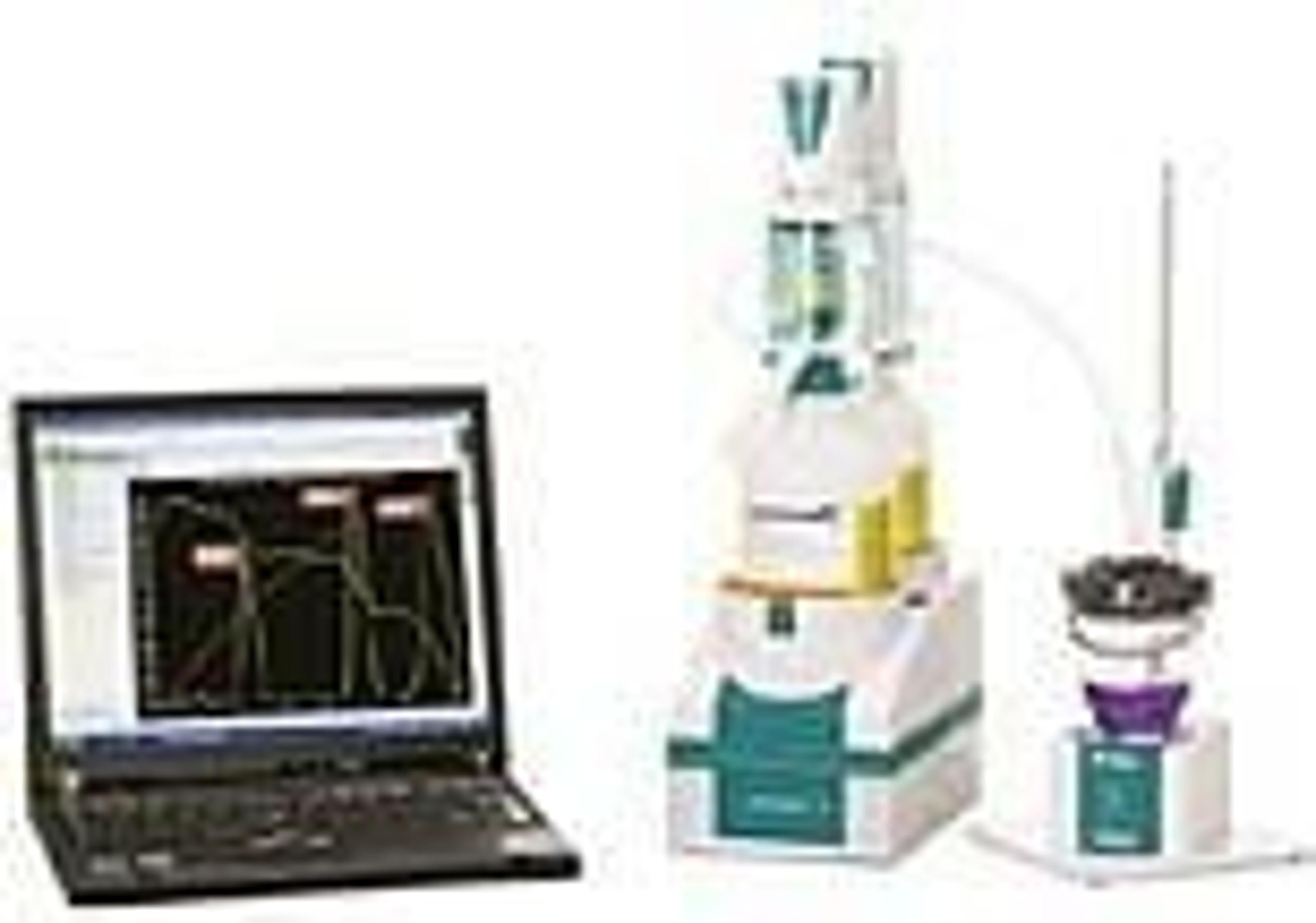
859 Titrotherm
Metrohm AGThermometric titration is a very versatile determination method and an ideal complement to potentiometric titration. In principle it is suitable for any reaction that produces a sufficiently large temperature change in the sample solution. It is particularly suitable for applications for which no suitable potentiometric sensor is available, for which no suitable reference electrode is available, in which the sample affects the indicator electrode or destroys it, for which no solvent is available that is suitable for potentiometry. The 859 Titrotherm combines innovative sensor technology with Metrohm's titration know-how. The temperature sensor based on semiconductor technology (thermistor), has a short response time of 0.3 s and a high resolution of 10-5 K. This makes the Thermoprobe the ideal sensor for thermometric titration, as it can follow any change in temperature quickly and accurately. Metrohm's Dosino technology has defined a new standard for volumetric titration. The Dosing Unit with its drive motor is mounted on the reagent bottle and thus guarantees maximum precision with minimum space requirements. The clearly laid out Titrotherm software allows adaptation of the screen view to the particular method parameters and thus provides rapid access to important commands or parameters. The endpoints are determined by calculating the first and second derivatives of the titration curve; by means of additional optimization parameters, the reproducibility can be improved even further.