
Correlation between nanoscale and bulk thermal analysis
27 Jun 2023Thermal methods, such as differential scanning calorimetry (DSC) and modulated temperature DSC (MDSC), thermogravimetric analysis (TGA), thermomechanical analysis (TMA), and dynamic mechanical analysis (DMA), are well-established techniques for characterizing the morphology and composition of polymers. It is often possible to identify and quantify materials by their characteristic transition temperatures and thermal stability. However, a serious limitation of conventional thermal methods is that they give only a sample-averaged response and cannot provide information on specific features on or within the sample. A DSC measurement, for example, may indicate the presence of more than one phase, but the technique cannot generally give any information regarding the size or distribution of phases. In this application note from Bruker, explore how this particularly impacts scientists in the field of polymer blends (where the blend morphologies are crucial to determining their material properties), coatings (where imperfections such as gel formations can seriously impact performance), and composites.
Related products
Request Quote for All Products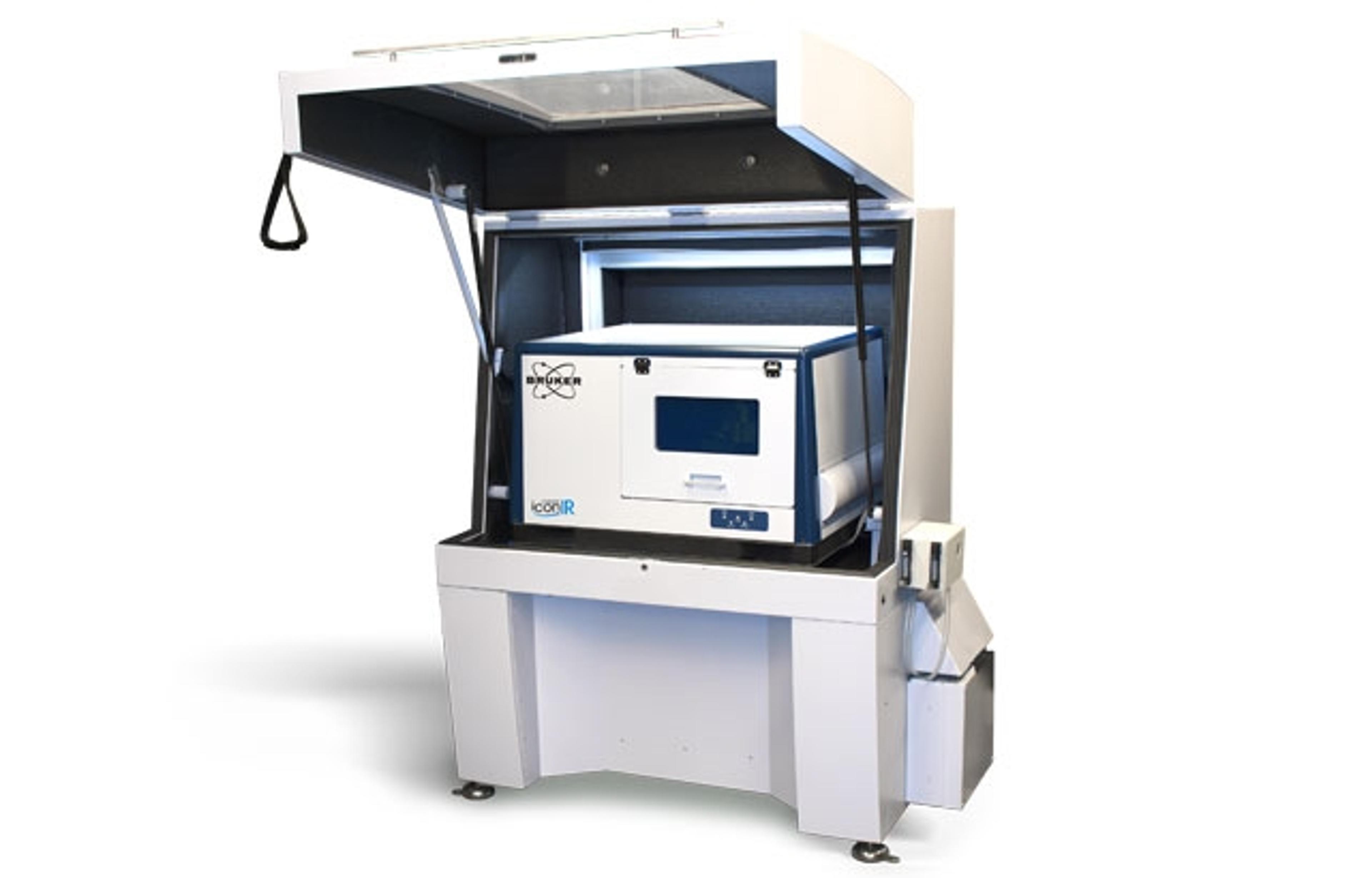
Dimension IconIR
Bruker Nano Surfaces and MetrologyBruker’s large-sample Dimension IconIR system combines nanoscale infrared (IR) spectroscopy and scanning probe microscopy (SPM) on one platform to deliver the most advanced spectroscopy, imaging, and property mapping capabilities available for academic researchers and industrial users. Incorporating decades of research and technological innovation, IconIR provides unrivaled performance based on and building off the industry-best AFM measurement capabilities of the Dimension Icon.
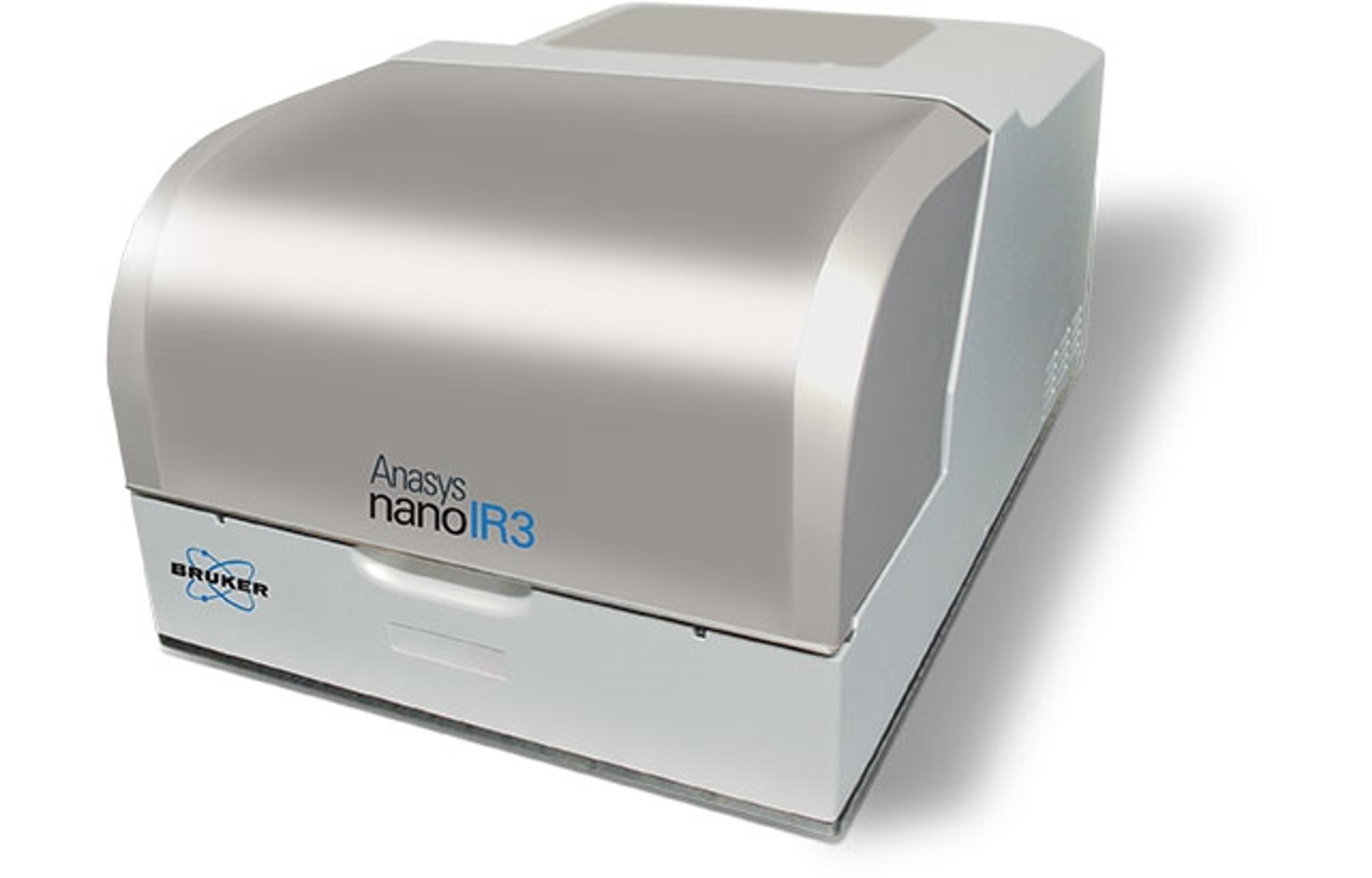
Anasys nanoIR3
Bruker Nano Surfaces and MetrologyThe nanoIR3 is the latest generation nanoscale IR spectroscopy, chemical imaging, and property mapping system for both materials and life science applications. The system also provides IR-based chemical imaging to provide mapping of chemical variations of the feature of interest. Unique point spectroscopy capabilities provide both spectroscopy and chemical imaging with a single source.