
Comparing 3D optical microscopy techniques for metrology applications
22 Jun 2023In this application note, Bruker Nano discusses the metrology advantages of Bruker’s ContourGT® 3D optical microscopes over confocal microscopes for certain applications. Key to these advantages is the ability to maintain subnanometer vertical resolution and 0.1 nanometer RMS repeatability, regardless of magnification or field of view.
3D optical microscopy is a mainstay metrology technology across a wide range of industries. There are a few techniques that provide a 3D surface representation from a microscope image, including the two key techniques of white light interferometry (WLI) and confocal microscopy, also known as laser scanning confocal microscopy (LSCM). These two methods are ubiquitous for measuring nanometers-to-millimeters surface heights. The principle of operation for each method provides different advantages and disadvantages.
Related products
Request Quote for All Products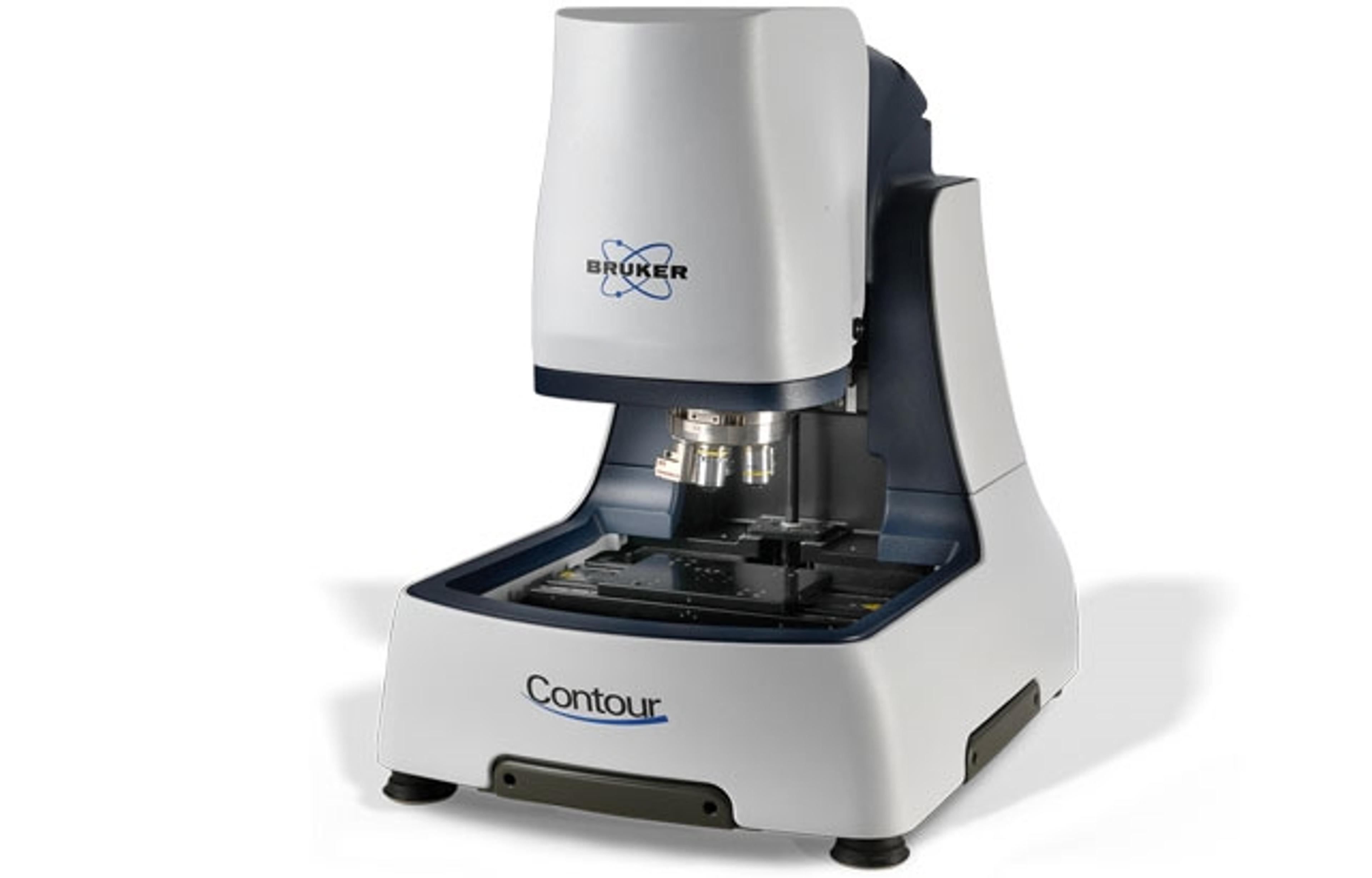
ContourX-500
Bruker Nano Surfaces and MetrologyThe ContourX-500 Optical Profilometer is the world’s most comprehensive automated benchtop system for fast, non-contact 3D surface metrology. The gage-capable ContourX-500 boasts unmatched Z-axis resolution and accuracy, and is easily customized for the widest range of complex applications, from QA/QC metrology of precision machined surfaces and semiconductor processes to R&D characterization for ophthalmics and MEMS devices.