ResourceGeneral Lab

Class II, Type A2 Biological Safety Cabinet HEPA Filter Loading Capacity

20 Oct 2014

The life of a HEPA filter for a Biological Safety Cabinet (BSC) is an important subject when considering the life cycle cost of any BSC. In this white paper, a short explanation as to the requirements, what has changed, why it changed and what information is required from manufacturers to assure at a minimum the same HEPA filter loading capability.

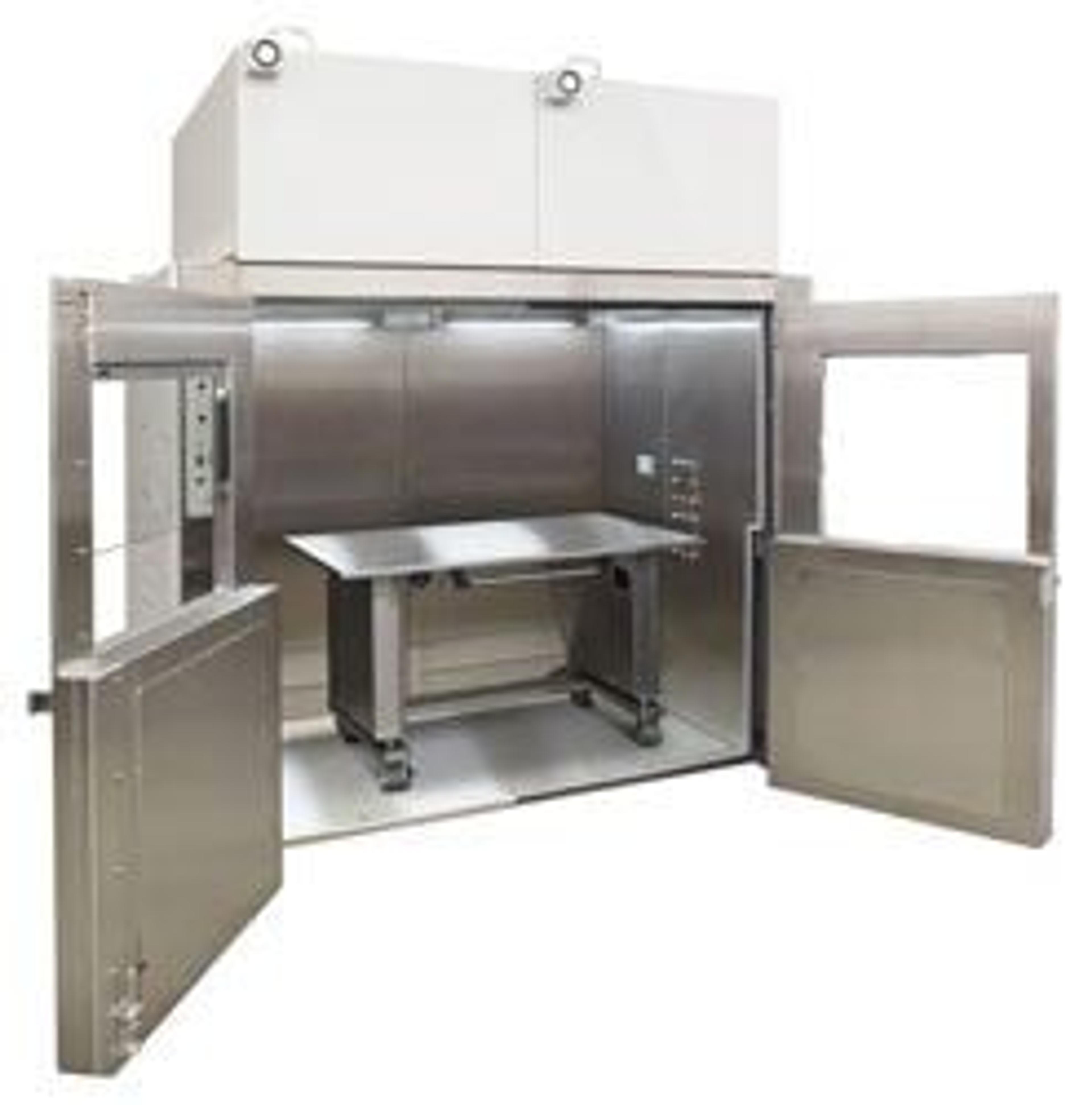
AutoLabGard ES NU-125 Mini-Room Class II, Type A2 Biosafety Cabinet

NuAire, Inc.

The AutoLabGard ES (Energy Saver) NU-125 Mini-Room is designed after a Class II, Type A2 Biological Safety Cabinet on a larger scale to provide Class II protection for personnel, product, and the environment. The mini-room can be used for applications involving high-throughput robotic systems, large high-speed cell sorters, ultra-centrifuges, and laboratory equipment requiring Class II protection from potentially harmful aerosols and airborne particles. The NU-125 AutoLabGard ES is constructed with an interior stainless steel floor and wall panels that are gasketed and bolted together. Painted exterior Cold Rolled Steel (CRS) cover panels are gasketed and bolted to the stainless wall panels that make up the negative pressure plenum. Painted CRS blower modules are mounted on top of the wall panels and contain both the supply and exhaust HEPA filters along with the ultra-high efficiency DC ECM motors. Stainless steel doors complete the cabinet enclosure with a hinged window assembly mounted on each door providing an 8 inch (203mm) access opening. If additional access is needed to the interior for user or system interfaces (i.e. power/computer cables, process tubing, etc.), negative pressure pass through ports may be added to the sides or rear of the enclosure that maintain enclosure containment. The airflow pattern of the NU-125 AutoLabGard ES is identical to any class II, type A2 biosafety cabinet. Room air is pulled into the cabinet through the work access opening at an average velocity of 105 fpm (.53 m/s) to provide an air barrier. Engineered with an ultra-high efficiency motor the AutoLabGard lowers operating costs by using less electricity and increasing filter life with less heat output. Each NU-125 is tested and comes with a certified copy to tests consistent with standard NSF/ANSI 49. Contact NuAire today to start your high-throughput robotic system enclosure consultation. Example Application: A perfect match for the BD FACS Airflow Cytometer Laboratory equipment or processes requiring sterility Class II Biological Safety Cabinet protection for robotics

(0)

Links

Tags

FiltrationFiltration and microfiltration are used to separate solids, particulates or large molecules from fluids (liquid or gases) in order to purify the filtrate. Explore a range of filter formats, including filter paper, plates and membranes for your separation needs. While larger particulates may be separated by gravity filtration, smaller particulates may require additional force for timely separation. Microfiltration equipment includes vacuum filters, as well as positive pressure, crossflow and centrifugal filtration devices. Find the best filtration products in our peer-reviewed product directory: compare products, check customer reviews and receive pricing direct from manufacturers.Labware and Lab SuppliesLabware and lab supplies include various forms of glassware, plasticware, reagents and personal protective equipment (PPE) and are used across all scientific laboratories, enabling daily tasks to be performed. Explore a range of flasks and beakers, petri dishes, carboys and storage bottles. Labware such as condensers, desiccators and burettes are also available for more specific tasks. Find the best labware and lab supplies in our peer-reviewed product directory: compare products, check customer reviews and receive pricing direct from manufacturers.Safety EquipmentLaboratory safety equipment is essential to the effective operation of all laboratories and is required to minimize the risk of harm during experiments. Safety equipment includes radiation safety, radioactive / hazardous waste disposal, alarms and personal safety.Fumehoods and Biological Safety CabinetsFume hoods and biological safety cabinets are used to provide personnel, sample and environmental protection by limiting exposure to hazardous materials either by venting or enclosing hazardous sample space. Fume hoods include filtered and ductless fume hoods, general ducted fume hoods, laminar flow cabinets and cabinets for powder weighing. There are three classes of biological safety cabinet, dependent on the level of protection provided. Class I provide personnel and environmental protection, class II provide product, personnel and environmental protection. Class III provide the highest level of protection and are designed for use with high-risk biological agents. Other ventilated workspaces for the laboratory include glove boxes, glove bags, anaerobic and hypoxic workstations. Find the best fume hoods and biological safety cabinets in our peer-reviewed product directory: compare products, check customer reviews and receive pricing direct from manufacturers.Contamination PreventionContamination prevention aims to control and minimize the risk of contamination during experiments. Biological safety cabinets and sterilization equipment are examples of technologies used to prevent contamination.Laboratory SafetyLaboratory safety is essential to the effective operation of all laboratories and is required to minimize the risk of harm during experiments. Guidelines, regulations, and equipment should be available in all laboratories to ensure that the working environment is safe and secure.HEPA Filtration
Class II, Type A2 Biological Safety Cabinet HEPA Filter Loading Capacity