
Analysis of Protein Kinase AKT with an AMMP™ Assay in Cell Culture and Tumour Lysates
17 May 2011In this application note by BioScale, inhibition of pSer473-Akt using both tissue culture and mouse xenografts is monitored. Activation of protein kinase AKT, through phosphorylation of both Thr308 and Ser473, promotes cell survival. A pair of commercially available monoclonal antibodies against both pSer473-Akt and pan-Akt was selected and each affinity tagged with either biotin or fluorescein. Using the ViBE™ Protein Analysis Platform with AMMP™ Assay technology, a standard curve was generated with in vitro phosphorylated (p473) recombinant Akt2. Using that derived standard curve a comparison of samples treated or untreated with PI3K inhibitors from either cell culture or xenograft tumor lysates was made using the ViBE™ BioAnalyzer with Li-Cor Western Blot analysis.
Related products
Request Quote for All Products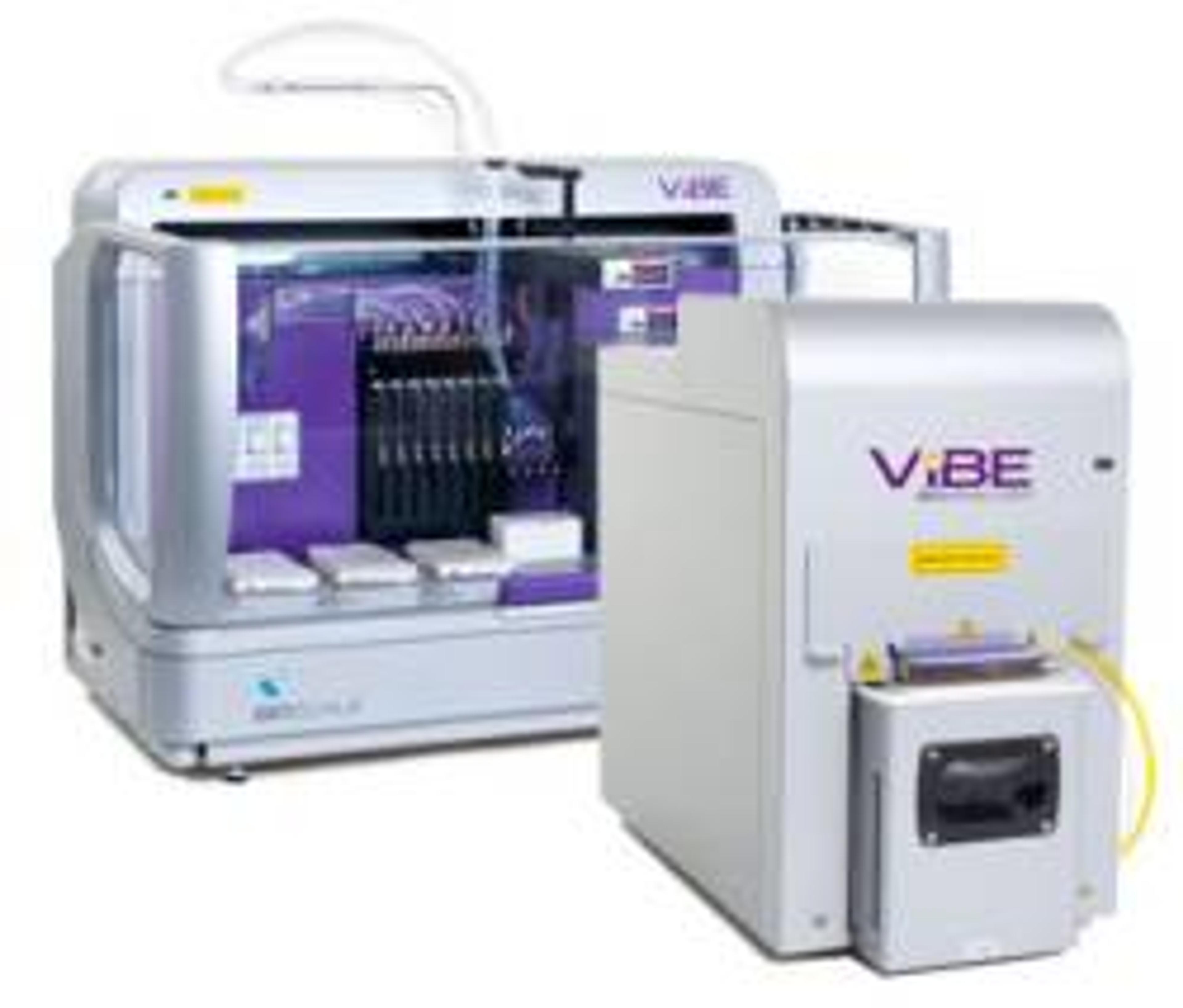
ViBE Protein Analysis Workstation
BioScale, Inc.ViBE Protein Analysis PlatformPowered by AMMP Technology, the ViBE platform allows rapid design and configuration of protein assays to achieve highly-sensitive detection and quantitation of proteins in complex biological samples with real-time results. The ViBE platform … • Open assay design allows use of your own antibodies and the ability to define sensitivity, dynamic range, and speed requirements for efficient process workflow. • Simple yet sophisticated AMMP assay format is able to selectively separate your analyte from the “noise”. • Rapid design, configuration and ease of methods transfer reduce the time for assay validation. • In a hurry? The ViBE platform can provide ELISA-like results in 20 minutes for a quick screening assay. • Unlike automated ELISAs, ViBE products provide “real time” results. • Data output from the ViBE Software are easy to interpret. AMMP Assays—Simple. Sensitive. Sophisticated AMMP assays use a traditional homogeneous assay format with a proprietary detection technology providing confident results, fewer sample limitations, simple operation and fast assay development. AMMP is the unique integration of magnetic microparticles, a universal sensor and acoustic detection, creating a protein detection technique that is highly robust and versatile. Non-optical detection AMMP non-optical protein detection technology has proven correlation with optical measurements but with broader detection limits and less sample prep. Non-optical detection and mechanically amplified signal allows measurement of low expressing proteins otherwise lost in baseline noise and less baseline interference reduces the need for multistep dilutions especially in complex samples. Complex matrices without the complexity Non-optical AMMP detection, assay flexibility and enhanced sensitivity enable the ViBE platform to analyze proteins from a variety of complex matrices. The ViBE platform has shown superior results in tissue, tumor, plasma, serum, urine, stool and bioreactor samples at concentrations as low as pg/mL ViBE Technical Performance • Enhanced Sensitivity – down to the sub-picogram level • Exceptional Reproducibility-- 5-10% CVs plus outstanding instrument to instrument repeatability • 3-log dynamic range