
Analysis of Polar Ionic Pesticides by Ion-Exchange Chromatography Tandem Mass Spectrometry
30 May 2018Learn how the application of high resolution ion-exchange chromatography, coupled to a triple quadrupole mass spectrometer, can overcome the issues experienced with other chromatographic techniques when analyzing polar ionic pesticides in food samples.
Related products
Request Quote for All Products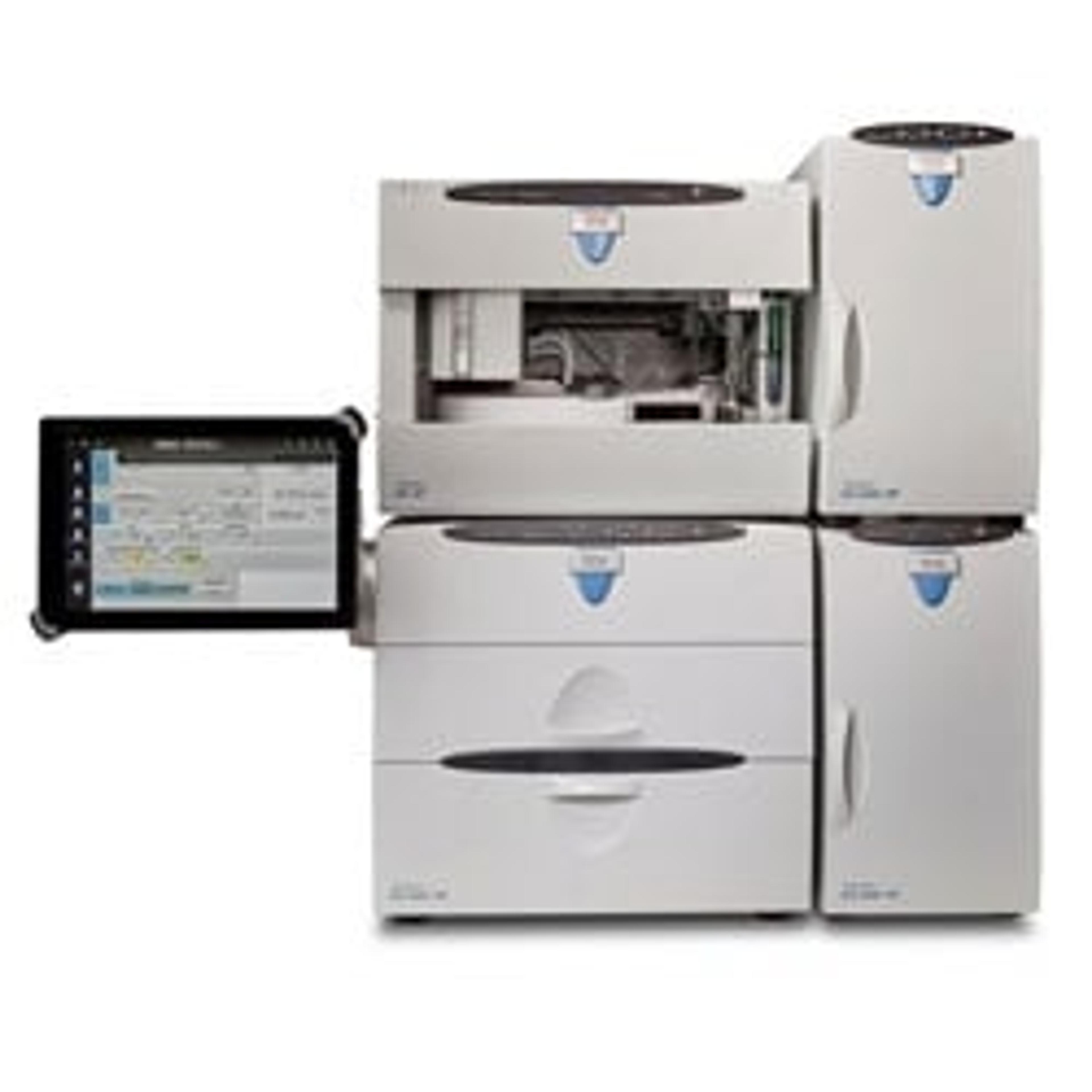
Thermo Scientific™ Dionex™ ICS-6000 Capillary HPIC™ System
Thermo Fisher ScientificObtain high performance, convenience, and flexibility by using a top-of-the-line IC platform optimized for capillary flow rates. The Thermo Scientific™ Dionex™ ICS-6000 Capillary HPIC™ System enables you to scale down column size, injection volumes, and flow rates by a factor of 25 to 100. With a capillary configuration, your system is always ready and able to run samples 24/7 with minimal calibration and equilibration time. These systems combine the all the advantages of high pressure ion chromatography and capillary IC. They are available in three configurations to match your application requirements. Choose from three configurations: Dionex ICS-6000 Single Channel Capillary RFIC System use this single channel capillary IC system to run one analysis at a time, 24/7. Dionex ICS-6000 Dual Channel Capillary RFIC System This dual capillary system can run two different analyses concurrently on a single sample, or analyze two samples in parallel. Alternately, run the same analysis on both channels to double throughput. Dionex ICS-6000 Carbohydrates Analysis Capillary IC System use this capillary IC system for analyzing carbohydrates with ion exchange chromatography and electrochemical detection. High pressure ion chromatography, high performance Fast, sensitive separations without sacrificing resolution—up to two times faster with Fast IC columns Outstanding resolution using columns with small-diameter particles, thanks to high-pressure capability Continuous operation at up to 5000 psi when configured as a Thermo Scientific™ Reagent-Free™ IC (RFIC™) system Optimized peak resolution with a choice of isocratic and electrolytic gradient separations on each channel Powerful and user-friendly operation using the Thermo Scientific™ Chromeleon™ Chromatography Data System (CDS) Wide variety of chemistries available in Thermo Scientific capillary and Fast IC columns Flexible, easy to configure, modular design Flexible, easy to configure, modular design Time-saving dual system option The capillary advantage Always ready with 24/7 uptime and minimal calibration and equilibration time Up to 18 months of continuous operation on one Eluent Generation cartridge Small dead volumes for minimized peak dispersion Reduced eluent disposal costs—only 15mL/day if eluent used for continuous operation at 10μL/min Enhanced ease-of-use: Dionex IC Cube houses capillary consumable cartridges with simple, colorcoded connections Flexible support for capillary columns of 0.2–0.6mm I.D. Application flexibility Typical flow rate range: 5–20μL/min Column i.d.: 02–0.6mm Typical yearly eluent usage: 5.25L Seamless sample preparation capabilities Dionex autosamplers integrate seamlessly with all Dionex ICS-6000 HPIC systems, providing effortless automation and advanced sample preparation capabilities.