
Alpha-GST Release as a Predictive Marker of Drug Induced Hepatotoxicity in 3D InSight™ Liver Microtissues
7 Oct 2015In this study, the assay of alpha-GST release, utilizing the EKF Diagnostics alpha-GST ELISA kits, and the Promega CellTiter-Glo® Luminescent Cell ATP assay were compared as tests for hepatotoxicity using InSphero’s 3D InSight™ Liver Microtissues. As test substances, two compounds with known hepatotoxic risks were chosen: Amiodarone and Diclofenac. Drug induced liver injury (DILI) is a major obstacle in the development of new pharmaceutical identities. Evaluation of potential DILI effects of novel compounds during pre-clinical phases is, therefore, a prerequisite for their safe entry into clinical trials. Hepatocytes, the major cell type in the liver, contain high amounts of metabolic enzymes, which are released upon cellular injury into the cell culture supernatant. Beside the commonly used markers alanine aminotransferase (ALT) and aspartate aminotransferase (AST), alpha-GST is increasingly being used as a liver injury marker.
Related products
Request Quote for All Products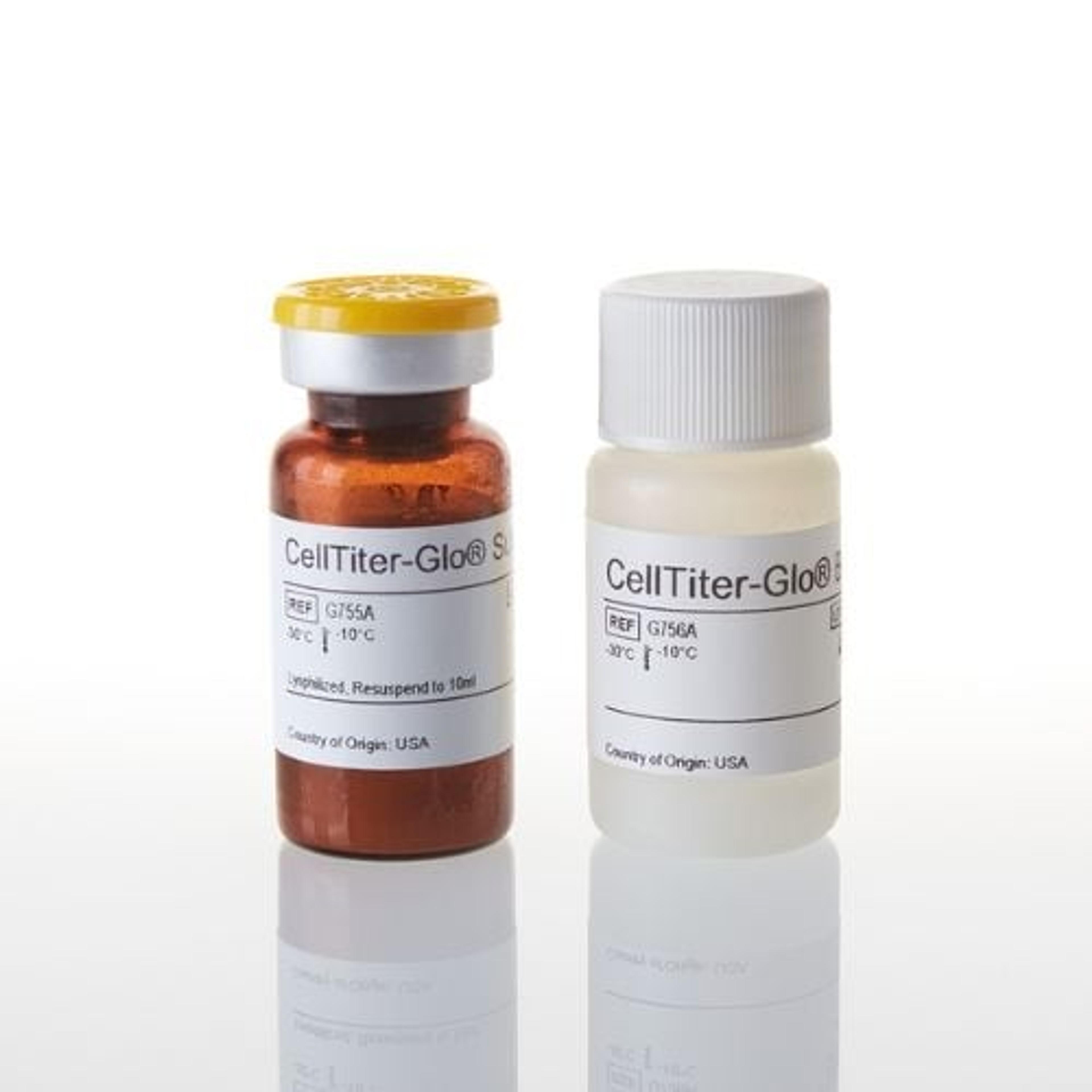
CellTiter-Glo® Luminescent Cell Viability Assay
Promega Corp.The CellTiter-Glo® Luminescent Cell Viability Assay(a,b) is a homogeneous method of determining the number of viable cells in culture based on quantitation of the ATP present, an indicator of metabolically active cells. The CellTiter-Glo® Assay is designed for use with multiwell formats, making it ideal for automated high-throughput screening (HTS), cell proliferation and cytotoxicity assays. The homogeneous assay procedure involves adding the single reagent (CellTiter-Glo® Reagent) directly to cells cultured in serum-supplemented medium. Cell washing, removal of medium and multiple pipetting steps are not required. The system detects as few as 15 cells/well in a 384-well format in 10 minutes after adding reagent and mixing. The homogeneous "add-mix-measure" format results in cell lysis and generation of a luminescent signal proportional to the amount of ATP present. The amount of ATP is directly proportional to the number of cells present in culture. The CellTiter-Glo® Assay generates a "glow-type" luminescent signal, which has a half-life generally greater than five hours, depending on cell type and medium used. The extended half-life eliminates the need to use reagent injectors and provides flexibility for continuous or batch mode processing of multiple plates. The unique homogeneous format avoids errors that may be introduced by other ATP measurement methods that require multiple steps.