ResourceSpectroscopy

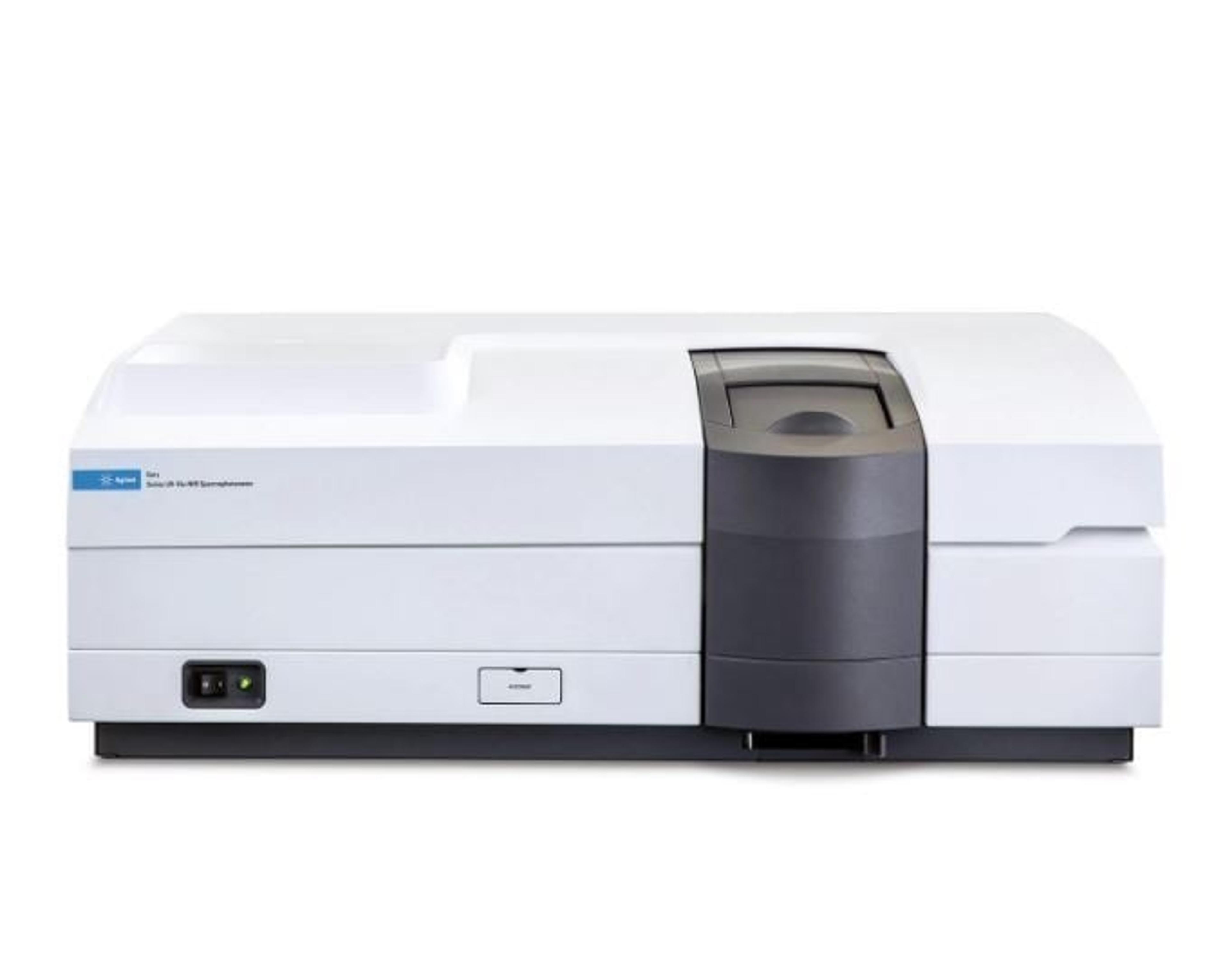
Agilent Cary 4000/5000/6000i Series UV-VIS-NIR Spectrophotometers

22 Mar 2021

Find out more about the world-renowned Cary product line, encompassing FTIR, UV-Vis-NIR and Fluorescence, offering you a comprehensive range of molecular spectroscopy solutions.

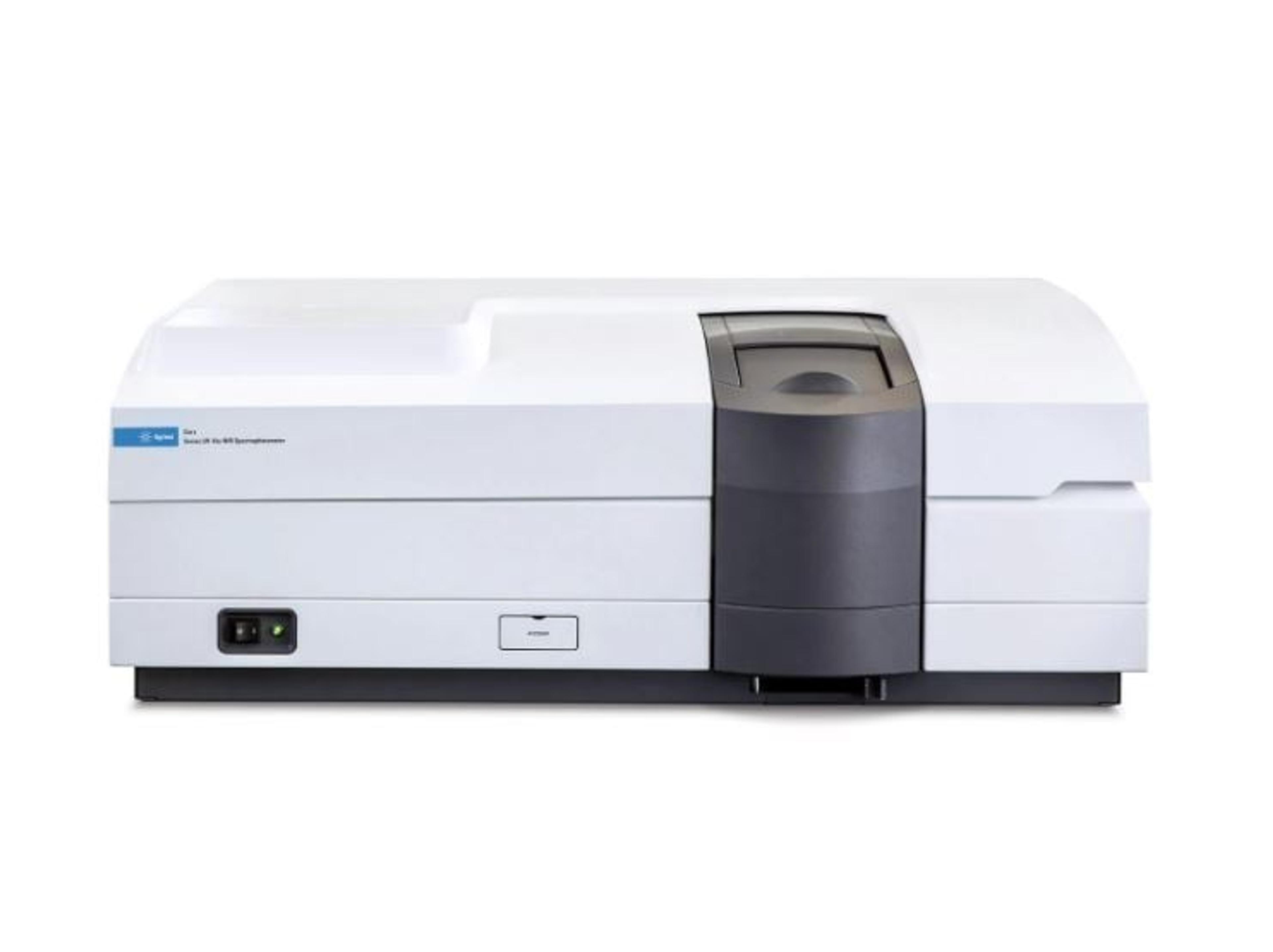
Cary 5000 UV-Vis-NIR

Agilent Technologies

The Cary 5000 is a high-performance UV-Vis and NIR spectrophotometer with superb photometric performance in the 175–3300 nm range. Using a PbSmart detector, the Cary 5000 extends its NIR range to 3300 nm making it a powerful tool for materials science research. The Cary WinUV software, a modular Windows-based software, makes it easy to perform powerful analysis and control a number of optional accessories.
(7)

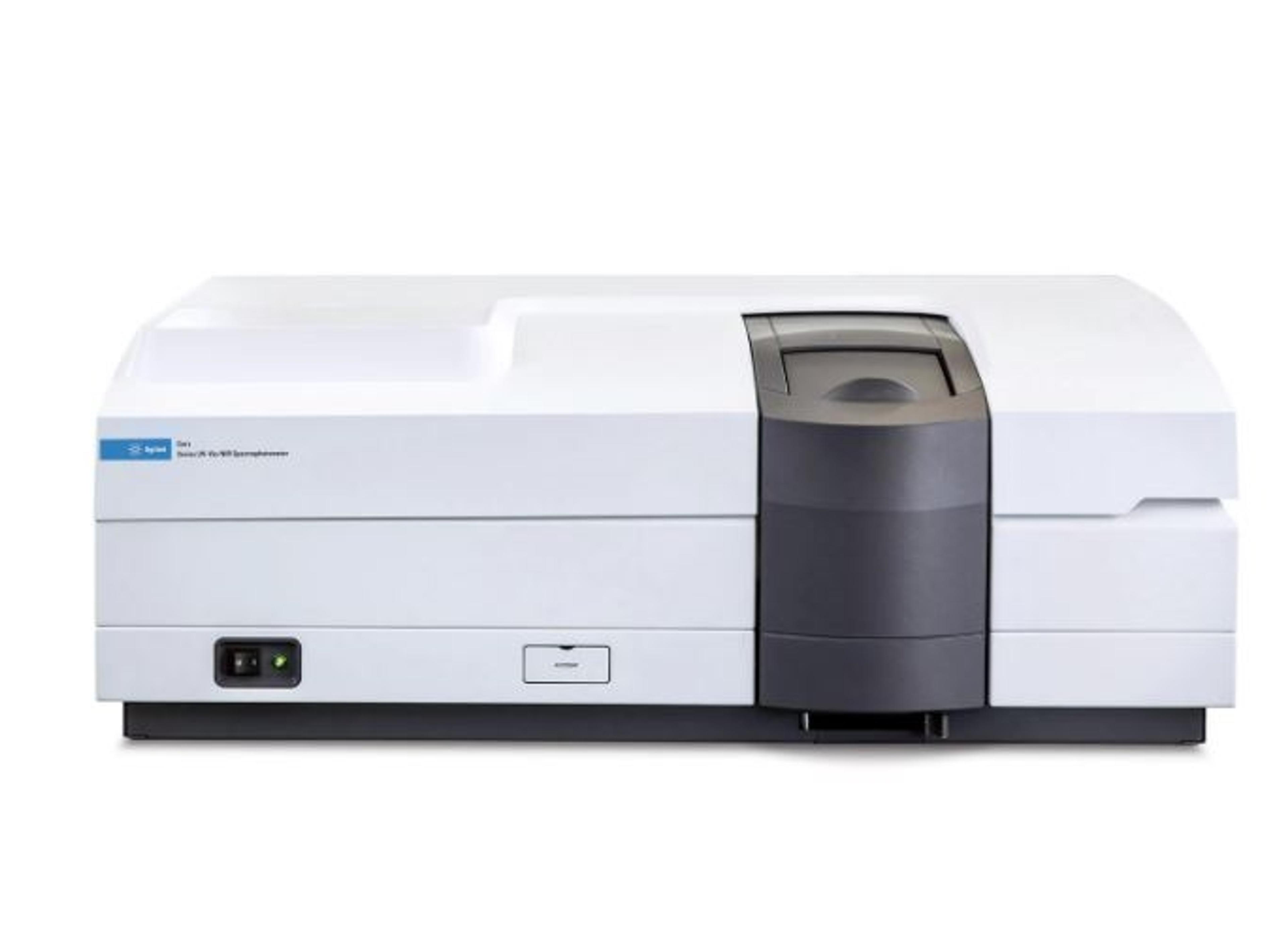
Cary 4000 UV-Visible Spectrophotometer

Agilent Technologies

The Cary 4000 is a high-end UV-Vis spectrometer with excellent photometric performance in the 175–900 nm range, making it a powerful reference spectrometer. The system is ideal for analyzing solid samples or biotechnology samples with minimal sample preparation.  
(4)

Cary 6000i UV-Vis-NIR Spectrophotometer

Agilent Technologies

The Cary 6000i UV-Vis-NIR spectrophotometer has been tailored for unmatched photometric performance in the short-wave infrared (SWIR) 800–1800 nm range as well as the UV-visible 175 to 800 nm. Using narrow-band InGaAs detection and a 600 lines-per-mm diffaction grating for improved SWIR sensivity, the Cary 6000i is the ultimate tool for materials characterization spectroscopy.  

(5)

Links

Tags

Fluorescence SpectroscopyFluorometers and spectrofluorometers (also called fluorescence spectrometers) are used to measure the intensity and wavelength of fluorescent light emitted from a sample after excitation by illumination. Spectrofluorometers utilize monochromators to select the desired wavelengths, whereas filter fluorometers employ a set of filters. Spectrofluorometers for measuring steady-state fluorescence and lifetime fluorescence (or time-resolved fluorescence) are available, as well as fluorescence microscopes and microplate readers. Find the best fluorescence spectroscopy products in our peer-reviewed product directory: compare products, check customer reviews and receive pricing direct from manufacturers.Infrared / IR SpectroscopyInfrared (IR) spectroscopy measures the interaction of infrared light with a sample, including transmission, reflectance & absorbance, facilitating the identification of analytes. Equipment used for quantitative analysis includes Fourier-transform infrared (FTIR) spectrometers, infrared cameras, FTIR gas analyzers, as well as attenuated total reflectance (ATR) accessories and pellet or film presses. Find the best IR spectroscopy products in our peer-reviewed product directory: compare products, check customer reviews and receive pricing direct from manufacturers.UV-Visible SpectroscopyUltraviolet-visible (UV-Vis) spectrophotometers are used to measure the interaction of UV and visible light with a sample, including transmission, reflectance & absorbance. The two major instrument classes are single-beam or double-beam spectrophotometers. More specialized equipment includes colorimeters, spectroradiometers and refractometers. Portable and microvolume spectrophotometers are also available. For the modular spectroscopy lab, explore a range of light sources for combination with a spectrograph/spectrometer and optics. Find the best UV-Vis spectroscopy products in our peer-reviewed product directory: compare products, check customer reviews and receive pricing direct from manufacturers.FluorescenceThe emission of fluorescence occurs when a photon of energy is supplied to a fluorescent chemical compound by an external source, causing it to become excited. Fluorescence can be detected and measured for different purposes using microplate readers, fluorescence microscopes, fluorescence scanners, and flow cytometers.UV-Visible-NIRUV-Visible-NIR spectroscopy is used to analyze a wide range of samples based on their absorption of ultraviolet, visible, and near-infrared light. It is commonly applied in chemical analysis, material science, and quality control. Browse our peer-reviewed product directory to find the best UV-Visible-NIR spectroscopy systems, compare products, check reviews, and get pricing directly from manufacturers.SpectroscopySpectroscopy is a technique that analyzes the interaction of light with matter to study molecular properties, concentrations, and structural information. Widely used in chemical, pharmaceutical, and environmental analysis, spectroscopy offers insights into molecular composition and helps identify unknown compounds. It plays a key role in quality control, research, and diagnostics. Browse our peer-reviewed product directory to compare spectroscopy tools, read reviews, and get prices directly from manufacturers.