A New Tool for Biomarker Discovery

17 Dec 2013

This article describes a new PEP technology, combining 2D-gel and mass spectrometry, intended to fill in the proteome knowledge gap. It provides a tool to systematically analyze the function of the proteins from a proteome and creating an overall picture of how the proteins are working as a system in important diseases.

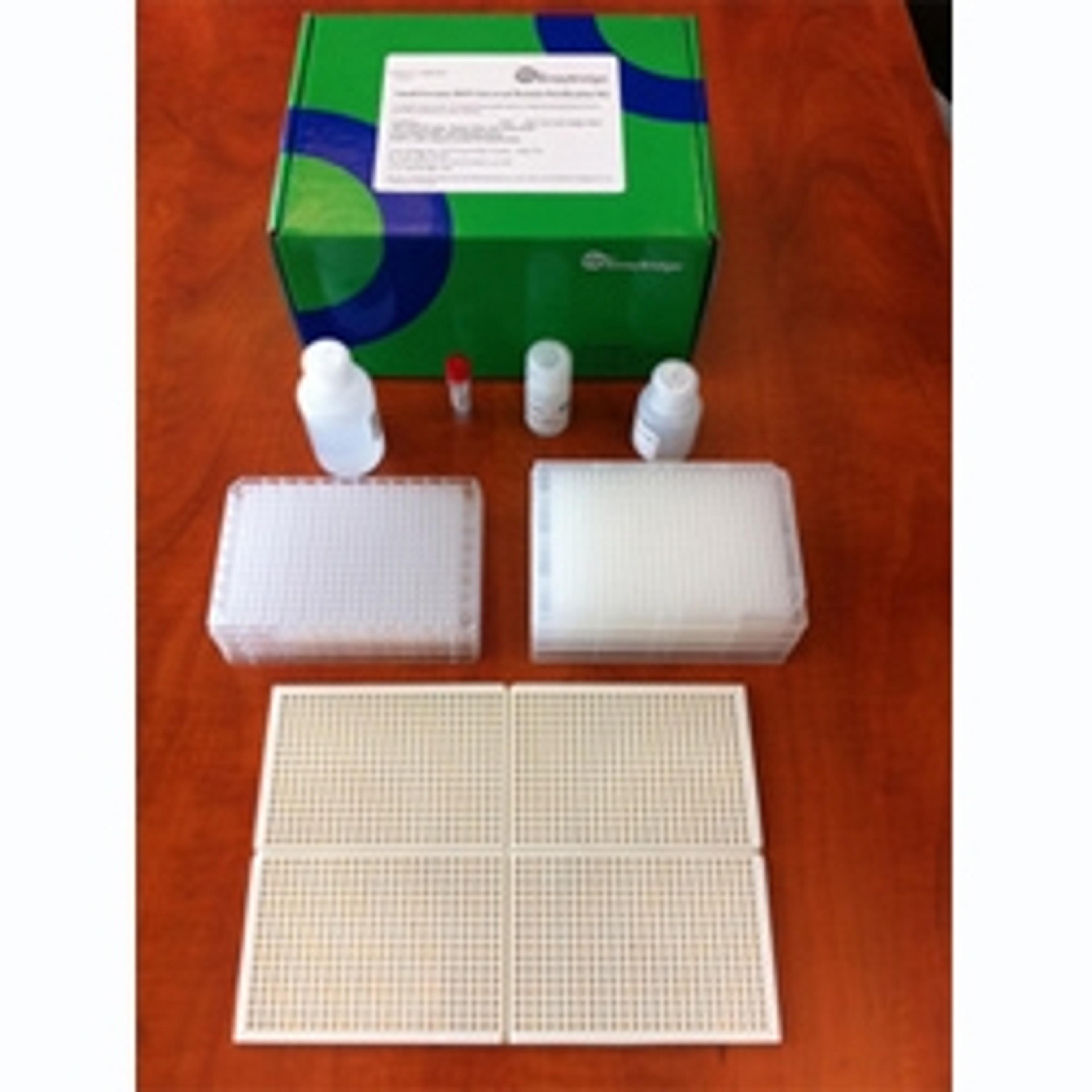
PEP Universal Protein Purification Kit

Array Bridge Inc.

Complete kit for the fast purification of any functional protein from a protein mixture or a proteome with hundreds to thousands of proteins. It can also be used to build the three-dimensional enzyme landscape for any protein family for which a functional assay is available such as Protein Kinases, Protein Photosphatases, Proteinases, Oxido-Reductases etc.In the PEP technology, protein mixture is first separated by a modified one-dimensional or two-dimensional gel electrophoresis, this modified procedure provides good resolution whilte still maintaining protein function. This is followed b an efficient protein transfer step to a specially designed 384-well Protein Elution Plate (PEP).It is also possible to analyze multiple enzyme families in parallel to obtain functional profiles for each enzyme. The PEP technology can be applied to the systematic analysis of any proteins for which functional assays exist.

(0)

Links

Tags

Mass SpectrometryMass spectrometry (MS) is a powerful analytical technique used to identify and quantify molecules based on the mass-to-charge ratio of gas-phase ions. It provides detailed information about the structure, composition, and properties of compounds and is widely used across fields such as environmental monitoring, materials science, drug discovery and development, food and beverage testing, and wider chemical research. Key MS techniques include tandem mass spectrometry (MS/MS), liquid chromatography–mass spectrometry (LS-MS) and inductively coupled plasma (ICP-MS). Choosing from these wide range of techniques and technologies can be a daunting task, so keep up to date with scientific applications, performance expectations, and customer reviews here all in one place. Visit our product directory to receive quotes direct from the manufacturer. Microarray AnalysisMicroarrays, also known as biochips, are used for the detection and analysis of multiple genes, proteins, antibodies, or biomarkers on a single microchip. This can reveal information on protein or gene expression, single nucleotide polymorphism (SNP), copy number variation (CNV), epigenetics and patient health in clinical diagnostic tests. Discover a range of microarray scanners and prefabricated antibody, protein, RNA and DNA microarrays for your analysis or consider creating your own custom microarrays with a microarray printer. Find the best microarray products in our peer-reviewed product directory: compare products, check customer reviews and receive pricing direct from manufacturers.Gel Doc / Image AnalysisGel documentation (gel doc) or gel imaging systems are used for the analysis of proteins, antibodies and nucleic acid immobilized in polyacrylamide or agarose gels, membranes or microarrays. Explore a range of a gel imaging systems, densitometers, scanners, transilluminators or UV lamp + CCD cameras for your image analysis solutions. Colorimetric, fluorescent and/or radioisotopic samples can be visualized and documented for further analysis. See gel doc / Image analysis software for quantitative 1D and 2D analysis of your samples. Find the best gel doc / image analysis products in our peer-reviewed product directory: compare products, check customer reviews and receive pricing direct from manufacturers.Protein BiologyThe analysis of protein expression, identity and function is vital for many areas of life science research and drug discovery. Some of the most commonly used techniques in protein analysis include Western blotting, electrophoresis and mass spectrometry.Peptide MappingBiomarker DiscoveryClinical biomarkers refer to substances related to known medical conditions that can be accurately measured <i>in vitro</i>. Biomarkers can be used to diagnose presence of a disease and indicate disease severity. The discovery of new biomarkers is incredibly valuable in the field of diagnostics.