
A Comparison of sCMOS and EMCCD Digital Camera Technologies for Spinning Disk Confocal Microscopy
A Comparison of sCMOS and EMCCD Digital Camera Technologies for Spinning Disk Confocal Microscopy
6 Sept 2015A promising development for scientific imaging is the improvement of complementary metal oxide semiconductor (CMOS) sensors. These devices have progressed to a point that makes them suitable for biological microscopy. Recently, a series of review articles and technical “white paper” reports discussing the merits of scientific CMOS (sCMOS) camera technology for biological microscopy have appeared in various periodicals, each written by a representative of the several reputable scientific camera manufacture companies. It has been suggested that the latest generation sCMOS cameras have the potential to out-compete or even supplant electron multiplication CCD (EMCCD) cameras, which to-date have been established as the leading imaging detector technology for low-light biological microscopy applications. This application note provides an overview of the cited benefits of sCMOS cameras over existing camera technologies.
Related Products
Request Quote for All Products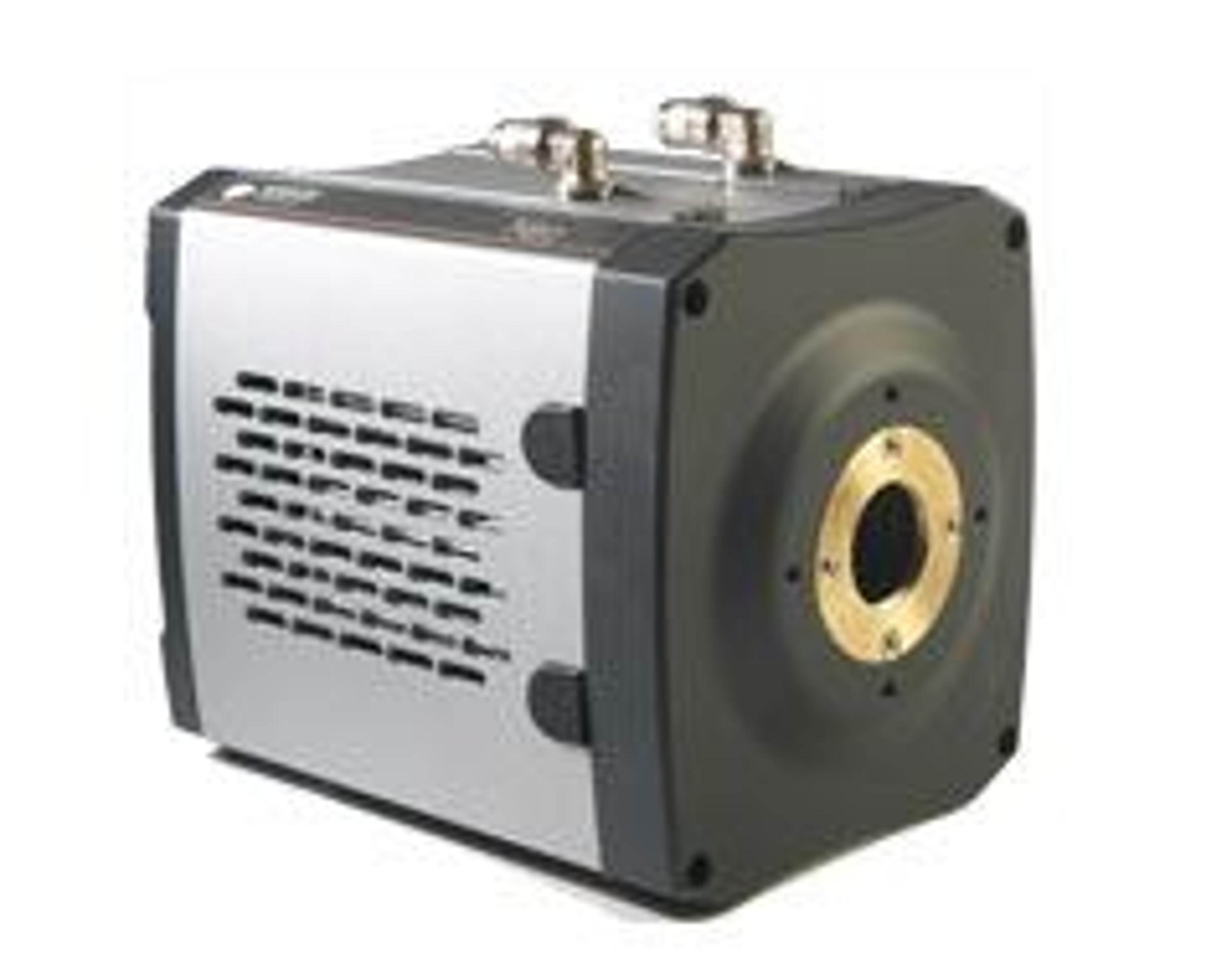
Neo 5.5 - sCMOS Camera
Oxford Instruments AndorThe Neo sCMOS Camera platform has been conceptualised and specifically engineered to harness the full performance potential of this new and exciting sensor technology. Unlike any CCD or CMOS camera to come before, Neo is unique in its ability to simultaneously offer ultra-low noise, extremely fast frame rates, wide dynamic range, high resolution and a large field of view. Neo breaks new boundaries in offering an exceptionally low read noise of 1 e- rms without the need for signal amplification technology. 100 frames/s can be reached with full frame readout, faster with region of interest selection. In Neo, these speeds are uniquely coupled to a dynamic range capability of 30,000:1 with 16-bit digitization.