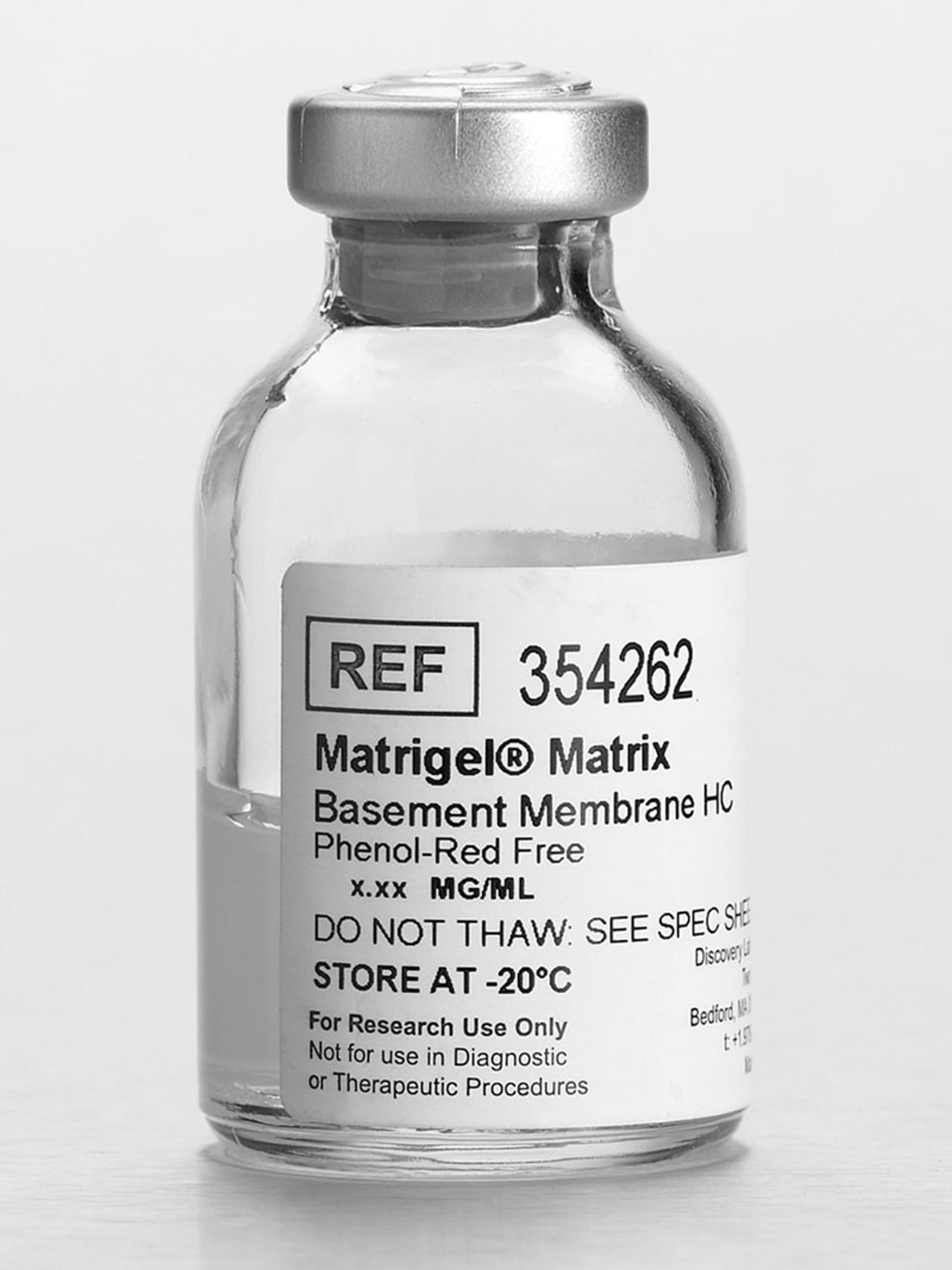
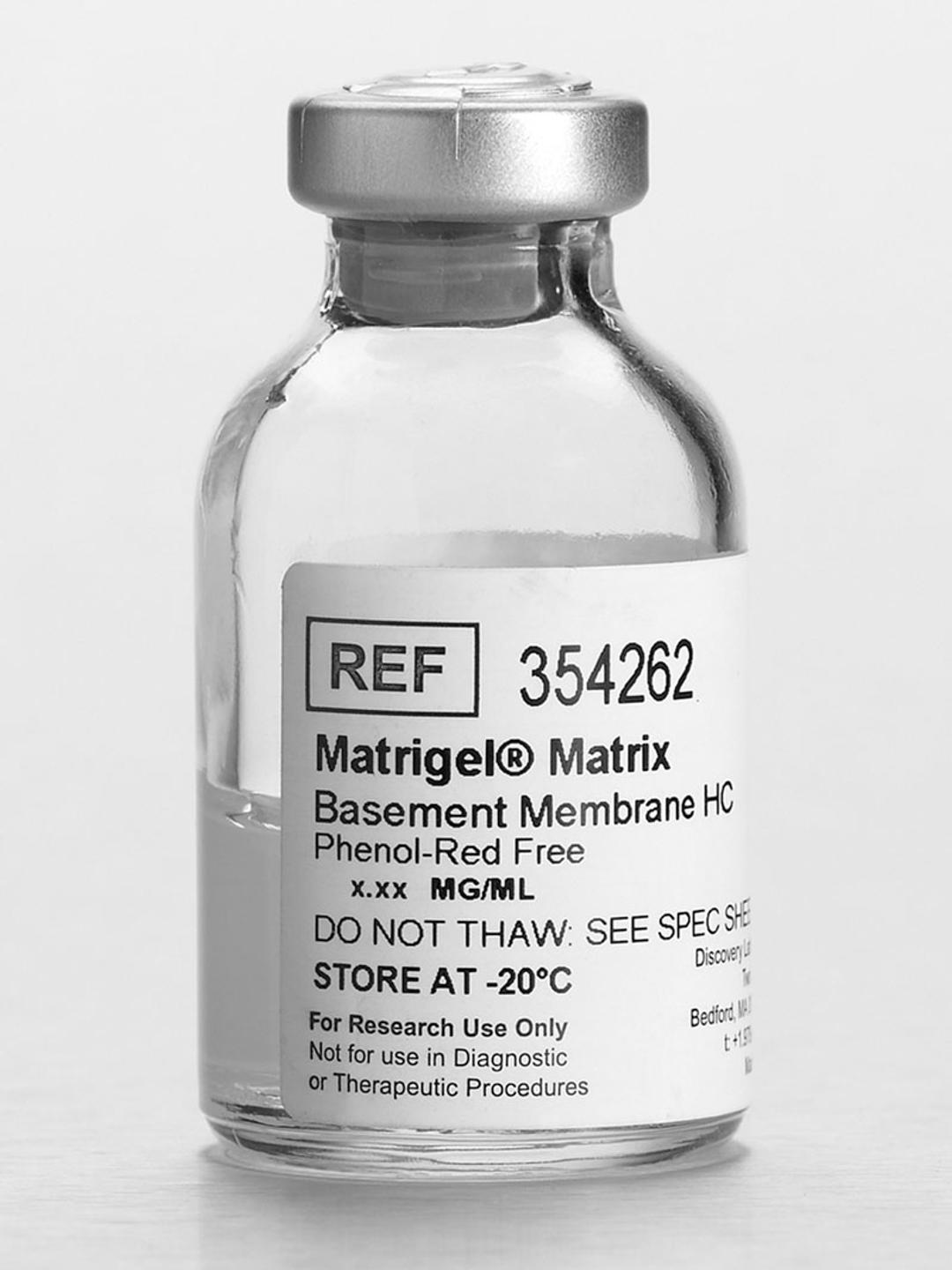
Corning® Matrigel® Matrix High Concentration (HC), Phenol-Red Free, LDEV-free, 10 mL
Corning Matrigel matrix is a solubilized basement membrane preparation extracted from the Engelbreth-Holm-Swarm (EHS) mouse sarcoma, a tumor rich in extracellular matrix (ECM) proteins, including Laminin (a major component), Collagen IV, heparan sulfate proteoglycans, entactin/nidogen, and a number of growth factors.Preparation and StorageStore at -20°C. Avoid multiple freeze-thaws.SourceEngelbreth-Holm-Swarm Mouse TumorQualit…

The supplier does not provide quotations for this product through SelectScience. You can search for similar products in our Product Directory.
Corning Matrigel matrix is a solubilized basement membrane preparation extracted from the Engelbreth-Holm-Swarm (EHS) mouse sarcoma, a tumor rich in extracellular matrix (ECM) proteins, including Laminin (a major component), Collagen IV, heparan sulfate proteoglycans, entactin/nidogen, and a number of growth factors.
Preparation and Storage
Store at -20°C. Avoid multiple freeze-thaws.
Source
Engelbreth-Holm-Swarm Mouse Tumor
Quality
- Mouse colonies routinely screened for pathogens via Mouse Antibody Production (MAP) testing
- Extensive PCR testing is performed to screen for a number of pathogens
- Tested and found negative for bacteria, fungi, and mycoplasma
- Protein concentrations determined by Lowry method
- Endotoxin units measured by Limulus Amoebocyte Lysate assay
- Matrigel Matrix gel stability is tested for a period of 14 days at 37°C
- Biological activity is determined for each lot using a neurite outgrowth assay
Application
- Cell Growth and Differentiation
- Metabolism/Toxicology Studies
- Invasion Assays
- in vitro and in vivo Angiogenesis Assays
- in vivo Angiogenesis Studies and Augmentation of Tumors in Immunosuppressed Mice
For Customers in California only: WARNING Please refer to Safety Data Sheet (SDS) Section 15 for more information regarding California Proposition 65.

The Evolution of Cell Culture with 3D Applications
This infographic from Corning Life Science looks at the benefits of 3D Cell cultures compared to 2D in cell research and drug discovery, and how it is advancing in both of these fields. Also shown is the equipment currently available for research in this area from Corning Life Science.