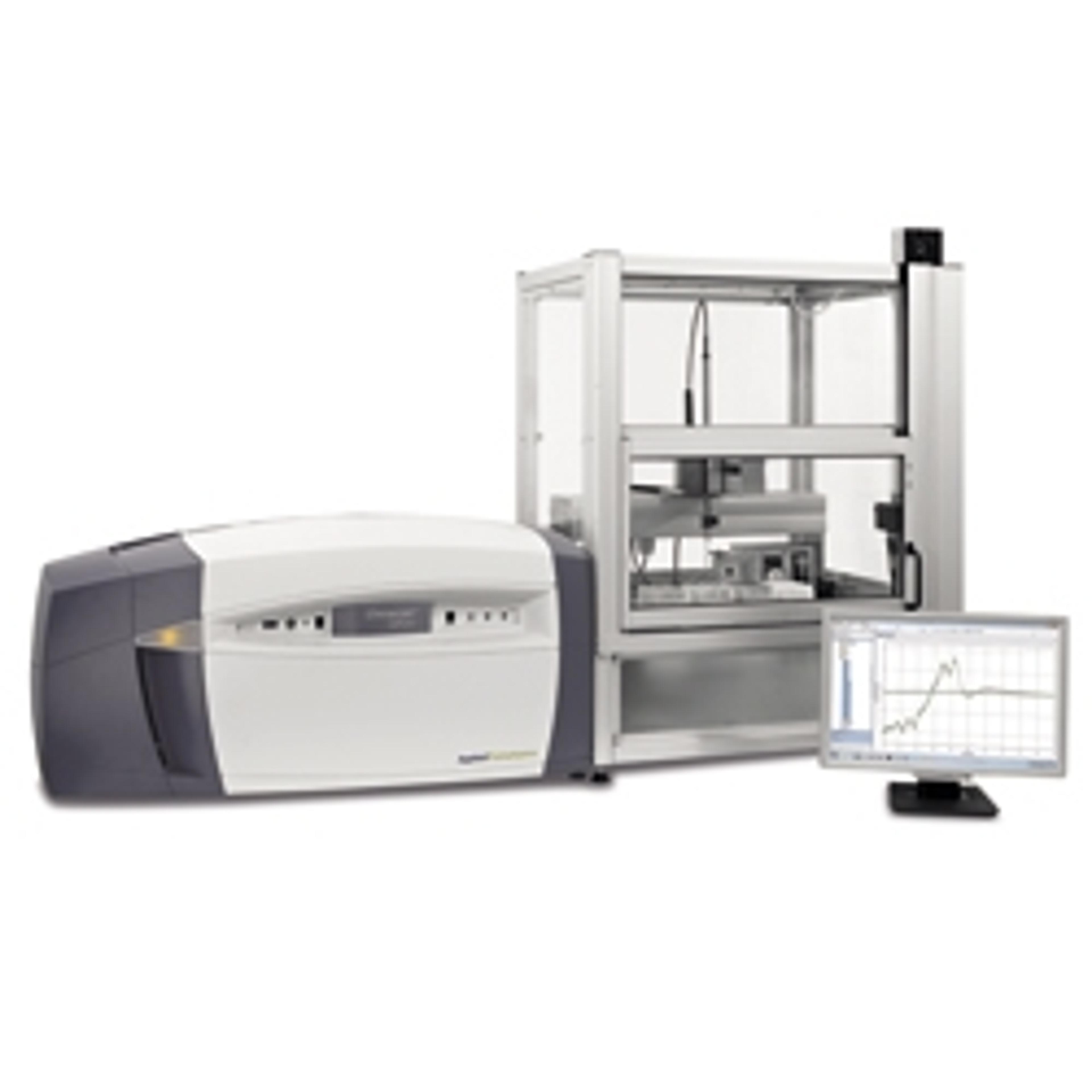
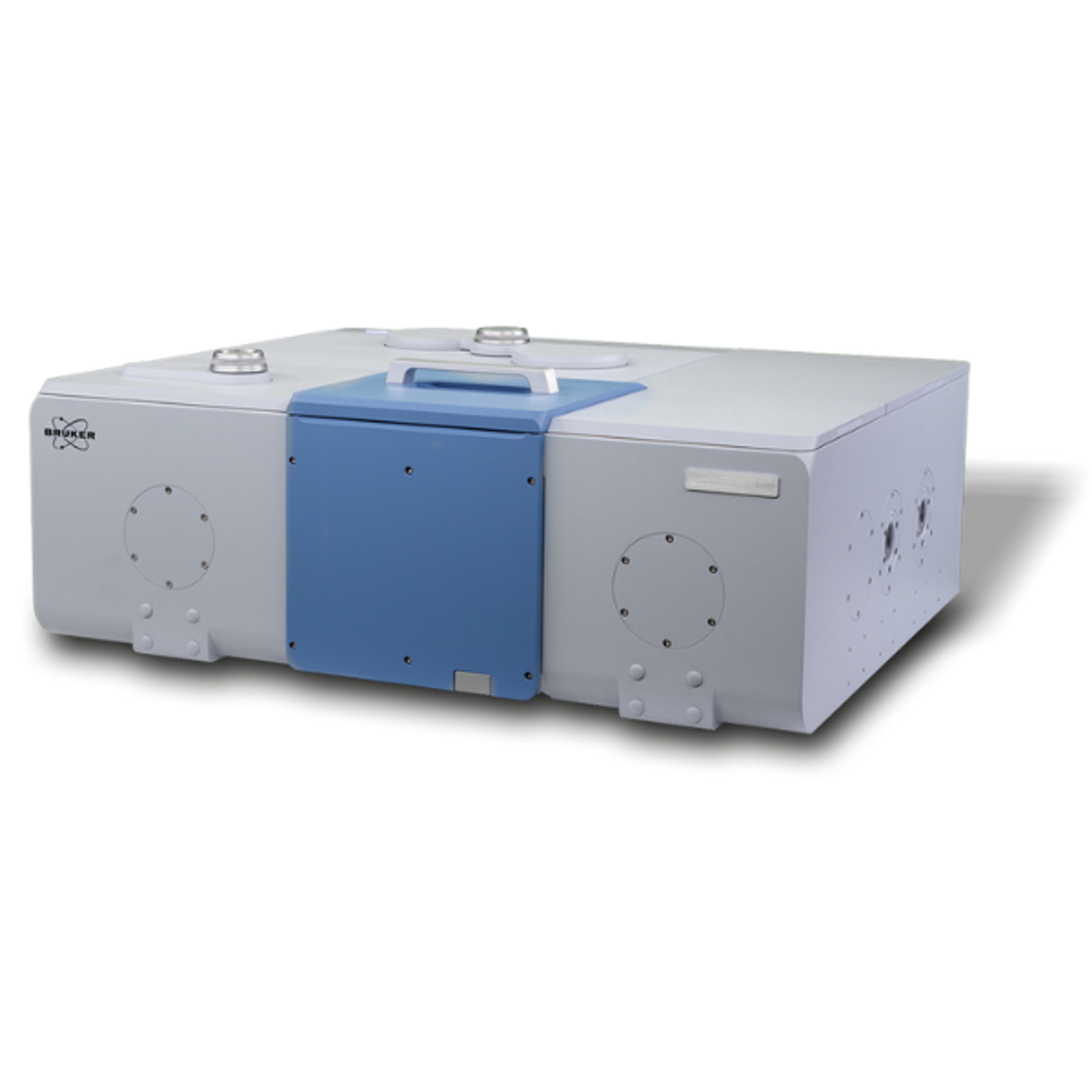
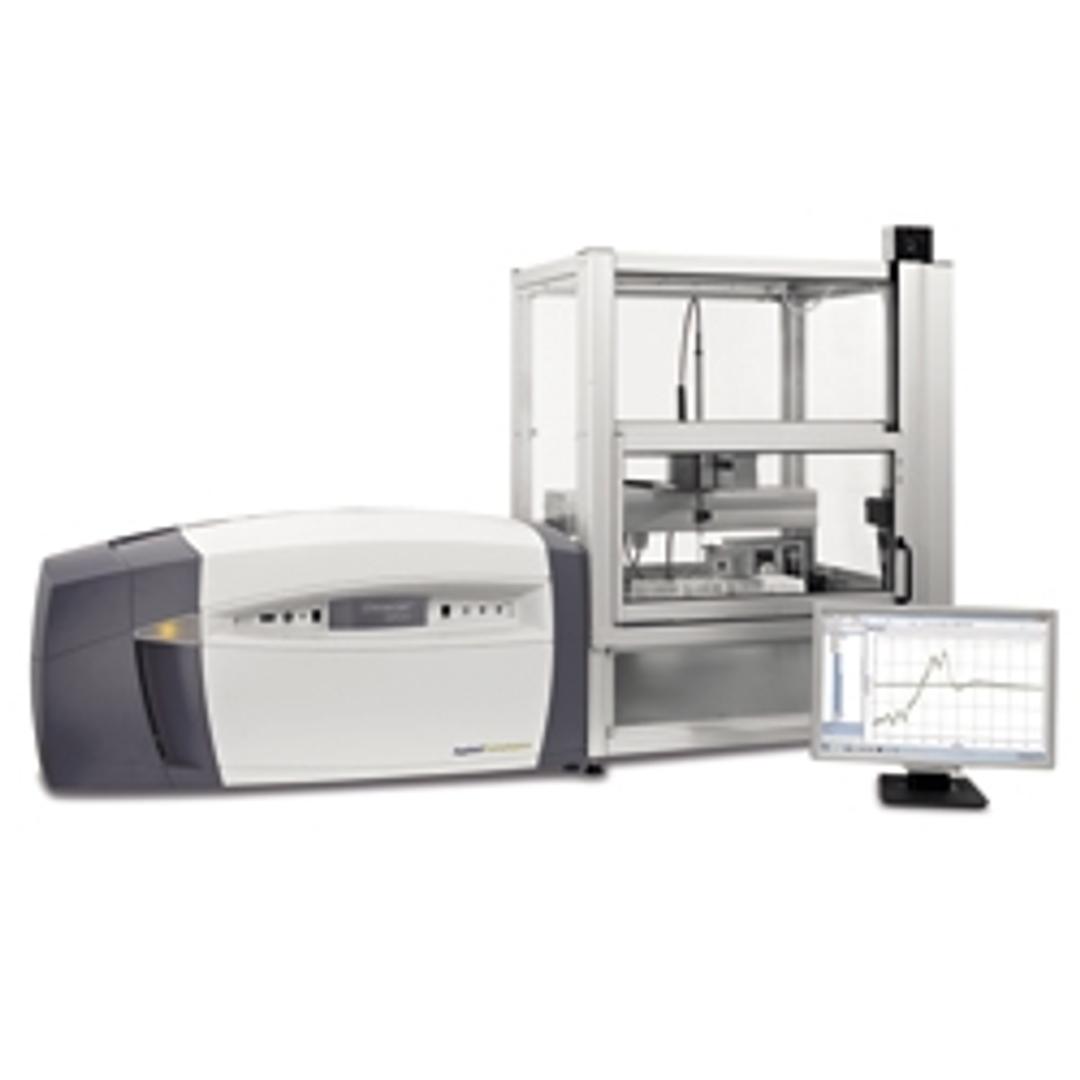
Chirascan™ Q100 Circular Dichroism Spectrometer
Unmatched Productivity and Performance

The supplier does not provide quotations for this product through SelectScience. You can search for similar products in our Product Directory.
The Chirascan Q100 Circular Dichroism (CD) Spectrometer offers comprehensive insight into the Higher Order Structure (HOS) characteristics of complex biomolecules. High-performance CD spectrometry and reproducible robotics combine to produce quality data compatible with the most strict statistical analysis techniques. The outcome: objective, statistically-validated HOS comparisons. Fully integrated for unmanned operation, the Chirascan Q100 saves days of operator time, analyzing 48 buffer-sample pairs in 24 hours whereas a skilled operator can process only up to 14 samples per day on a manual system.
Ready to run
The Chirascan systems are provided with the features and accessories needed for acquisition of superior quality data from ‘day one’.
Molecular Sieve, Activated Charcoal Filter
- Removes common gas impurities
Active Nitrogen Management System
- Software-controlled
- Regulates purge gas consumption
Air-Cooled Xenon Lamp
- Up-time recorded
- Software-controlled
Monochromator
- Dual polarizing prisms maximize light throughput
- Generates horizontally, linearly polarized monochromatic light
Photoelastic Modulator
- Converts horizontally polarized light to circularly polarized light. Alternates between left- and right-handed circular polarized light
Integrated Autosampler
- Precise liquid handling and reproducibility
- Eliminate sample handling errors
- Temperature-controlled storage maintains sample integrity
Temperature-Controlled Sample Chamber
- Continuous temperature ramps (single sample mode)
- Consistent analytical conditions
Water Circulator
- Dissipates heat from sample chamber and sample storage Peltiers
Avalanche Photodiode Detector
- Maximum sensitivity (high signal: noise)
Optics-Based, MultiwaveLength Calibration
- For CD accuracy at every wavelength
Fixed Flow Cells
- Eliminates errors of cuvette handling
- Choice of pathlength to optimize concentration and absorbance
- Recognized by Chirascan Control to choose run/wash/dry protocols
Cuvettes and Holders
- Selected for far- and near-UV CD analysis of biomolecules (single sample mode)
Control and Analysis Software
- Saves time with scheduled start-up/shutdown of lamp and N2 supply
- Easily defined run parameters and store standard protocols
- Ensures O2-free conditions with N2 purge
- Fail-safe lamp switch-off if N2 flow drops
- Recognizes flow cell to choose ideal run/wash/dry protocol
HOS Comparison Software
- Create statistically-validated comparisons
Global Thermodynamic Analysis
- Obtain melting points and enthalpies from multi-wavelength, thermal denaturation experiments (single sample mode)

Assessment of Statistical Significance of minor Changes in HOS Using Circular Dichroism - A New Approach
During development of biosimilars and innovator biotherapeutics the importance of detecting minor changes in higher order structure (HOS) is well recognized. Increasing demands from regulatory authorities for objective, statistically-validatable data presents a challenge for certain data-types including circular dichroism (CD) data. This application note presents results from subjecting an IgG1 to a range of degradation conditions, comparing the resulting CD spectra followed by a rigorous statistical analysis. The significance of the differences between the datasets can be objectively evaluated leading to stronger regulatory submissions.
A Novel Approach for Objective, Quantifiable HOS Comparisons: a Biosimilar Case Study Utilizing Circular Dichroism
During biotherapeutic development a wide range of biophysical characterization techniques are required to support informed decisionmaking and contribute to the totality of evidence in regulatory submissions. Regulatory authorities are increasing their demand for ‘state-of-the-art’ techniques that can provide statistically-validatable data. To date, obtaining such results for higher order structure (HOS) comparisons has presented challenges in terms of data acquisition and suitability of statistical methods. This application note presents a novel, integrated approach to HOS analysis to generate an objective, quantifiable comparison of a commerciallyavailable biotherapeutic (Fab fragment) with a biosimilar currently under development.
More Than Just α-Helix and β-Sheet: Expanding the Role of Circular Dichroism
Chirascan spectrometers go beyond the traditional use of CD. High-quality data supported by stringent statistical analysis provide unique insights into the higher order structure (HOS) of complex molecules.