PFAS Reference Materials


Place your order directly with the manufacturer.
Dr Ehrenstorfer has decades of experience in developing quality accredited reference materials that enable laboratories to keep pace with fast-changing regulations. It constantly adds new relevant mixtures and compounds to its portfolio to address both complex, real-world analysis problems and the latest regulatory requirements. PFAS reference materials are certificated to ISO 17034 and/or ISO/IEC 17025 and are available in neat, single and mixture formats – all of which are designed to give you certainty in your analysis.
The range also includes 13C-labelled single solutions and mixtures for EPA Method 1633, EPA Method 533, EPA Method 537.1 and the EU Drinking Water Directive:
DRE-A50000793MW Mass-Labelled PFAS-24ES Extraction Mixture 1 μg/mL in Methanol:Water
DRE-A50000790MW EPA Method 533 Isotope Dilution Standard 0.5-2 μg/mL in Methanol:Water
DRE-A50000795MW EPA Method 533 Isotope Performance Standard 1-3 μg/mL in Methanol:Water
DRE-A50000791MW EPA Method 537.1 Surrogate Primary Dilution Standard 1-4 μg/mL in Methanol:Water
DRE-A50000796MW EPA Method 537 Internal Standard Primary Dilution Standard 1-4 μg/mL in Methanol:Water
DRE-A50000792MW EPA Method 1633 EIS Labelled PFAS Mixture 0.25-5 μg/mL in Methanol:Water
DRE-A50000794MW EPA Method 1633 NIS Labelled PFAS Mixture 0.25-1 μg/mL in Methanol:Water
DRE-A30000095MW EU Drinking Water Directive Labelled PFAS Mixture 2 µg/mL in Methanol:Water
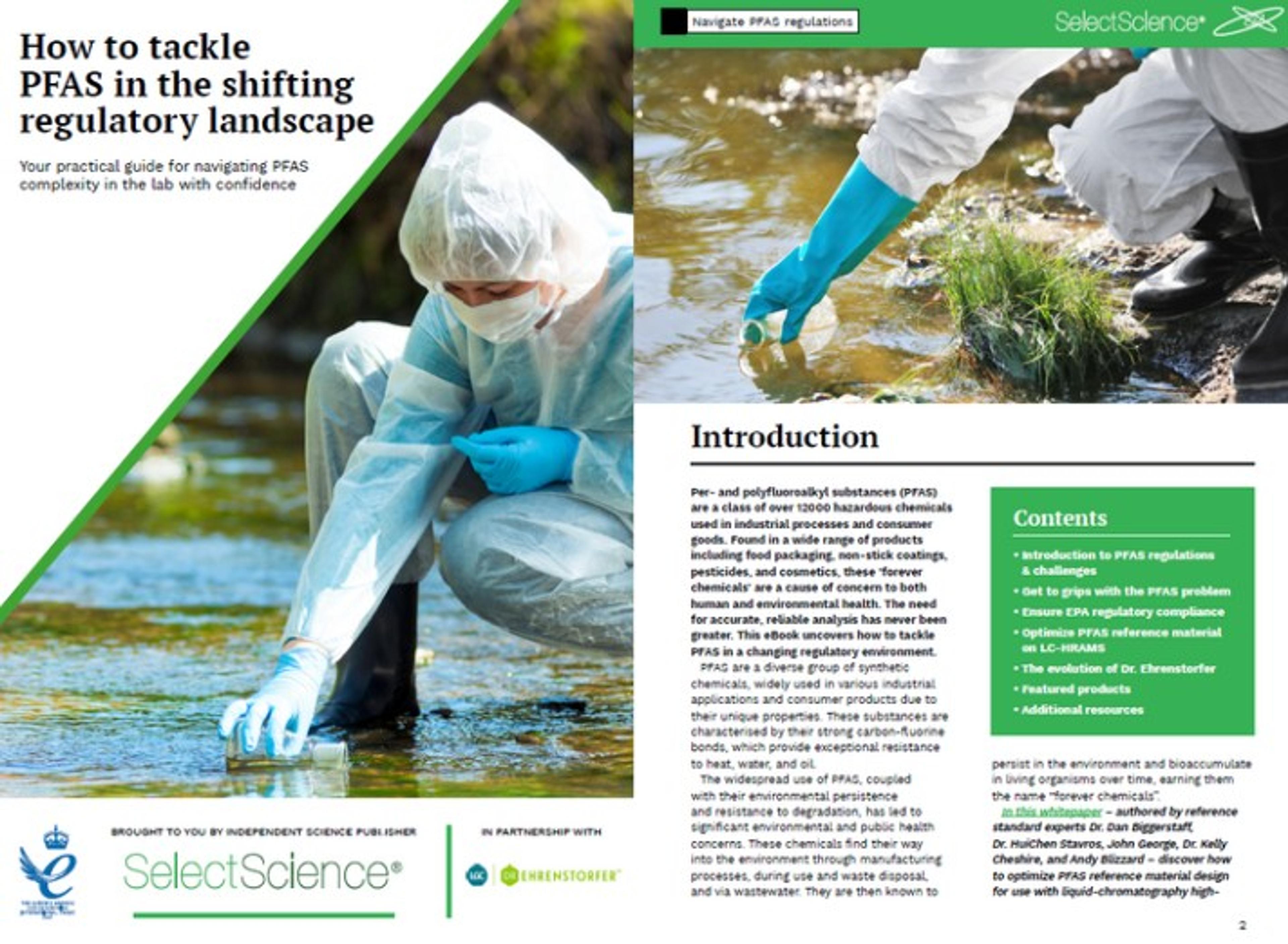
How to tackle PFAS in the shifting regulatory landscape
Per- and polyfluoroalkyl substances (PFAS) are found in a vast range of industrial and consumer products, and these ‘forever chemicals’ remain a critical concern for both human health and environmental safety. As global scrutiny intensifies, the need for accurate, reliable PFAS analysis has never been greater. Today’s laboratories must navigate a rapidly shifting regulatory environment while maintaining the highest standards of data integrity and throughput.
This SelectScience eBook, produced in partnership with LGC Dr. Ehrenstorfer, a leading provider of high-quality reference materials for environmental and food safety testing, provides a practical roadmap for scientists to manage PFAS complexity. From ensuring compliance with evolving global standards to optimizing technical workflows, this guide delivers the insights needed to build resilient and scalable PFAS testing protocols.
Inside, you will find:
- A deep dive into the current challenges facing the landscape.
- Strategies for maintaining accuracy amidst shifting global mandates.
- How to refine LC-HRAMS (Liquid Chromatography-High Resolution Accurate Mass Spectrometry) workflows.
- A look at the heritage and innovation behind industry-leading reference standards.
Whether you are establishing a new PFAS testing site or refining your existing laboratory protocols, this eBook provides the tools and knowledge to help your facility thrive.
Download now to stay ahead of the regulations and turn PFAS analysis into a strategic advantage for your lab.
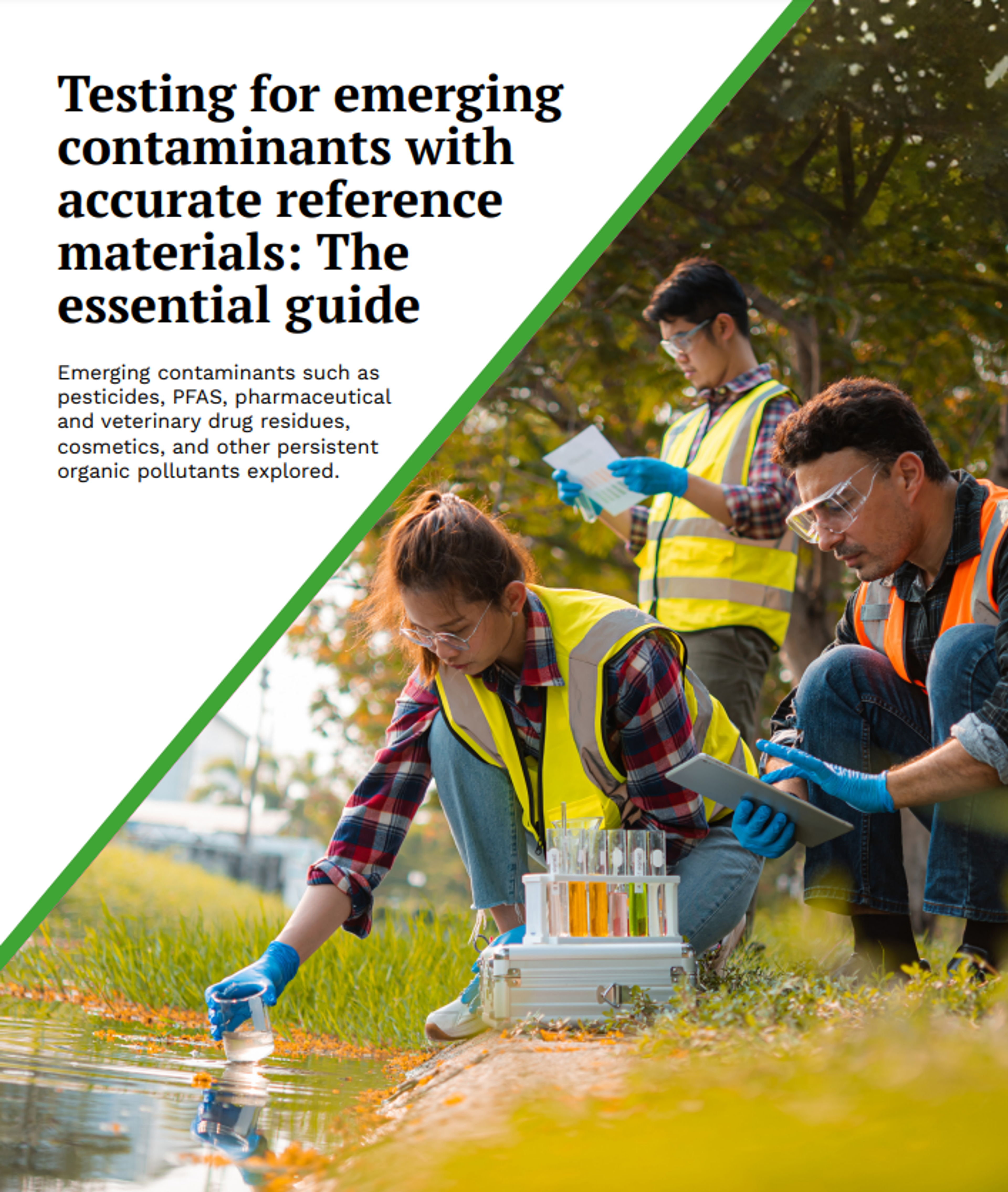
Testing for emerging contaminants with accurate reference materials: The essential guide
Surfacing contaminants in the environment such as pesticides, per- and polyfluoroalkyl substances (PFAS), pharmaceutical and veterinary drug residues, cosmetics, and other persistent organic pollutants are affecting the environment as well as public health. The challenges we face to monitor and control their existence is becoming increasingly regulated and therefore keeping within compliance of regulations is ever more important.
In this eBook, discover how new emerging contaminants are being discovered every day and learn how LGC are supporting these areas to address global concerns.
Download your free copy of this eBook to learn about:
- The importance of pesticide analysis
- Food testing and regulation to address concerns of PFAS in food
- Multiclass testing of pharma and veterinary drug residues
- Cosmetics and personal care testing

PFAS on our plate: The critical need for stronger food regulation and testing
Potentially unsafe levels of per- and polyfluorinated substances (PFAS) in food and drink have become a major global concern. LGC Standards examines the scale and severity of PFAS contamination in food in light of recent toxicology data, evaluates global regulatory progress, and considers expert opinions on the necessary steps to enhance clarity for the food industry and better safeguard public health. The impact of advancements in sample processing and analytical techniques such as liquid chromatography (LC), gas chromatography (GC), mass spectrometry (MS), high resolution mass spectrometry (HRMS), and nuclear magnetic resonance (NMR) for detecting and quantifying trace levels of PFAS across various food and packaging matrices is also reviewed.

PFAS reference material optimization to meet EPA regulatory compliance
April 24, 2025 at 14:00 BST / 15:00 CEST / 09:00 EDT / 06:00 PDT
PFAS contamination in drinking water is regulated by the EPA, and compliance is crucial to protect human, animal and environmental health. In order to efficiently monitor PFAS contamination, we must accurately identify and quantify PFAS in various samples and understand how different PFAS analytes in reference materials and sample vials react to solvents and surface interactions.
Join LGC Standards Technical Director, Dr. Dan Biggerstaff, and Segment Manager, Dr. Kelly Cheshire, as they discuss the research exploring the parameters that impact data integrity with the analytes in EPA Method 1633, UCMR 5 and EU DWD. They will also explain the work performed investigating response factors to arrive at the optimum reference material design, and share how this can be implemented to improve efficiency, free up resources, and give you confidence in your results.
Certificate of attendance
If you attend the live webinar, you will automatically receive a certificate of attendance, including a learning outcomes summary, for continuing education purposes.
If you view the on-demand webinar, you can request a certificate of attendance by emailing editor@selectscience.net.
Webinar details
- Cost: Free to attend
- Location: Online
- Duration: 60 minutes
Registration is required to secure your place. If you register but can’t attend live, you will receive a link to the on‑demand recording once it becomes available.
Monitoring PFAS with LGC Standards reference materials
Dive into the world of PFAS, commonly known as 'forever chemicals'. These man-made substances are found in everyday products and are notorious for their persistence in the environment and the human body. Learn about what industries they are used in, how they enter the environment, and how LGC Standards' reference materials and technologies provide innovative solutions to detect and monitor PFAS.

Tackling the PFAS challenge
Explore the uncertainty surrounding PFAS, their profound health and environmental impacts, and the ongoing challenges in establishing effective cleanup strategies