DRAGEN™
A suite of bioinformatics pipelines to process NGS data and maximise genomic discovery.





Receive your quote directly from the manufacturer.
llumina DRAGEN (Dynamic Read Analysis for GENomics) secondary analysis enables labs of all sizes and disciplines to maximize the value of the genome with powerful, cutting-edge data analysis tools. DRAGEN secondary analysis provides accurate, comprehensive, and highly efficient bioinformatics with multiple deployment options, applications, and pipelines to meet your research needs.
For Research Use Only
Not for use in diagnostic procedures (except as specifically noted).
Brochures
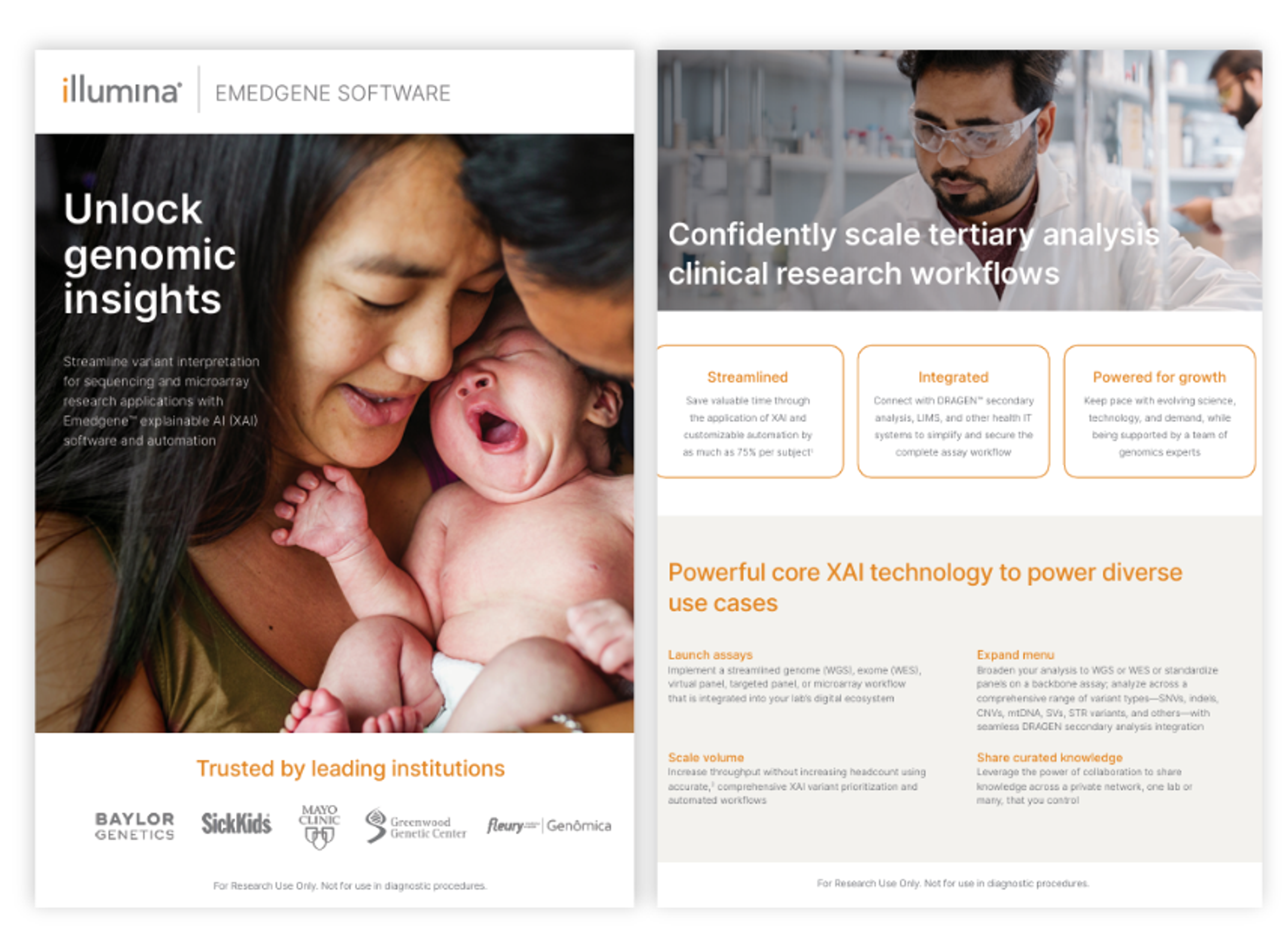
Unlock genomic insights with Emedgene software
In this brochure, Illumina presents Emedgene™, an AI-powered solution that streamlines variant interpretation for sequencing and microarray research applications. Find out how Emedgene accelerates tertiary analysis workflows by up to 75% per subject, integrates with DRAGEN™ Secondary Analysis, LIMS, and other lab informatics systems, and supports diverse workflows. Features include scalable throughput, comprehensive variant coverage, and collaborative knowledge sharing across private networks, enabling labs to expand their assay menu while maintaining accuracy and efficiency.
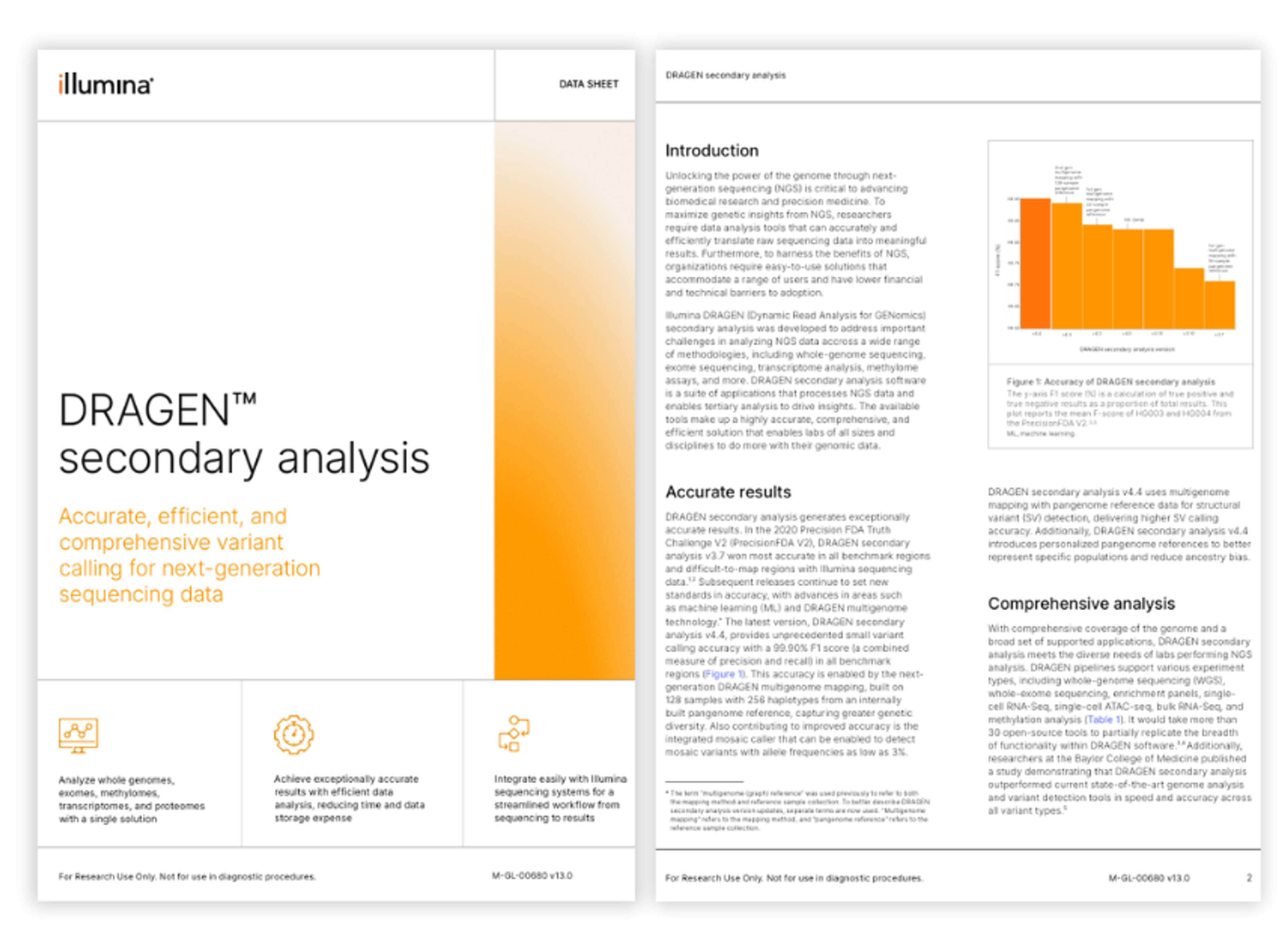
DRAGEN secondary analysis
In this data sheet, Illumina introduces DRAGEN™ secondary analysis, a high-performance suite of tools designed to process next-generation sequencing data and convert raw sequencing output into insights. Find out how DRAGEN supports multiple sequencing applications, including whole-genome, exome, transcriptome, and methylome analysis, all while delivering high accuracy, efficiency, and scalability.
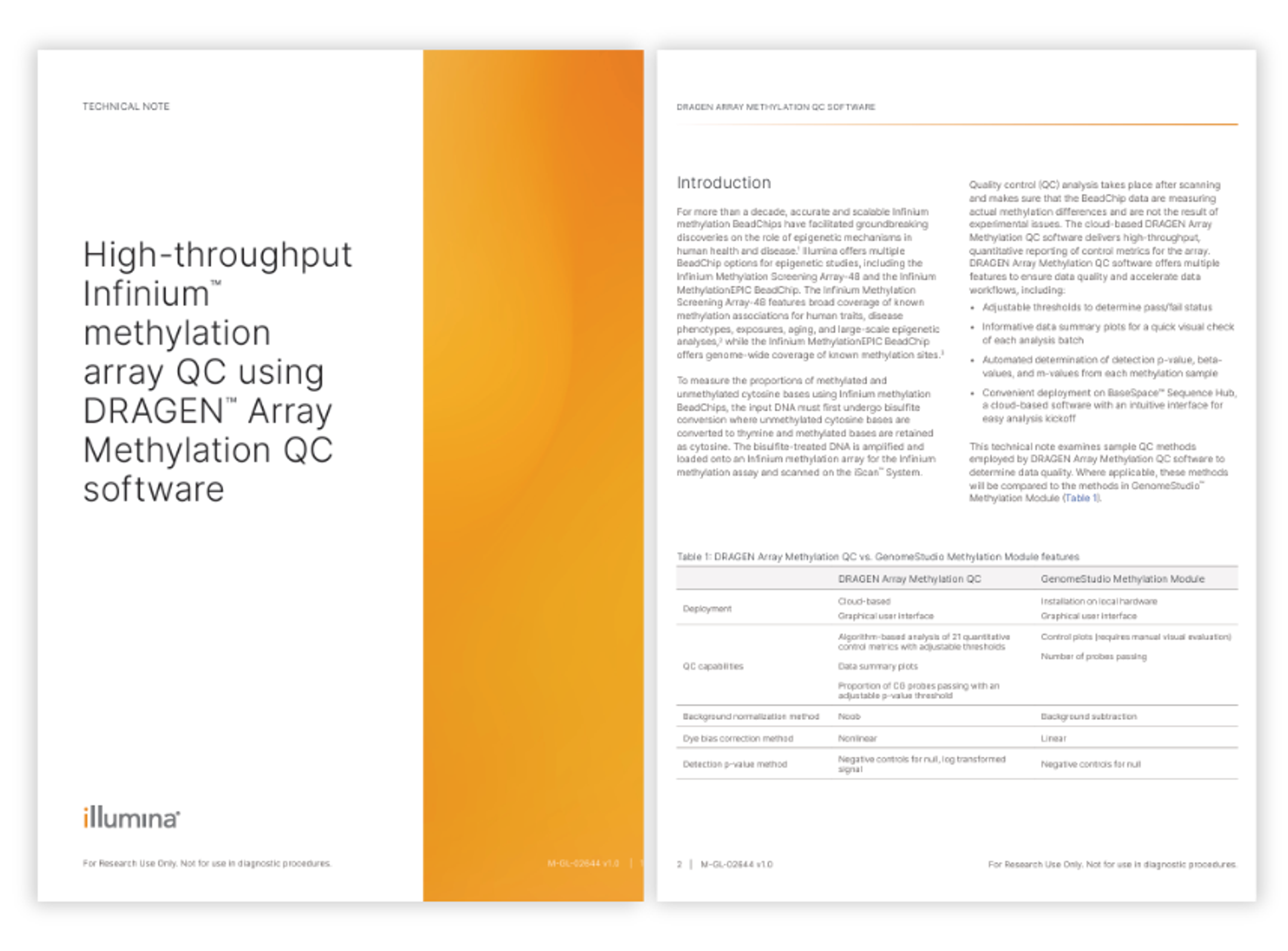
High-throughput Infinium methylation array QC using DRAGEN Array Methylation QC software
In this technical note, Illumina describes how the DRAGEN™ Array Methylation QC software performs quality control analysis for data generated from Infinium methylation arrays. Illumina outlines the workflow for methylation analysis, from bisulfite conversion and array processing to scanning and QC, and visual data summaries.
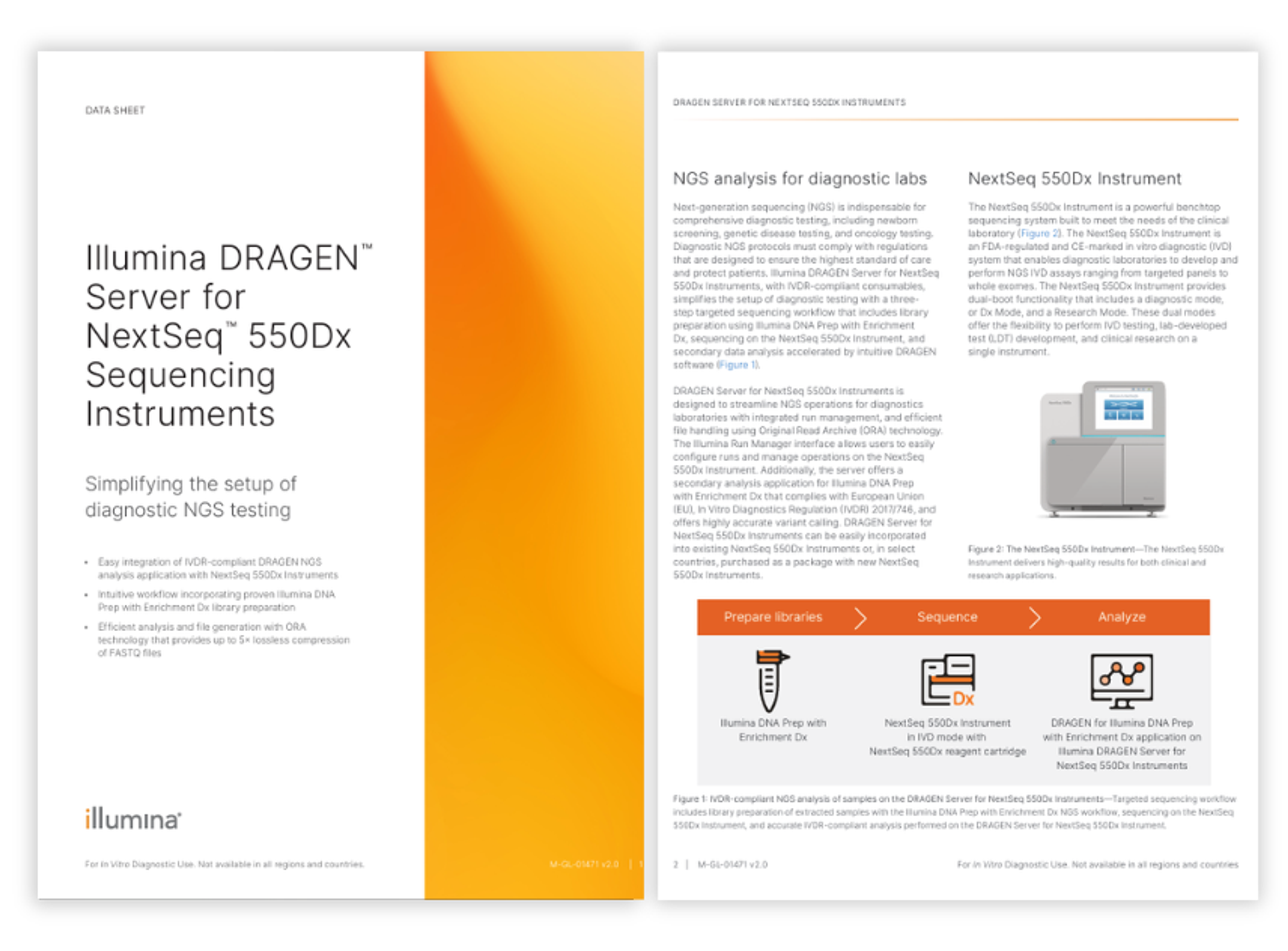
Illumina DRAGEN Server for NextSeq 550Dx Sequencing Instruments
In this data sheet, Illumina presents the DRAGEN™ Server for NextSeq™ 550Dx, a solution designed to streamline diagnostic next-generation sequencing workflows. Illumina details a targeted sequencing workflow, including library preparation with Illumina DNA Prep with Enrichment Dx, sequencing on the NextSeq 550Dx Instrument, and accelerated secondary analysis with DRAGEN software, while ensuring compliance with EU In Vitro Diagnostics Regulation (IVDR 2017/746).
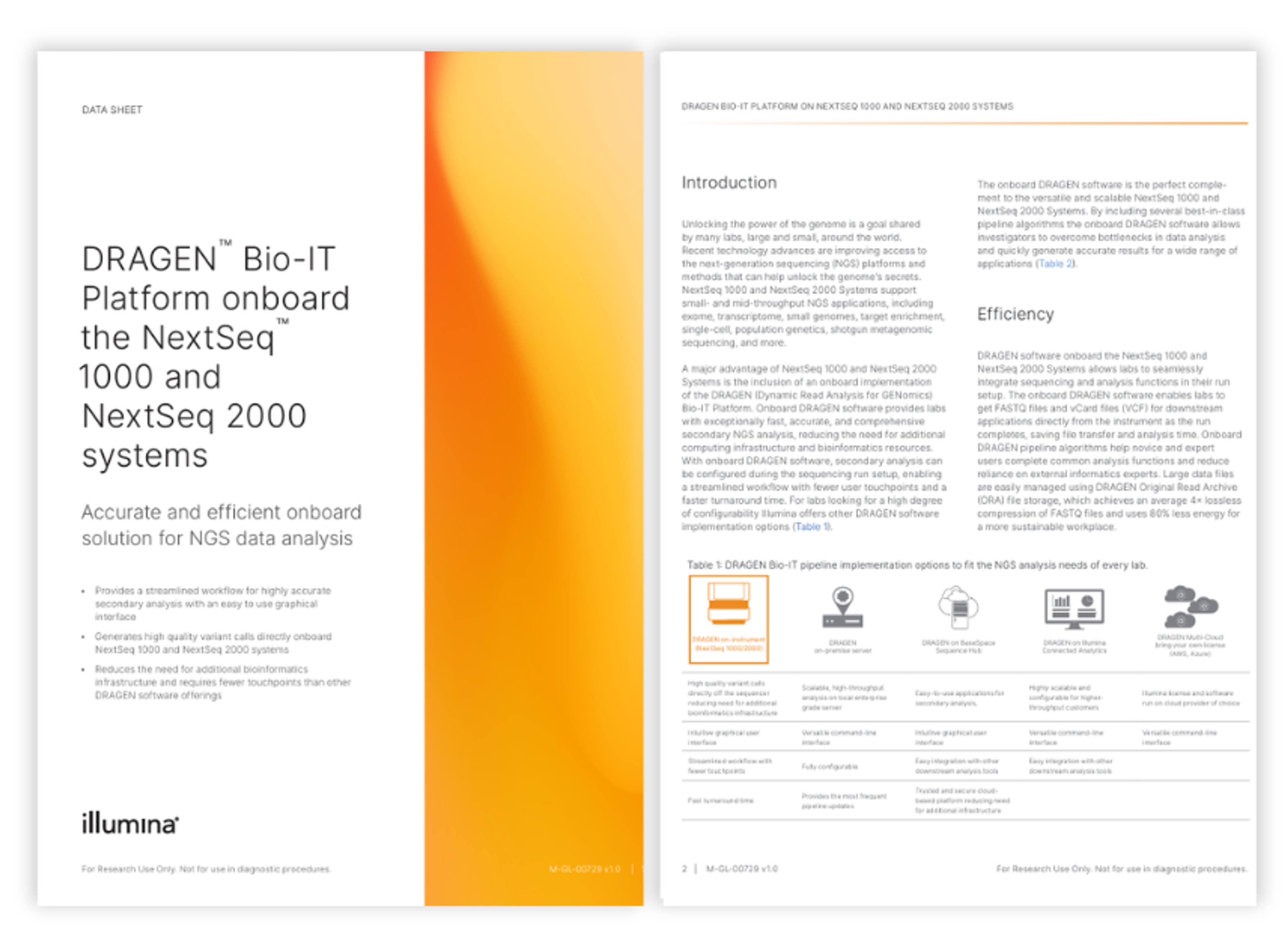
DRAGEN Bio-IT Platform onboard the NextSeq 1000 and NextSeq 2000 systems
In this data sheet, Illumina describes how the DRAGEN™ Bio-IT Platform is integrated into the NextSeq™ 1000 System and NextSeq 2000 System to provide fast and accurate secondary analysis for next-generation sequencing workflows. Discover how onboard DRAGEN software enables streamlined data processing during sequencing run setup, reducing the need for additional computing infrastructure while supporting a wide range of NGS applications, including exome, transcriptome, targeted sequencing, metagenomics, and single-cell analysis.
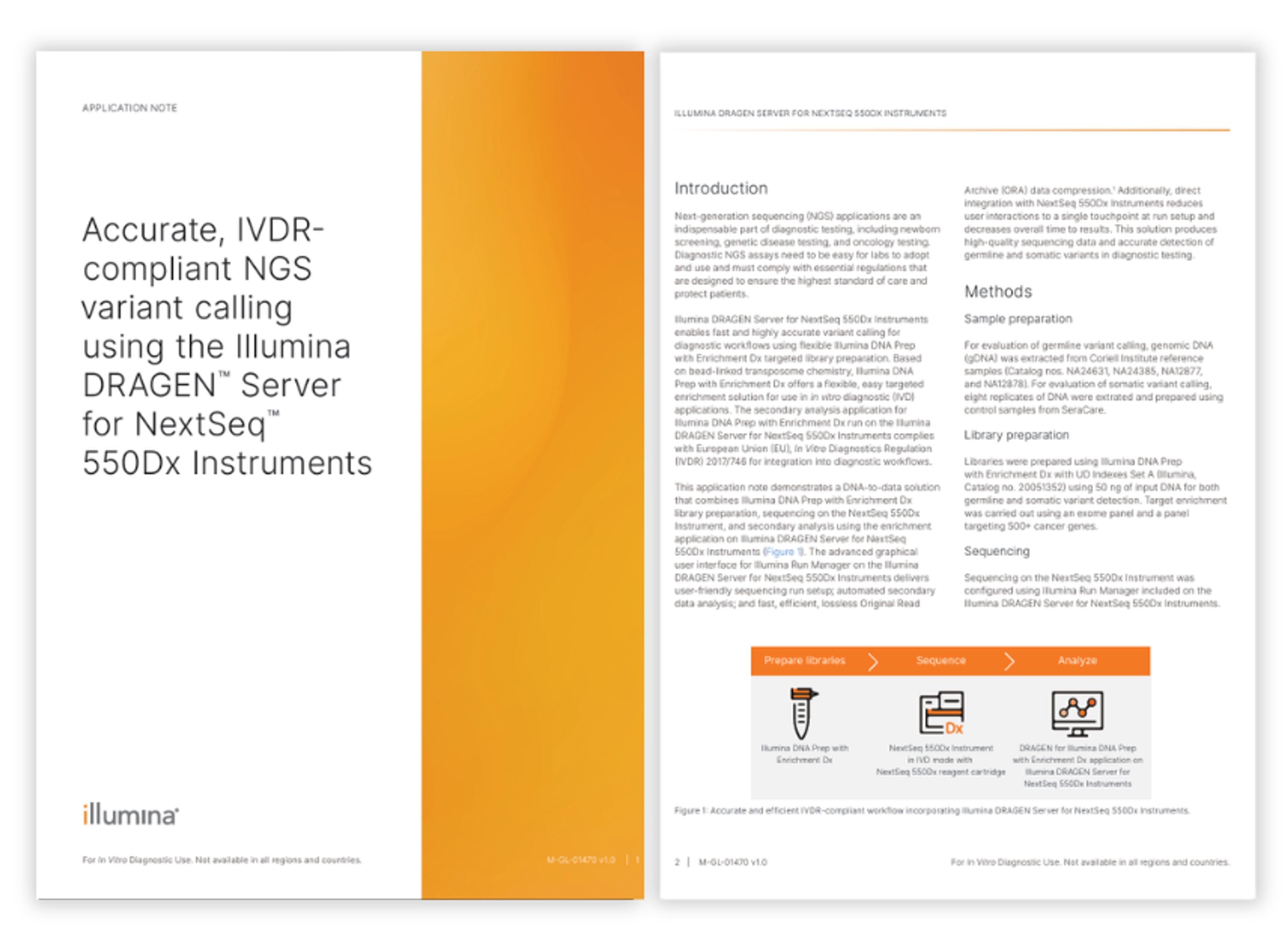
Accurate, IVDR compliant NGS variant calling using the Illumina DRAGEN Server for NextSeq 550Dx Instruments
In this application note, Illumina highlights how the DRAGEN™ Server for NextSeq™ 550Dx enables fast and highly accurate variant calling for diagnostic next-generation sequencing workflows. Illumina describes a complete DNA-to-data solution combining Illumina DNA Prep with Enrichment Dx library preparation, sequencing on the NextSeq 550Dx Instrument, and secondary analysis with DRAGEN software, and demonstrates how this workflow supports flexible, easy-to-use targeted enrichment for in vitro diagnostic applications.
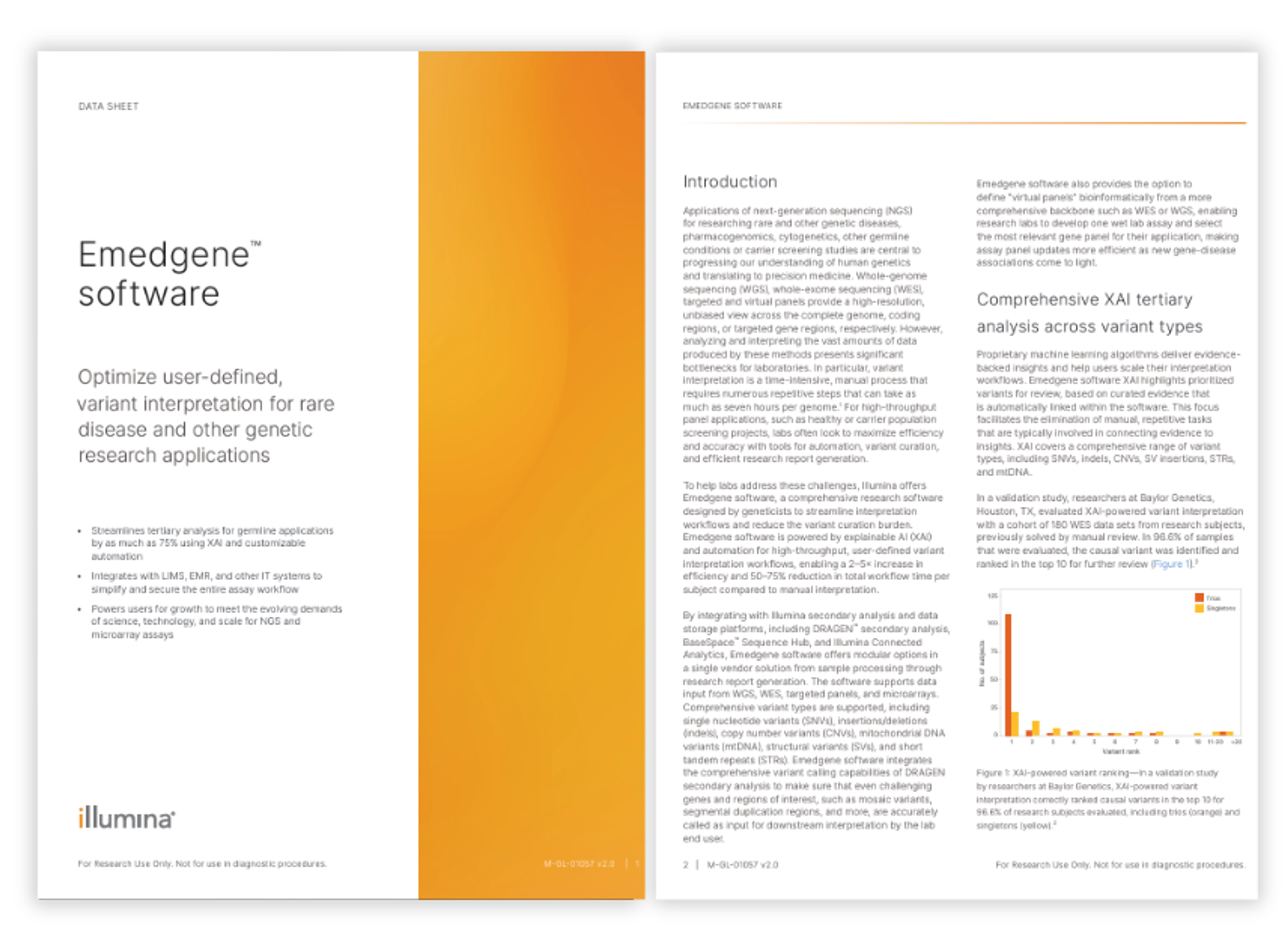
Emedgene software
In this data sheet, Illumina highlights Emedgene™, a research software designed to streamline variant interpretation workflows for next-generation sequencing applications. Emedgene integrates with Illumina secondary analysis and data platforms, including DRAGEN™ Secondary Analysis, and accepts input from WGS, WES, targeted panels, and microarrays, covering comprehensive variant types for streamlined research report generation.
Unlock genomic insights with DRAGEN
Discover how breakthrough genomics innovations are reshaping healthcare and agriculture. This video spotlights the DRAGEN™ platform, delivering unmatched accuracy and speed in secondary analysis, including 99.89% germline whole‑genome small‑variant calling accuracy. See how DRAGEN accelerates genomic insights, performs complex analyses up to 10× faster than traditional methods, and helps unlock the full potential of modern genomic research.