
CycloGraph<sup>™</sup>: Adventures in Separation Science
8 Oct 2008The CycloGraph system is a centrifugally accelerated device for performing preparative thin layer radial separations of up to 4grams of sample.
The separations occur quickly with no need for scraping separated bands as with traditional Thin Layer Chromatography. Initial fractions are collected within 15-20 minutes. The compound to be separated is applied as a solution inside the absorbent ring of the pre-cast silica gel Rotor by way of the solvent pump or hand held syringe. The initial mobile phase is then pumped through the adsorbent layer. The components of the compound are effectively separated just as on a TLC plate using the sample mobile phase. As the individual component rings reach the outer rim of the Rotor they are spun off the edge of the glass and are collected via the port at the bottom of the annular chamber. This method is less expensive and uses less solvent than flash chromatography.
Key Feature of the Cyclograph:
- Variable speed control (100-1400rpm)
- Integrated 4 watt UV lamp for hands-free viewing of separations
- Ultra quiet, variable speed Solvent Pump 90-15ml/min)
- Compatible with all common chromatography solvents including acetic acid
- Adjustable plane angle setting (0-45 degrees)
Related products
Request Quote for All Products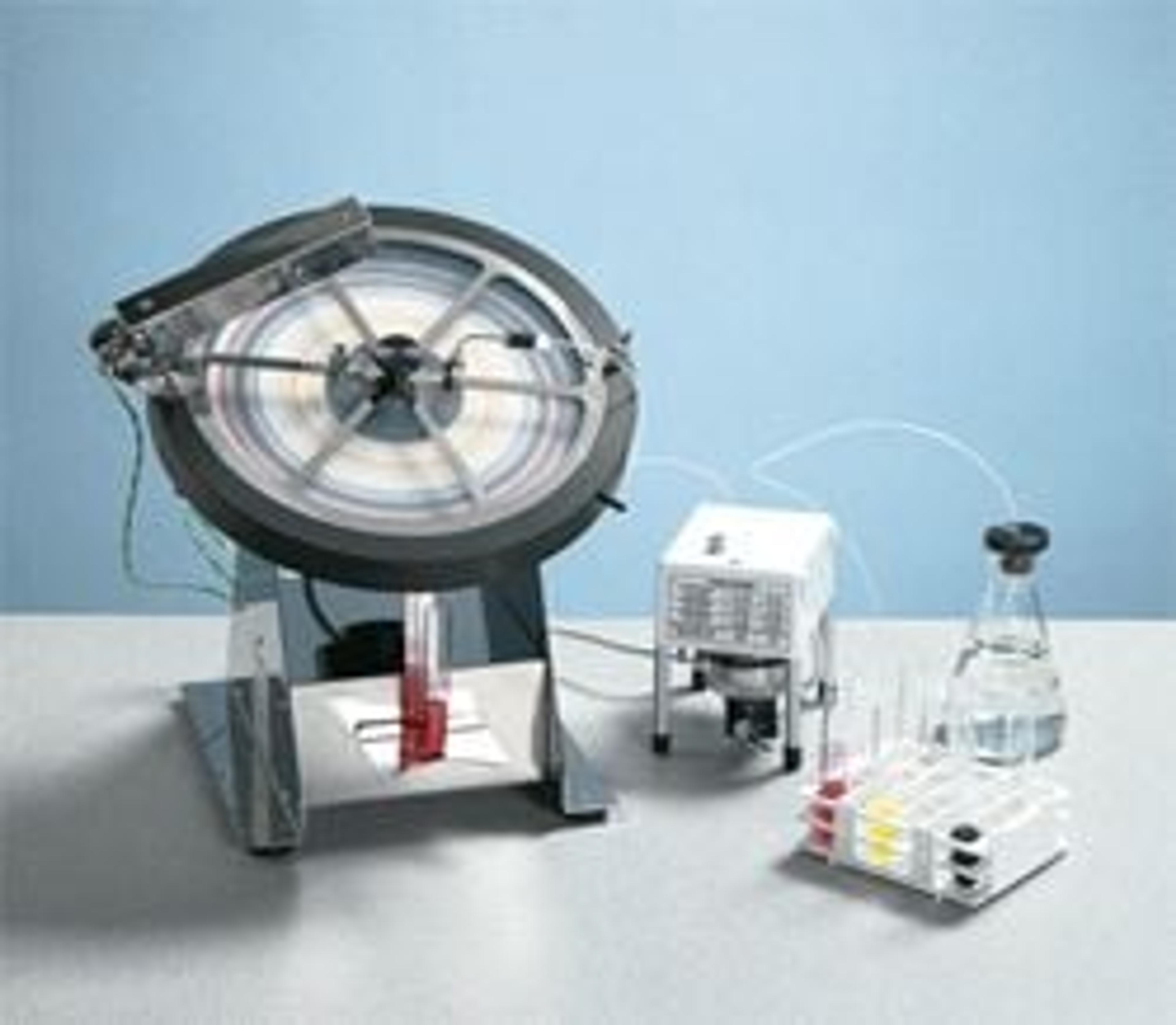
Cyclograph Deluxe Centrifugal Chromatography Device
Analtech Inc.The CycloGraph system is a centrifugally accelerated device for performing preparative thin layer radial separations. The separations occur quickly (within 20 minutes) with no need for scraping separated bands as with traditional Thin Layer Chromatography. Principle of Operation The compound to be separated is applied as a solution inside the adsorbent ring of the pre-cast Rotor (Analtechs prepared consumable for this device) by way of a solvent pump or hand held syringe. The chosen solvent mixture is then pumped (at an appropriate speed) through the adsorbent layer effectively separating the individual components as a result of their different affinities for the layer and solvent mixture. As the individual rings reach the outer rim of the Rotor they are spun off the edge of the glass and collected in the special circular trough. The angle of the trough allows the eluent to collect at the bottom and drop out the collection port.