How Analytik Jena's technologies safeguard the circular economy of valuable metals
Dwindling resources and increasing demand for valuable metals illustrates the importance of the technologies used to assist in ensuring a sustainable circular economy
19 Jan 2023
Industry news
While copper and precious metals are essential components in the electronics and semi-conductor industries, lithium has also developed into one of the most important raw materials for rechargeable batteries and therefore the entire consumer electronics sector. The path from ore to metal is still very complicated. In addition to ore production, the extraction of metals to obtain the highest purity is a complex process. Only extremely precise and accurate analysis makes it possible to detect very low and ultra-traces, particularly in metal recycling. Analytik Jena provides an important contribution to a sustainable circular economy with their innovative technologies.
In contrast to precious metals, metals do not exist in their pure form but are bound in minerals and ores – which are sometimes very widely distributed, or sometimes only found in a few areas and in very low concentrations in the ore. Nevertheless, their extraction and recovery are worthwhile, because dwindling resources and an increasing demand for these valuable metals go hand-in-hand. It is therefore absolutely essential to extract and reuse scrap metal within the scope of metal recycling. This sustainable circular economy will continue to become increasingly significant.
However, the production and recovery of metals is highly complex and requires extreme precision to meet the high application requirements such metals need to meet. The accurate quantification of the metal that actually needs analyzing is affected by the content of other base metals such as copper, cobalt, chromium, nickel, iron or zinc and trace elements (through additives or contaminants).
High-performance atomic absorption with the contrAA and novAA 800 series
In the initial process steps of the value chain, numerous raw materials must be analyzed to obtain detailed specifications about the starting material. This involves the quantification of the main contents and concentrations of elements, primarily by means of flame atomic absorption spectrometry (AAS). The highly efficient instrument series of Analytik Jena, contrAA and novAA 800, master these tasks easily and cost-effectively.
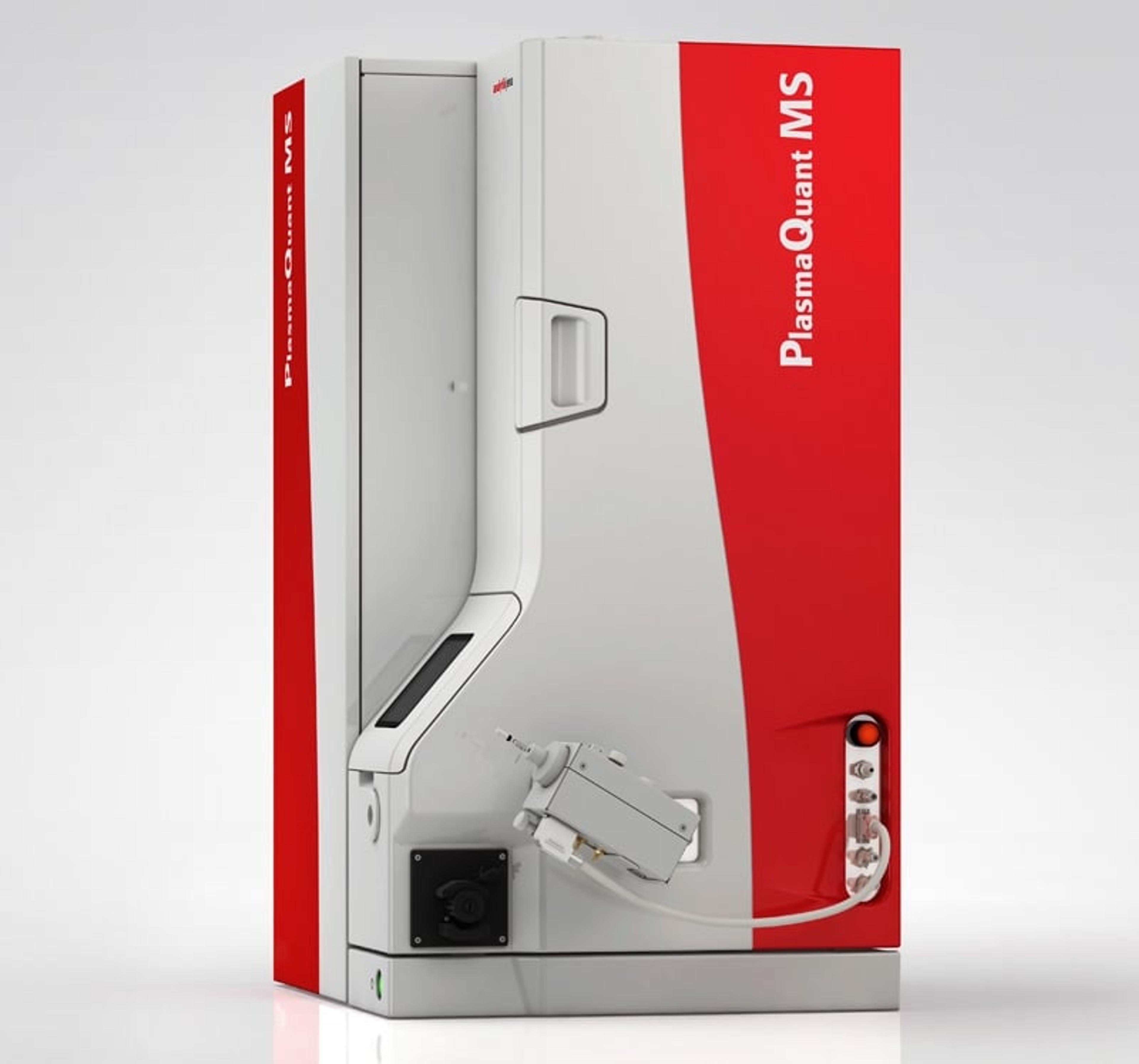
Detecting ultra-traces with PlasmaQuant 9100 and PlasmaQuant MS
Trace and ultra-trace elements can significantly affect the quality of high-purity metals or alloys, which is why their detection and subsequent elimination require even greater accuracy and precision. This is where the high-resolution PlasmaQuant 9100 ICP-OES series and the highly sensitive PlasmaQuant 9100 ICP-MS series offer maximum performance, and thus reliability and efficiency.
The AAS, ICP-OES and ICP-MS technologies offered by Analytik Jena are extremely well designed for the special requirements that need to be met in the individual phases of the value chain:
Robustness & user friendliness
Especially the exploration of possible mining sites and the mining itself often take place under harsh environmental conditions and in very remote locations – not infrequently at very high altitudes. Air pressure and oxygen content are very low in such environments and can strongly affect the measurements. Suitable laboratory equipment is also usually rare in such locations. The analysis instruments offered by Analytik Jena are designed for such circumstances: user-friendly, easy to set up and if necessary, easy to use by personnel without in-depth specialist training.
The availability of consumer materials at the mining sites is often just as rare as oxygen saturation. Rare or special chemicals are often difficult to obtain. The instruments therefore should not pose unreasonable demands, but should still meet the necessary high requirements. The all-rounder in elemental analysis, the novAA 800, for example, can be operated with LPG gas, which is available even in the most remote places on earth.
Sensitivity & precision
The analytical instruments must be highly sensitive, accurate and precise due to the low concentrations of metals in the ores and the adverse effect of other metal present in the sample. The solutions designed by Analytik Jena offer suitable analytical methods for the quantification of even very low metal content in ores, contaminants in pure metals and for monitoring treatment processes. With their high sensitivity and low detection limits, the PlasmaQuant 9100 series and the PlasmaQuant MS series cover the entire concentration range – with peak performance offered by the PlasmaQuant 9100 Elite and PlasmaQuant MS Elite.
Automation & economic efficiency
As the quantity of samples for such routine applications is constantly growing, analytical instruments must meet the increased sampling rate through automation and/or innovative analytical techniques. This not only ensures improved throughput rates, it also reduces the overall costs for analysis and opens up resources for the workforce. The high sample throughput, especially of the PlasmaQuant MS Q makes it possible.