
PFAS contamination in drinking water – tackling the challenge of extraction with automated SPE
Meet the scientists at Aqua Pennsylvania who are streamlining EPA method 537 to increase water sample throughput
5 Apr 2020
Perfluoroalkyl and polyfluoroalkyl substance (PFAS) contamination of drinking water has made national news headlines and even the big screen– so, what are PFAS, why should we be concerned and what is happening to protect our water supplies?

PFAS compounds are manmade chemicals produced over the past decades that can be found in numerous everyday products, from non-stick cooking pans to carpets, cleaning products, paints, and firefighting foams. The structure of these complex compounds, which incorporates chains of carbon-fluorine bonds, means that they do not break down easily, and as a result, can accumulate in the environment – including in water systems. For example, in the United States the most widespread PFAS chemicals, perfluorinated alkyl acid (PFOA) and perfluorooctanesulfonic acid (PFOS), remain in the environment despite no longer being produced in the US.
The longevity of PFAS is a particular concern as research has suggested they pose a risk to human health, with some studies indicating adverse effects on development, reproduction, liver function and the immune system of laboratory animals. As a result, it has become increasingly important to test drinking water and other water samples for the presence of both PFOA and PFOS, as well as an expanding list of new PFAS chemicals.
Aqua Pennsylvania, a subsidiary of Aqua America, is a water and wastewater utility company committed to ensuring the safety of drinking water. The company currently runs analysis of seven PFAS compounds – PFBS, PFHxA, PFHpA, PFHxS, PFOA, PFNA and PFOS. In this interview, we speak with Alicia Beauchamp, Chemist III at Aqua Pennsylvania, to find out how she implements EPA method 537 to detect PFAS in drinking water and how automated solid phase extraction (SPE) technology is helping to increase laboratory throughput.
Why is it so important to test for PFAS chemicals in water?
Some recent studies suggest adverse health effects from some PFAS compounds. As a result of the Unregulated Contaminant Monitoring Rule 3 (UCMR 3), there has been an increase in the need to test for these compounds in water. UCMR 3 required select water systems throughout the United States to test for six PFAS compounds – PFBS, PFHpA, PFHxS, PFOA, PFNA and PFOS. The results of UCMR 3 provided nationwide occurrence data of PFAS compounds in drinking water – the suspected major sources of contamination were military bases and firefighting foams.
What are some of the challenges when testing PFAS in water post -UCMR 3?
Post-UCMR 3, in 2016, the EPA established a health advisory for PFOS and PFOA in drinking water of a combined 70 ng/L. Some of the challenges in testing were deciding which target PFAS analytes should be monitored and what Minimum Reporting Levels (MRL) should be set. During UCMR 3, the MRLs were in the range of 10-40 ng/L; subsequently, post-UCMR 3, there was a desire for much lower MRLs. There was also a need to analyze sample matrices other than drinking water.
In November 2016, Aqua set up the ability to analyze for PFAS compounds by EPA method 537. This included the purchase of an LC/MS/MS system, two evaporative concentration units and four Biotage® solid phase extraction units. The Minimum Reporting Levels set up using this workflow were in the range of 2.2 -2.5 ng/L.
Can you talk us through your analysis?
Method 537 is a method established by the EPA for the analysis of PFAS in drinking water. The method utilizes SPE followed by LC/MS/MS analysis and encompasses detection of 14 PFAS compounds. When initially setting up the ability to analyze PFAS compounds, method 537 was the only EPA-approved method for PFAS analysis in drinking water. Since we currently hold certification for method 537 in two states, Pennsylvania and New Jersey, the method is followed explicitly, meaning that all extraction steps and procedures for the automated extraction process are followed.
How does the Biotage® Horizon SmartPrep automated system help your analysis and what benefits have you seen as a result?
EPA Method 537 requires the use of SPE using a polystyrene-divinylbenzene (SDVB) cartridge. Currently, we are running many samples through the four extractors every week, including all required QC from the method. In addition to drinking water samples, we also run operational raw surface water samples, raw groundwater samples, as well as treatment study samples and treatment monitoring samples that have been filtered using granular activated carbon (GAC) and ion-exchange in an effort to reduce PFAS levels.
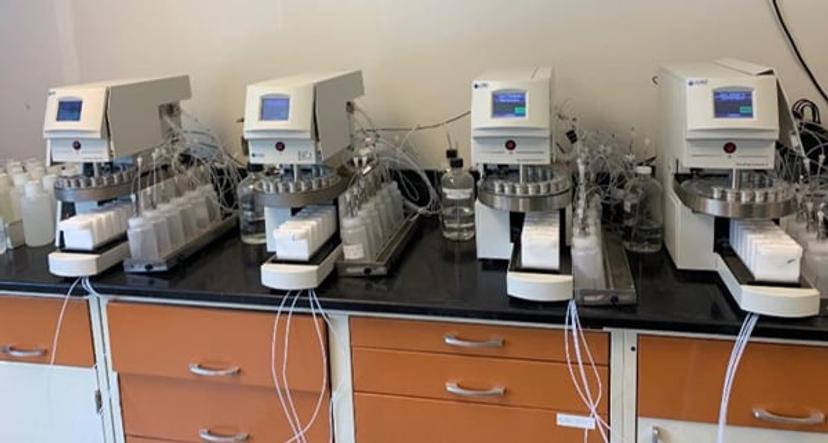
The biggest benefit of having the four Biotage extractors is the number of samples that we can run. It takes a short amount of time for an analyst to set up samples on the extractors and after the samples are set up the extractors can be run unattended until completed. With the four extraction units, we have the ability to run 20 samples in a compliance batch and that takes about six hours – to a water utility laboratory, that's a large amount of sample volume. It ultimately leads to a quicker turnaround time – the analysis is in-house, so we get the results quicker, and if there was any issue, action could be taken sooner. Thankfully, all our drinking water samples have been under the EPA health advisory of 70 ng/L.
What trends do you expect to see in the future in terms of methodology and the compounds you test?
I think there is only going to be more testing for PFAS compounds. For example, the EPA recently released a new drinking water method, Method 533, for the analysis of PFAS compounds. Method 533 is an isotope dilution anion exchange SPE and LC/MS/MS method with the capability to analyze for 25 PFAS compounds. The method still uses SPE but instead of the SDVB cartridge an anion exchange one is used – we're looking to utilize that method and will be setting it up here using one of the Biotage extractors initially.
Do you use Biotage® products in your lab? Write a review today for your chance to win a $400 Amazon gift card>>