
Increased NGS throughput for personalized genomics with automated cell counting
Sangmi Han discusses how cell counters have become an integral part of Macrogen’s single-cell RNA sequencing workflow
20 Nov 2020
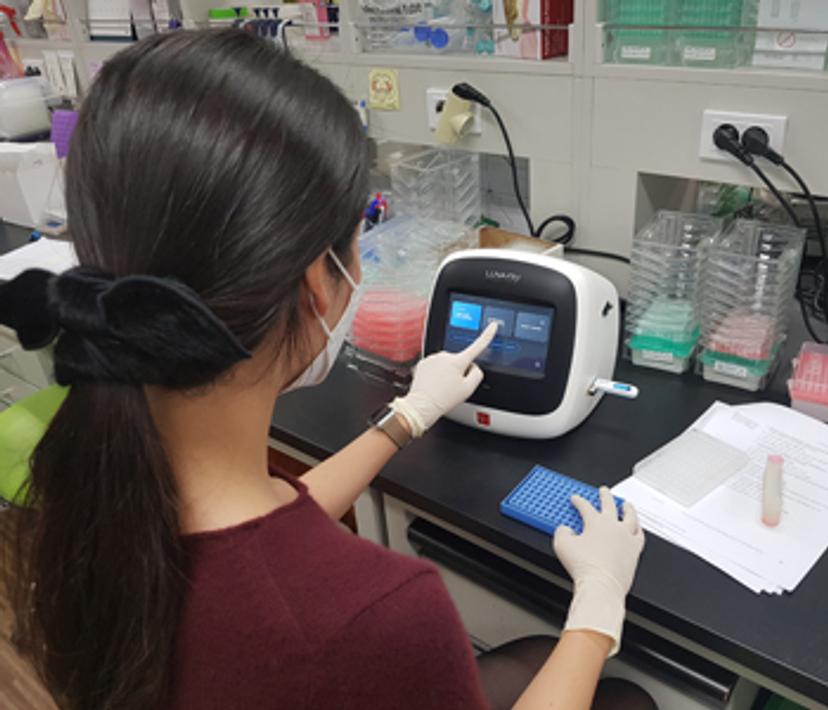
Macrogen, Inc. is a leading expert in genomic analysis, proactively seeking to improve the fields of genetic and genomic analyses through research and development. To further this mission, Macrogen is working to identify the causal genes for rare diseases with a view to building a big data system that brings together patient genomic and medical data. Using this integrated database, the team aims to help predict disease onset and prognosis, and innovate personalized medicines at an individual level.
Here, we speak with Sangmi Han, Macrogen’s Head of the Next-Generation Sequencing (NGS) Technical Services Department, about how the LUNA-FX7™ Automated Cell Counter from Logos Biosystems has increased the throughput, reliability, and accuracy of her lab’s single-cell RNA sequencing and precision medicine workflows. Han explains how these state-of-the-art cell counters are helping Macrogen to predict, prevent, and treat diseases on a personal level.
What are Macrogen's key areas of research?
SH: Macrogen is a global leader in precision medicine and biotechnology with the aim of medical innovation for the future by integrating genomic, medical, and life sciences data. We possess the world’s fifth-class genome analysis platform, sequencing and data analysis capacity, and support systematic genome research through precise genome analysis services and personalized medicine that diagnoses, treats, monitors, predicts, and prevents diseases based on the captured genomic information.
What are the intended impacts of your work on research, healthcare, and patients?
SH: I look after whole genome sequencing and metagenome sequencing for microbial identification. When accurate genomic information is obtained from customers and patients, the genes that cause a specific disease can be found based on this sequencing data. Through this genetic analysis, diagnostic kits and panels can be developed with our technology and diseases can be more accurately diagnosed, predicted, prevented, and treated, leading to a much higher quality of patient life.
Why is cell counting an important technique in your work?
SH: A current trend in the NGS market is the single-cell library where genes can be analyzed through the unique barcoding of each cell. To construct single-cell sequencing libraries, we count the cells that have been isolated from specific tissues and provided to us by customers. Since we need to perform single-cell RNA sequencing for a certain number of cells in order to enter a sufficient number of barcodes, cell counting is an essential process and must be accurate. In addition, as the demand for single-cell library construction increases, the capacity of cell counting and quality control equipment is becoming ever more important.
To ensure this high accuracy in our cell counts, we use the LUNA-FX7™ Automated Cell Counter from Logos Biosystems, the latest and most powerful in the LUNA™ Family. This instrument provides not only high accuracy but also high throughput, with the LUNA™ 8-channel slides enabling the counting of eight separate samples at once, fully assisting us in overcoming any potential difficulties we may face during our experiments. We also cross-check these results using manual counting via a microscope. As experimental analysis of single-cell libraries is conducted according to the number of target cells, cell counting is highly important. The better the input number of cells matches the output result, the more reliable the data.
What do you see for the future of your research?
SH: In the NGS market, advanced and precision kits are becoming increasingly popular and being released at a rapid rate. Comprehensive services, from companies like Macrogen, can be provided through the performance of various sequencing analyses, from human to non-human. As a result, we are sure that the use of big data will drastically increase and, due to the vast amount of data available to us, the market size of personal genomics and disease prediction and prevention services will only continue to grow.
Do you use Logos Biosystems products in your lab? Write a review today for your chance to win>>
Related products
Request Quote for All Products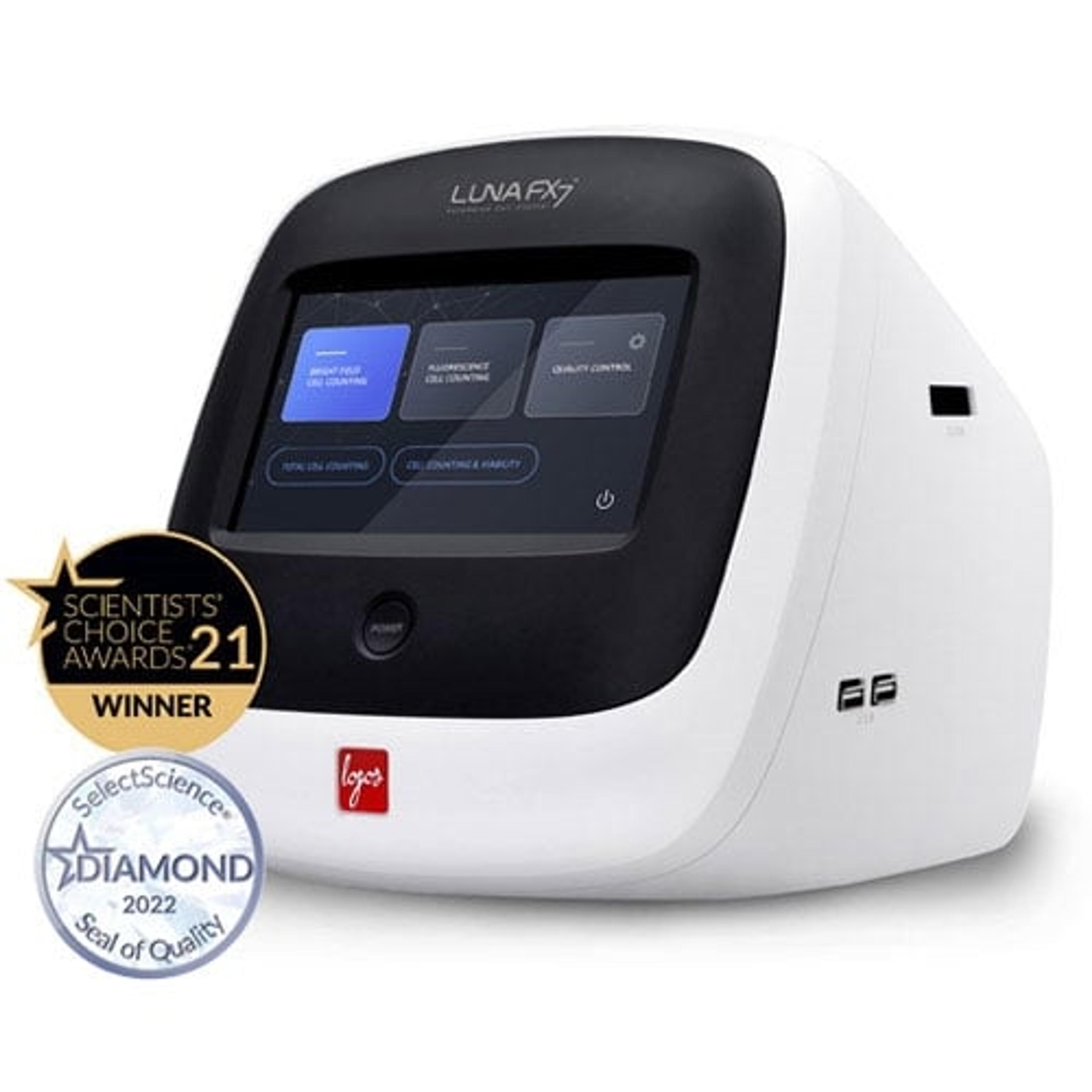
LUNA-FX7™ Automated Cell Counter
Logos BiosystemsThe LUNA-FX7™ is our most powerful cell counter to date, with unmatched cell counting accuracy, new 1, 3 and 8-chamber slide options, state of the art optics, dual fluorescent and brightfield detection, and precision autofocus. The LUNA-FX7™’s new features such as the Bioprocess mode, Quality Control mode, and the CountWire™ (21 CFR Part 11 compliant) software will help companies and facilities meet and surpass quality and regulatory requirements.