
How Non-Targeted MS Metabolite Profiling can Improve the Taste of Your Beer
Studying proteomics and metabolomics with TOF mass spectrometers from Waters
27 Jul 2015
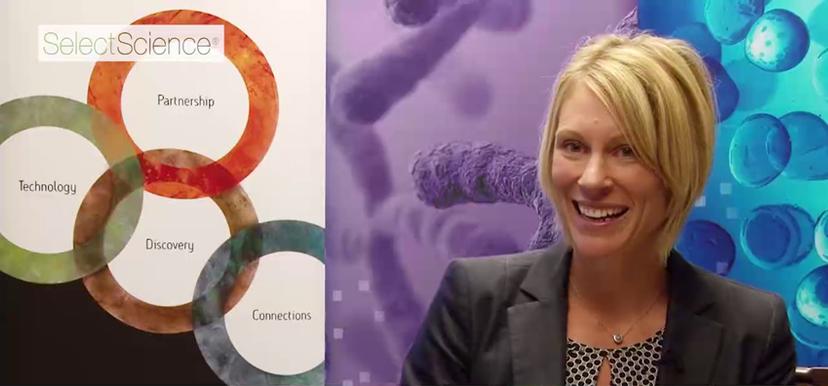
Dr Jessica Prenni, of Colorado State University
Dr Jessica Prenni, Director of Proteomics and Metabolomics Facility at Colorado State University and a Waters Center of Innovation Program honoree, uses TOF mass spectrometers in her work on protein and metabolite analysis. The use of non-targeting metabolite identification has transformed agricultural breeding approaches, offering a method to predict downstream characteristics from the presence of certain metabolites.
No-one had access to this kind of information beforehand
Dr. Jessica Prenni Colorado State University
Predicting the malting process
In the study, Dr. Prenni and her team took a large population of breeding barley lines and studied "the influence of varying different genetics, as well as the breeding environment, using duplicate lines grown in different environments", she told us. Through non-targeted metabolite profiling, Dr. Prenni "correlated the metabolites from the barley to its downstream malting quality characteristics", allowing the creation of a model that enabled her and her team to predict "a certain malting quality trait" if a particular metabolite or set of metabolites were present in the barley. Significantly, the metabolite markers were reflective of both genetic and environmental influences on the malting quality traits.
Understandably, the agricultural industry was very excited about this discovery. "No-one had access to this kind of information beforehand," explained Dr. Prenni, but this technique can be applied “to a very broad range of biological questions". "Our approach is from an analytical chemistry point of view," she went on, "so we don't have a specific biological focus area." This gives her core facility at Colorado State University high flexibility.
Mass spectrometry and non-targeted screening
Mass spectrometry has become increasingly important to Dr. Prenni's facility in recent years. "We primarily use the Waters TOF mass-spectrometers for our non-targeted screening applications,” revealed Dr. Prenni, "and the data independent acquisition mode allows us to collect the MS and MS/MS on a very fast timescale" – crucial for non-targeted screening. Dr. Prenni also explained how Waters' MSE technology allows her team to collect "all the MS/MS data we need" for complete profiling, as it records data without discrimination or pre-selection, allowing completely catalogued samples that can be re-examined at any time.

Waters Centers of Innovation
The Waters Centers of Innovation Program recognizes analytical scientists facilitating breakthroughs in health and life science research, food safety, environmental protection, sports medicine and many other areas.
The future of chromatography
Dr. Prenni is already looking to the future. In terms of chromatography, she says, the future is "microflow technology, specifically the iKey device from Waters. The robustness of the system, the sensitivity gains over analytical scale chromatography and in the significant ease of use are unmatched”, she explained, “which is especially important when going from nanoflow applications to microflow applications." However, Dr Prenni really sees the future heading towards "incorporation of ion mobility measurements with the MSe data", making this identification process even stronger.
Watch our talk with Dr Prenni and discover what else you might have missed at ASMS 2015 here
Related products
Request Quote for All Products
SYNAPT G2-Si MS
WatersTransform your lab's discovery capability with the SYNAPT G2-Si MS. Information. Informatics. Impact. SYNAPT enables extensive characterization of complex mixtures and molecules with uncompromising qualitative and quantitative performance, streamlined workflows and unparalleled platform versatility. With the SYNAPT G2-Si you get ultimate UPLC/MS/MS performance, powerful data independent & data dependant solutions, CID and ETD fragmentation capabilities, and a wide range of experimental options.
MALDI SYNAPT G2-Si High Definition Mass Spectrometry
WatersRedefining Resolution - Resolution in 3 Dimensions. MALDI SYNAPT G2-Si is a uniquely powerful and versatile MS platform. It's the only way to combine multiple dimensions of separation for analysis of complex samples, from imaging to biological research to chemical materials characterization. The MALDI SYNAPT G2-Si gives you high performance, accurate mass MALDI MS/MS, superior post-ionization separation with T-Wave IMS, High Definition Imaging (HDI) MALDI workflows, versatile experimental options, and the ultimate UPLC/MS/MS performance.
SYNAPT G2-Si HDMS
WatersThe Waters SYNAPT G2-Si High Definition Mass Spectrometry provides complete characterization of complex mixtures and molecules with unique levels of MS performance, industry leading informatics and unparalleled platform versatility.Through high-efficiency T-Wave™ ion mobility you can get superior separation, enhance the peak capacity, specificity and sensitivity of your analysis and transform your targeted and untargeted workflows. Ultimate UPLC/MS/MS performance, data independent and data dependant T-Wave IMS solution, CID and ETD fragmentation capabilities and a wide range of experimental options. This system gives you additional dimension of separation, based on molecular size and shape. It delivers a third dimension to your analysis, proven to transform your analytical perspective whatever the application.