Experts discuss the challenges and future of mycotoxin analysis in food testing
SelectScience speaks with three leading experts in mycotoxin analysis to discuss the latest developments in this field
13 Sept 2022
Editorial article

Mycotoxins are toxic metabolites produced by fungi that can grow on crops and foodstuffs such as cereals, nuts, and coffee beans. Mycotoxins can pose a significant health threat to both humans and livestock, and regulatory bodies have established guidelines for acceptable levels for food safety testing, for both animal and human food products.
Fungi that produce mycotoxins penetrate deep into foodstuffs, and concerns go beyond the ‘big six’ mycotoxin classes of aflatoxins, ochratoxin A (OTA), deoxynivalenol (DON), zearalenone (ZEN), T-2, and fumonisins (FUM). Often undetected, emerging, and multiclass mycotoxins also present a risk.
In this article, Jana Hajšlová, Head of ISO 17025 Accredited Laboratory for Food Quality and Safety, UCT Prague, Dwayne Schrunk, Laboratory Manager of Analytical Chemistry Services, Veterinary Diagnostic Laboratory (VDL) at Iowa State University, and Dr. Olaf Scheibner, Team Leader Applied Market Support, EMEA, Thermo Fisher Scientific, discuss the analytical mycotoxin testing landscape and what it may hold for the future of food safety.
Q: What changes have you seen in the past two years in mycotoxin contaminant testing and characterization, including the technologies used?
JH: We are moving away from single mycotoxin methods. We are moving to integrate them into one run. It's even possible when using high-resolution mass spectrometry to easily integrate mycotoxins together with pesticide analysis. So, you have a great chance to improve your efficiency by screening both toxins and, let's say, fungicides. So that might be used for crop protection.
DS: The biggest change in the last several years is that labs are finally at least being able to get an LC-MS/MS system and incorporate everything into one run for mycotoxins. But I think that a lot of laboratories like ours, are not able to incorporate some of those newer or novel mycotoxins because we do not have ways to interpret them. So, the next step for me is doing some work with those mycotoxins and figuring out what are the toxicokinetics of them or the toxic effects of them.
OS: As a mass spectrometrist, I'm always thinking very much of mass spectrometry. I see lots of mass spectrometry labs, but there are way more that do not use mass spectrometry yet for various reasons. And one of those is that samples of course must be suitable for mass spectrometry. But the drive for lower sensitivities is pushing more labs into mass spectrometry.
Q. As experts in mycotoxin contaminant testing with analytical techniques like chromatography and mass spectrometry, what method expansion are you working on and why?
JH: I have been working in the field of mycotoxins for more than two decades. We are working with liquid chromatography connected with mass spectrometry. However, we also use some screening tools. But in case we are asked for analysis, which is for the European Food Safety Authority (EFSA) database or accreditation, we always go to the accredited methods which is multimethod. We are able now to analyze multiple mycotoxins within a single run. In our case, our scope covers almost 60 mycotoxins, not only those which are regulated by EU legislation but also those which are on the list as emerging compounds. Moreover, we also analyze conjugated or masked mycotoxins because they are of toxicological concern. Multimethod is our step to efficiency.
Our scope covers almost 60 mycotoxins, not only those which are regulated by EU legislation, but also those which are on the list as emerging compounds.
Jana Hajšlová UCT Prague
OS: I am coming from the other side as I’m representing an analytical instrument manufacturer here. We must look at the regulations while on the other hand, consider what is requested by contract testing laboratories. Therefore, our scope at the moment is the identification of about 50 to 60 mycotoxins in one method. Looking into climate change and things like that, we will see different mycotoxins occurring in different regions. And so, we need to see where we go. And that brings us to looking into the screening realm in order to be prepared if something comes up that wasn't expected.
DS: In our laboratory, we've analyzed mycotoxins as well for the past 20, 25 years and used a variety of techniques. The last three to five years, we have got our methods over to LC-MS/MS methodologies as well so that we can do a multi mycotoxin panel. A lot of the laboratories like our veterinary diagnostic lab are still analyzing individual mycotoxins by HPLC or other methodologies just because there is some cost to going to LC-MS/MS. And we have a much narrower view than the other speakers just because we are targeting mycotoxins where we know the toxic effect on the animals and the long-term effect. With some of these novel or newer mycotoxins, there is not as much data as to how they affect the livestock or companion animals. So, we are really targeted in about 15 mycotoxins. One of our biggest challenges with expanding is having good analytical standards and internal standards.
OS: We need to look into the two different effects that we may see here with the matrix. One thing is the physics of the ion source. This can only be solved by chromatography where you separate compounds. So, you must use a longer chromatography column, pull things apart a little bit in order to observe the physics of the ion source. And on the other hand, of course, interferences of compounds that are close together. High resolution helps a lot. If there is a really crowded matrix, you can use a high-res instrument to find the analytes more easily and with less effort and method development. So, I see this as a clear trend because it makes life much easier.
Q: As regulators expand the prohibited list of toxic substances including mycotoxins, and producers adapt strategies to reduce the risk of toxin contamination, what challenges are new regulations and climate having on the food testing lab?
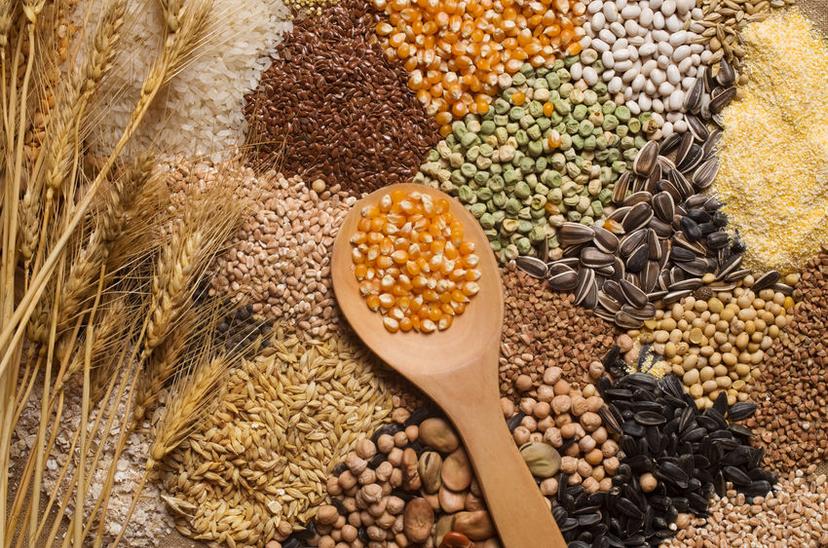
JH: The change in climate results in different mycotoxin profiles. For example, we are in a mild climate zone in Central Europe and before we did not see aflatoxins too often, for example. So, we were not ready to look for them. But now, this is the case.
OS: Especially climate change I think gives us some additional headaches because for pesticides, for example, it's easy to test directly after harvest on site and then you ship the foodstuff and it will not acquire additional pesticides while it's in transport on the ship or the train. But for mycotoxins, it's completely different. And with climate warming, I think it's getting more pronounced. It's good to see that the material is clear when it leaves the production country, but you still need to test when it's back or when it's at its destination because you don't know what happens in between. We have seen that often enough. And this is a problem that the question is, "Okay, where do we test?" And that we need to test at multiple places.
And so especially here we need to make it easy and affordable because it's not only testing once. Regulations just tend to get tighter. So, we are hunting sensitivity in terms of regulations. The scope is getting broader. And the limits, the levels go down and down which is understandable. It's a little bit of a difficult game because when we as manufacturers get something new that has better sensitivity, regulations tend to follow this.
Q: And how do you see the role of the in-house lab or independent testing institute adapting to ensure that future food products are safe?
DS: I think that laboratories are going to adapt to what is available, whether it's standards or other commercially available information. Then they will be able to add that to their panels. But I think that a lot of your private labs or independent labs are going to stick with what they know until either regulation is going to force it, or the market forces it, and enough people want that. But like Jana’s laboratory, we have got to stick to what we know and what's available and what's economically viable too.
JH: It's very important to have a broad scope and be ready for emerging compounds because they will be regulated soon and it's very good to be prepared.
OS: It is a game of analytical power in the end. So, labs need to invest in additional technology because protocols just become more advanced. Specifically with mycotoxins or toxins, in total we need to see [testing] at many stages of the production chain; not only in one. So, there are many places where the product needs to be tested and that involves way more labs. If it's animal feed or human food, you need to test a lot and always mycotoxins can come in. And so, we are really asked to offer easy-to-use technology, to make it easier for the labs to invest.
Watch the webinar series: Emerging trends and future directions in food testing on-demand >>
Learn more about mycotoxin food analysis in this infographic >>