

Biomarkers and breakthroughs in dementia diagnostics
CLINICAL24
Biomarkers, such as amyloid-beta (Aβ) and tau proteins, are revolutionizing dementia research and care, providing measurable biological indicators that reflect underlying disease processes. These markers, ranging from proteins, metabolites, and genetic variants to imaging signatures, offer the potential to detect neurodegenerative changes (such as those found in Alzheimer's disease, Lewy body dementia and frontotemporal dementia) earlier and with far greater accuracy than traditional methods.
For decades, diagnosis relied primarily on clinical assessment and observable cognitive or behavioral symptoms, which often delayed intervention until the later stages of the condition. Today, rapid advances in biomarker discovery and diagnostic technologies are reshaping this paradigm, enabling:
- Early detection of pathological changes before symptoms appear.
- Precise classification of dementia subtypes.
- Dynamic monitoring of disease progression and treatment response.
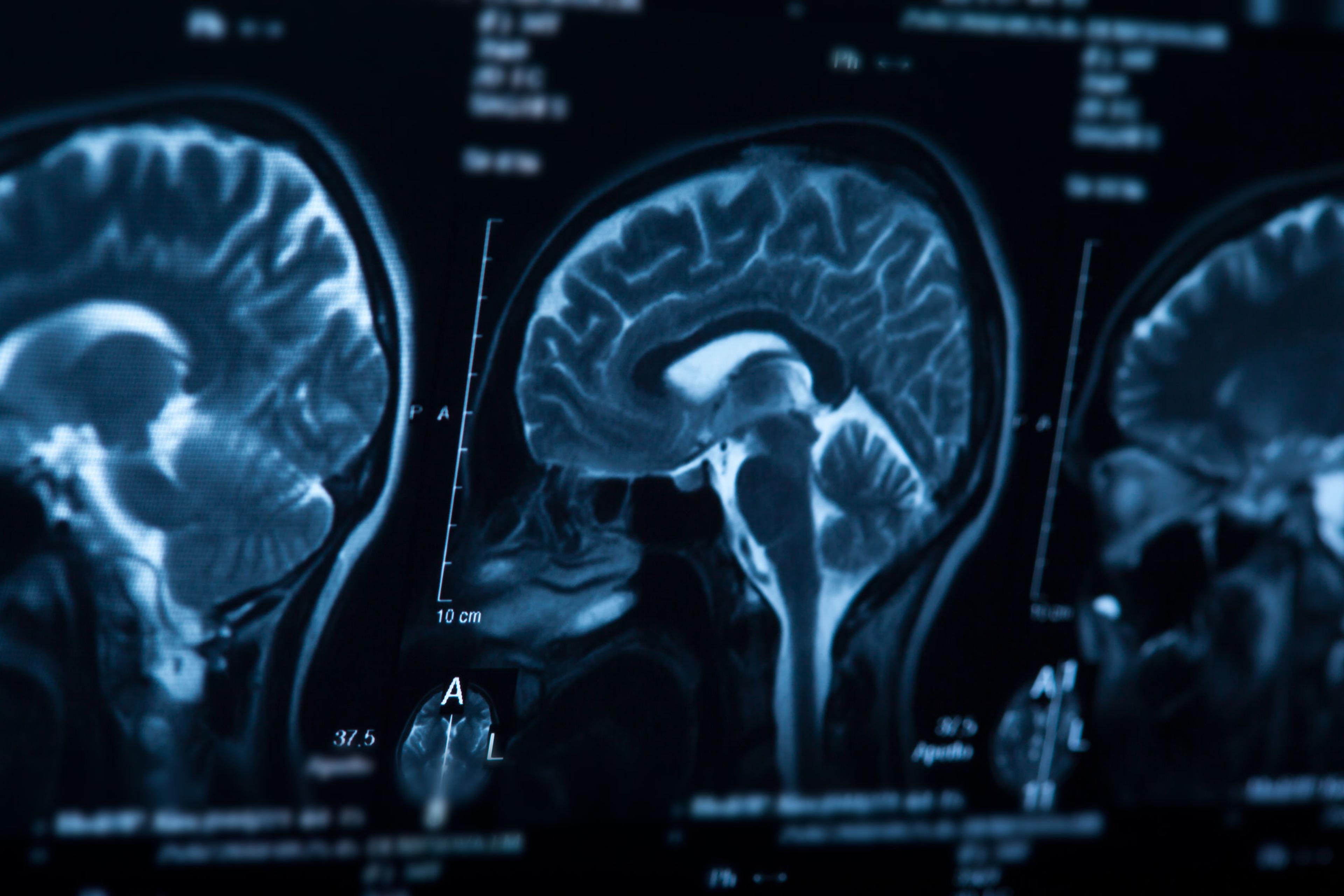
From blood-based assays measuring amyloid-beta and tau proteins, to advanced neuroimaging techniques like PET and MRI, and molecular profiling through cerebrospinal fluid (CSF) analysis and genomics, these breakthroughs are opening new avenues for both research and patient care.
In this SelectScience® CLINICAL24 feature for Biomedical Scientists, Medical Laboratory Scientists, clinicians and other clinical laboratory professionals, we explore the latest innovations driving dementia diagnostics, their real-world applications, and the promise they hold for improving outcomes and shaping the future of personalized medicine.
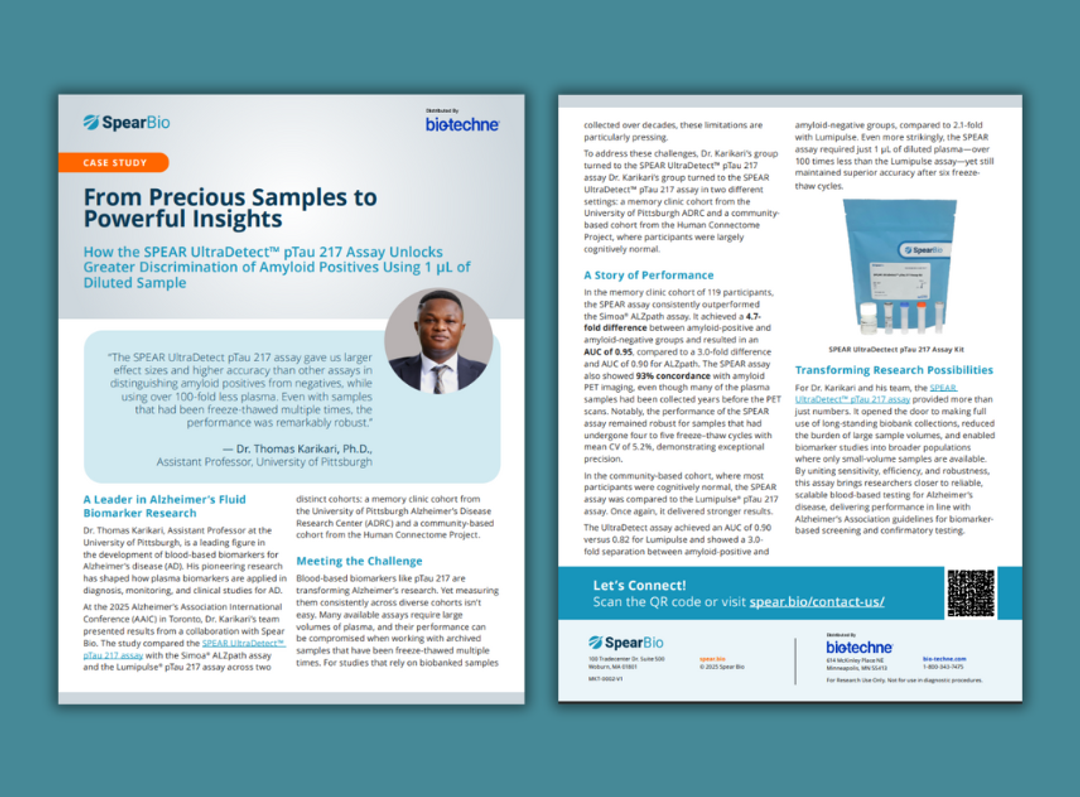
Advancing Alzheimer’s biomarker research with pTau 217 assay
Dr. Karikari’s team at the University of Pittsburgh showed the SPEAR UltraDetect™ pTau 217 assay delivers unmatched sensitivity and reliability for blood-based Alzheimer’s research using just 1 µL of plasma, even after multiple freeze–thaw cycles, outperforming other assays in clinical and community cohorts.
Download SpearBio case study
AI and the rise of blood-based biomarkers heralds new era for neurological diagnostics
Advances in blood-based biomarkers are transforming early and accurate Alzheimer’s disease detection. Quanterix, a company working at the very frontiers of neurology, is pioneering some of these innovations, integrating novel assays and partnerships to improve diagnostic precision and clinical adoption. In this interview, Lindsey Mette, Director of Medical Affairs tells us more.
Read Quanterix interview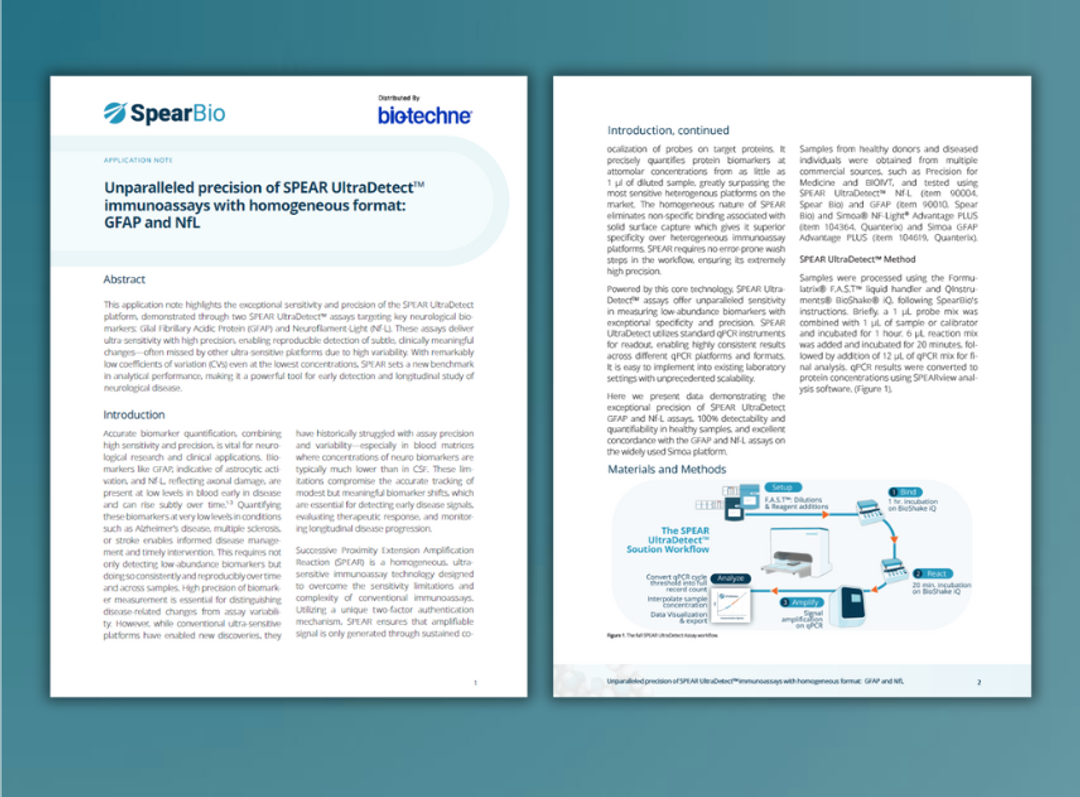
Immunoassays detect early and small changes of neurodegenerative biomarkers
Learn how SPEAR UltraDetect™ homogeneous immunoassays for the quantification of the neurological biomarkers GFAP and Nf-L are designed to overcome the limitations of conventional ultra-sensitive platforms. The assays deliver a combination of ultra-high sensitivity, precision, and robust reproducibility, even at the lowest biomarker concentrations found in blood.
Download Spear Bio application note
Transforming Alzheimer’s diagnosis with innovative blood-based biomarkers
In this exclusive interview, Cristiano Tunesi, the Neurology International Business Leader at Roche Diagnostics, explains how Elecsys® pTau blood tests are transforming Alzheimer’s diagnosis, enabling early detection, differentiating it from other neurodegenerative disorders, and shaping future neurology innovations.
Watch Roche Diagnostics interview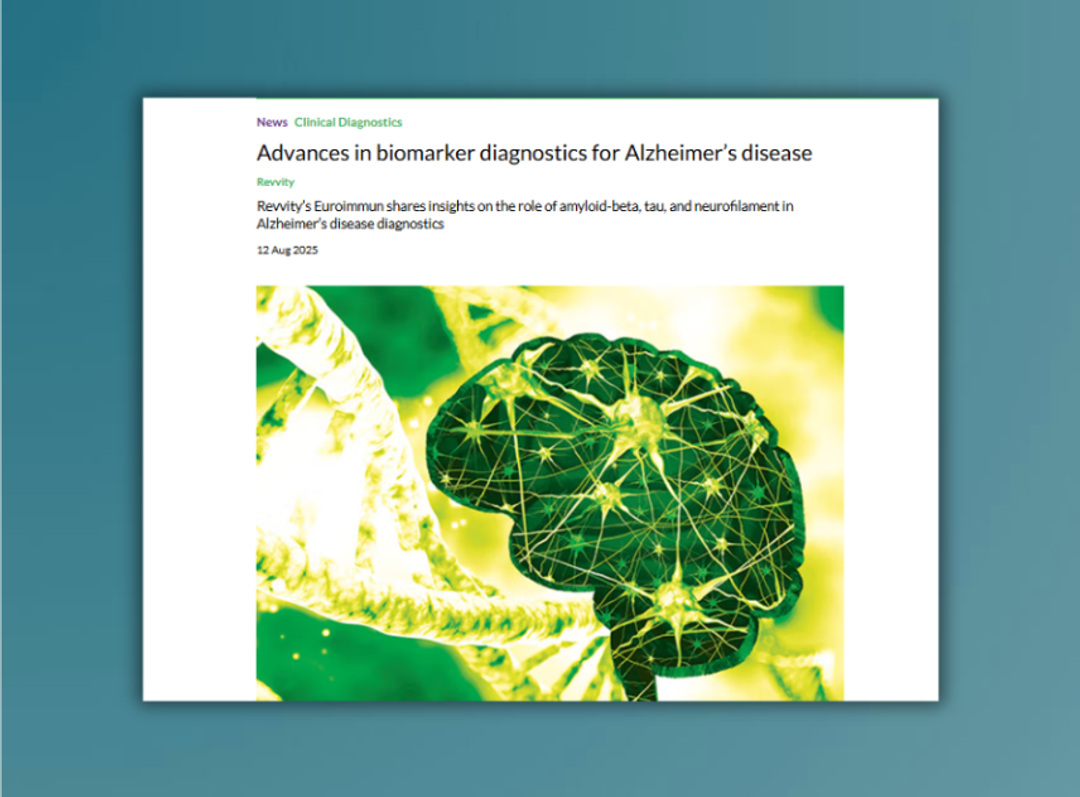
Advances in biomarker diagnostics for Alzheimer’s disease
Biomarkers like amyloid-beta, tau, and neurofilaments, detected via PET or biofluid tests, are central to Alzheimer's diagnosis. While CSF-based assays remain the gold standard, blood-based biomarkers are emerging but need further validation. Advances in diagnostics, including AI and molecular testing, are shaping more personalized and scalable care pathways.
Read Euroimmun article
Reagents for diagnostics immunoassays
Discover Jackson ImmunoResearch’s high-quality secondary antibodies, conjugates, and immunoassay reagents for reliable serological diagnostics. This resource offers guidance on antibody selection, monoclonal vs. polyclonal choices, assay formats, and cross-adsorption to reduce non-specific signals. Learn how different reporter conjugates and blocking methods can enhance sensitivity, accuracy, and reproducibility in ELISA, lateral flow, and other diagnostic immunoassays.
Download Jackson ImmunoResearch resource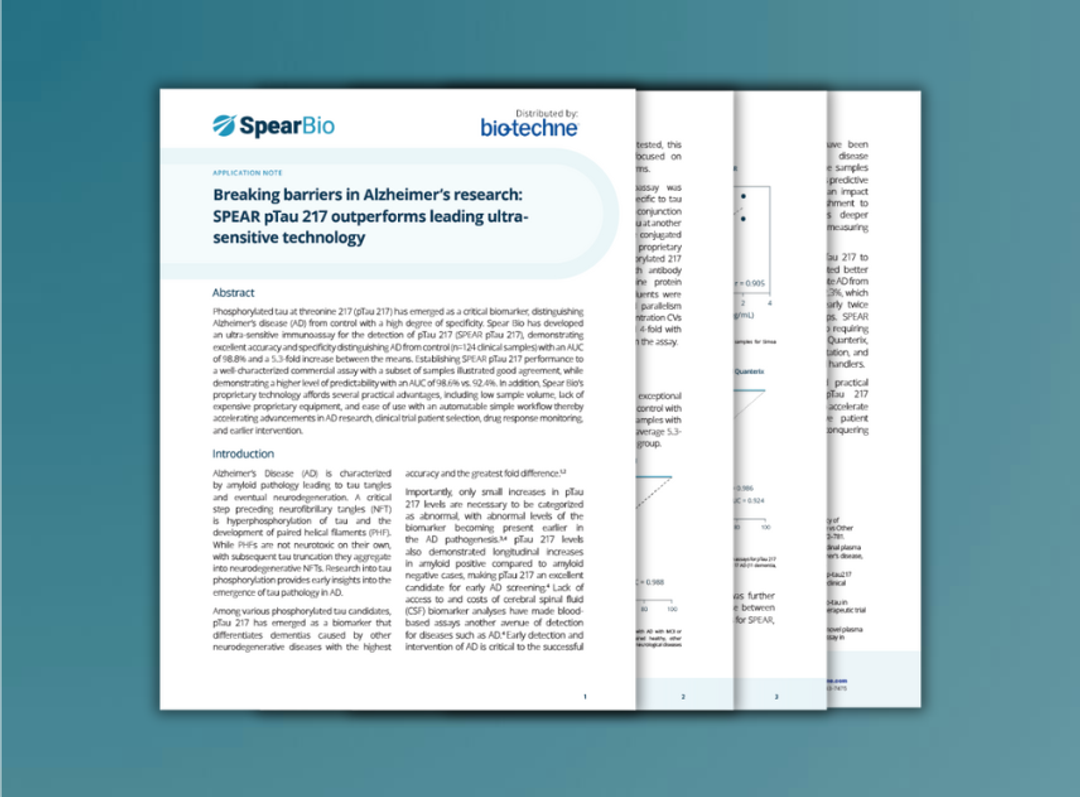
SPEAR pTau 217 immunoassay enables early detection of Alzheimer’s disease
This study highlights how SPEAR® pTau 217, an ultra-sensitive blood-based immunoassay, delivers exceptional performance in Alzheimer’s disease research and clinical studies. The assay is demonstrated as a powerful tool for early detection and differentiation of Alzheimer’s disease.
Download SPEAR pTau 217 application noteRelated resources




Frequently Asked Questions (FAQ)
What are laboratory biomarkers in dementia diagnostics?
Biomarkers are measurable biological indicators, such as proteins, metabolites, or imaging signatures, that reflect disease processes. In dementia, they help detect early changes in the brain and guide diagnosis and treatment.
Why are laboratory biomarkers important for dementia care?
They enable early detection, accurate classification of dementia subtypes (e.g., Alzheimer’s disease, Lewy body dementia), and monitoring of disease progression, which supports timely interventions and personalized treatment plans.
What types of laboratory biomarkers are used in dementia diagnostics?
Common biomarkers include amyloid-beta (Aβ) and tau proteins in cerebrospinal fluid or blood, neurofilament light chain (NfL) for neurodegeneration, and imaging markers detected through PET or MRI scans.
How do blood-based tests compare to imaging techniques?
Blood-based tests offer a less invasive and more accessible option for screening, while imaging techniques like PET provide detailed visualization of amyloid and tau deposits in the brain.
Can laboratory biomarkers predict treatment response?
Yes. Biomarker profiles can help clinicians identify which patients are likely to benefit from specific therapies, including emerging disease-modifying treatments.
Are these dementia laboratory tests widely available?
Access varies by region and healthcare system. While advanced imaging and molecular tests are common in research and specialized centers, efforts are underway to make blood-based biomarker testing more broadly available.
What role do biomarkers play in clinical trials?
Dementia biomarkers are essential for patient selection, monitoring therapeutic effects, and validating outcomes in trials for new dementia treatments.