What laboratories need to know as hemophilia gene therapy expands
After years of research, gene therapy is entering clinics worldwide, bringing new expectations and new responsibilities for diagnostic laboratories
24 Apr 2026
Dr. David Lillicrap, Professor in the Department of Pathology and Molecular Medicine at Queen’s University, outlines the data behind current gene therapy products, dissects clinical laboratory considerations, and explains where testing and monitoring must adapt as gene therapy expands.
Hemophilia care has entered one of the most transformative periods in its history. After decades of foundational research, iterative vector design, and long-term follow-up studies, gene therapy is no longer theoretical. It is becoming part of routine clinical practice, with Phase 3 trials completed and several products receiving regulatory approval. As clinical laboratories prepare to support these therapies, understanding the scientific and operational implications will be essential for safe and effective implementation.
This shift is the focus of a recent webinar hosted by SelectScience® and Siemens Healthineers, presented by Dr. David Lillicrap, Professor in the Department of Pathology and Molecular Medicine at Queen’s University. The session, Laboratory implications for hemophilia gene therapy and other novel hemophilia treatments, outlines the data behind current gene therapy products, dissects laboratory considerations, and explains where testing and monitoring must adapt as gene therapy expands. With gene therapy entering mainstream clinical use in rapid fashion, the laboratory’s role is evolving just as quickly.
Stable long-term expression reshapes expectations
One of the clearest successes so far is factor IX gene therapy. Dr. Lillicrap highlights long-term results from HEMGENIX®, showing sustained expression and durable control of bleeding. “After single infusions of this material, the mean factor IX level at year three is 38.6,” he details. Levels rose quickly, with “the levels… around 30 percent” by one month, then plateauing near 40 percent and remaining stable for years.
Even more compelling, long-term data continue to affirm durability. “The five-year data on this study is going be presented at ASH… showing very, very similar data,” he adds. Some individuals from the earliest studies now have more than a decade of stable expression. “Patients are now going out to 13 years with stable levels of factor IX,” he shares.
Factor VIII gene therapy, represented commercially by ROCTAVIAN®, shows a more complex pattern of variability and decline. According to Dr. Lillicrap, “there is marked variability in the first year” and “from one year onwards, there is a reduction in the levels, particularly in the first two or three years.” By year seven, the median expression ranges between 10 and 16 percent. While still clinically meaningful, it underscores the need for careful laboratory interpretation during follow up.
Patient selection for gene therapy begins in the lab
As gene therapy becomes more common, laboratorians will play a major role in determining patient eligibility. The presence of preexisting AAV antibodies is a key issue. As Dr. Lillicrap explains, “if they have pre-existing anti-AAV antibodies, which will neutralize the vector, they should not be included for therapy.” Across global cohorts, seropositivity ranges from 30 to 60 percent depending on serotype and geography.
However, emerging clinical evidence suggests that not all antibodies are equal. One gene therapy program showed efficacy even in patients with measurable titers. “In their phase 3 study… they had individuals who showed positive results for gene therapy with antibody titers up to about 1 in 600,” Dr. Lillicrap notes. These appear to be low-affinity antibodies that do not interfere transduction, but he cautions that this complexity increases the need for standardization. “There’s a critical need for assay standardization to equalize eligibility criteria,” he says.
Assay discrepancies demand careful interpretation
Post-infusion monitoring requires an understanding of how gene therapy-derived factor behaves in common assays. Significant discrepancies between one-stage and chromogenic assays are expected. “The one-stage levels for both factor VIII and factor IX are always higher than the chromogenic levels,” Dr. Lillicrap explains.
For factor VIII gene therapy, the difference is roughly 1.6-fold. In factor IX studies using the Padua variant, the amplification is even greater: “The one-stage assays will be about 2.5-fold higher than the chromogenic assays,” says Dr. Lillicrap. Failing to account for this may lead to misinterpretation of response, inappropriate dose-adjustment decisions, or confusion during management of breakthrough bleeds.
The variability becomes even more pronounced with engineered products like ALTUVIIIO®, where Dr. Lillicrap stresses that results depend heavily on reagent choice. With certain reagents, chromogenic assays can produce “marked overestimation, sometimes over 3 or 4 times the levels you should be expecting.” In practical terms, labs need clear, validated assay-reagent combinations and must educate clinical teams about which values are reliable.
Safety monitoring and long-term considerations
A repeated patient question, Dr. Lillicrap notes, is what happens to vector DNA after infusion. Although most vector genomes remain episomal, a small percentage integrates into host chromosomes. “Less than one percent is still a very large amount of material,” he explains, because the dose includes around 10^15 vector particles.
Long-term monitoring for oncogenicity is therefore an essential consideration, but the evidence to date is reassuring. Across several hundred treated individuals, cancers have occurred at expected background rates. “There is no molecular evidence of contributions of the gene therapy vector to the cancer,” says Dr. Lillicrap, even in extensively analyzed biopsy specimens. Based on current data, routine invasive testing is not recommended. “Would liver biopsies and next-generation sequencing change clinical management? No,” he emphasizes.
New monitoring needs beyond gene therapy for emerging treatments
Gene therapy is only one part of the evolving landscape. The webinar also reviews laboratory implications for bispecific antibodies such as emicizumab and Mim8, which continue to reshape prophylaxis standards. As Dr. Lillicrap notes, “Most of you … will be aware of emicizumab… there are now over 22,000 individuals worldwide on prophylaxis.” These agents require alternative approaches to efficacy assessment, with thrombin generation assays offering one of the more informative metrics.
Rebalancing therapies such as fitusiran introduce additional laboratory challenges. Designed to lower antithrombin levels using siRNA, these therapies shift hemostasis by dampening natural anticoagulant pathways. The therapeutic window is highly sensitive. Dr. Lillicrap highlights that the recommended antithrombin range of 15 to 35 percent “will produce efficacy… but limit the likelihood of thrombosis.” Monitoring requires assays with tight reproducibility.
Laboratories at the center of the next decade of hemophilia care
Gene therapy’s transition into clinical practice marks a decisive shift in hemophilia management. Durable expression, fewer infusions, and declining bleeding rates are redefining treatment expectations for patients worldwide. But the success of these therapies depends heavily on laboratory support. Accurate pre-treatment screening, assay standardization, reliable post-infusion monitoring, and clear communication with clinical teams will be central to ensuring safety and optimizing outcomes.
As Dr. Lillicrap concludes, “All of these new treatments pose laboratory challenges… standardization of laboratory testing will, as always, be critical to ensure the safety and optimal efficacy of these novel therapies.” For laboratorians, the arrival of hemophilia gene therapy represents both a challenge and an opportunity: a chance to help shape the next era of care by providing the analytical foundation that makes innovation possible.
To explore these developments in greater detail and hear Dr. David Lillicrap’s full discussion, watch the P.A.C.E.® and ACCENT®-accredited webinar today.
Related products
Request Quote for All Products
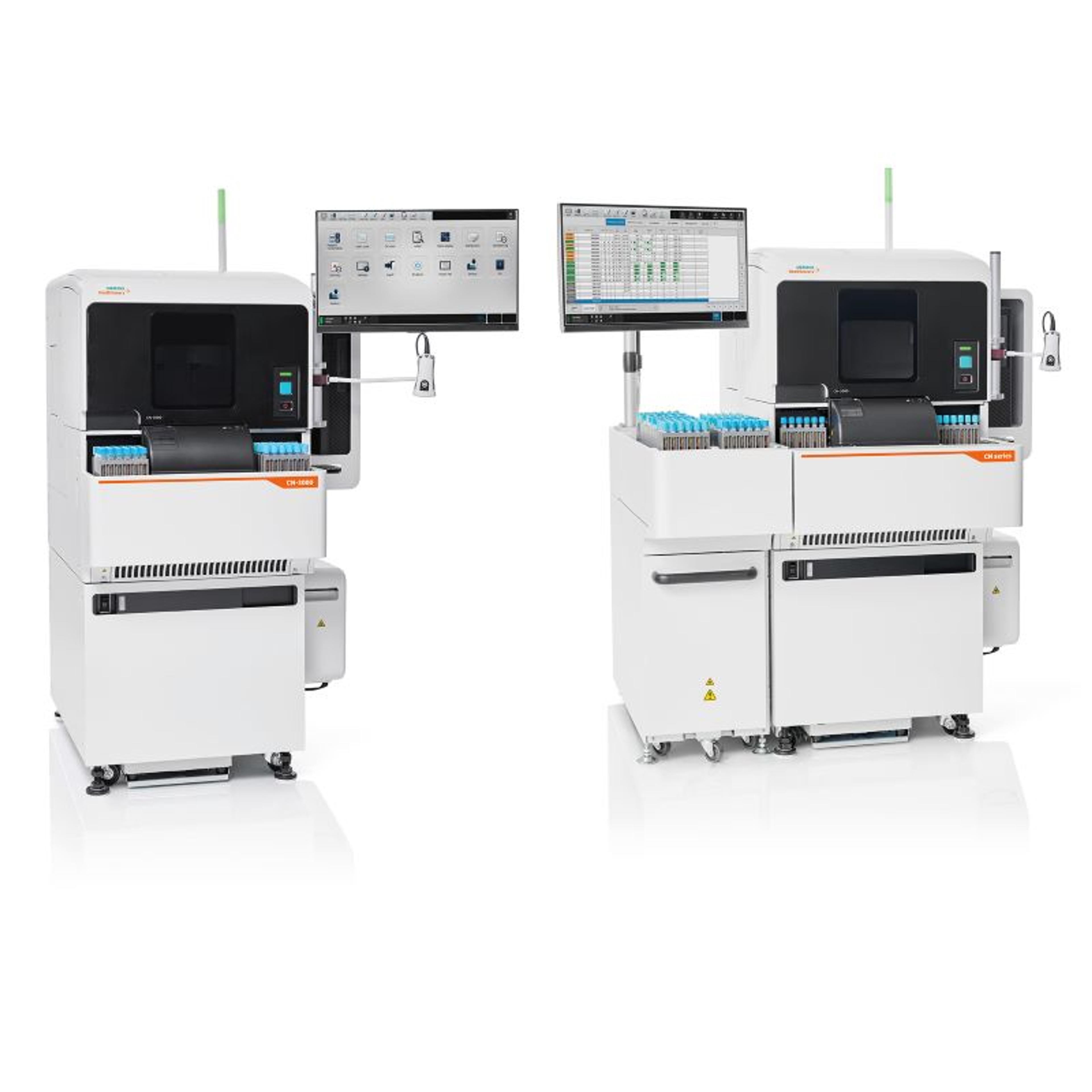
CN-3000/6000 Systems
Siemens HealthineersSmall-sized, mid- and high-volume hemostasis testing solutions to tackle big lab challenges.