Waters Unveils New Line of Calorimeters, New Solid-Core Column Chemistries and More at Pittcon 2016

Company also spotlights how its glycan analysis kit has saved biopharmaceutical industry nearly four years of lab work

7 Mar 2016
Alex Waite
Editorial Assistant

Product news

Waters Corporation has unveiled its new line of differential scanning calorimeters reaffirming TA Instruments' position as the technology and global leader in thermal analysis at the 2016 Pittsburgh Conference on Analytical Chemistry and Applied Spectroscopy.

Additionally, the company highlighted new CORTECS® column chemistries and reported that its GlycoWorks™ RapiFluor-MS™ N-Glycan Kit has already saved biopharmaceutical laboratories industry-wide approximately four years of work based on sales in just its first year of availability.

"Innovation is the engine that drives Waters," said Christopher J. O'Connell, President and CEO of Waters Corporation. "From the days of Jim Waters, our commitment to innovation has been deeply engrained in the organization's make-up. For decades, the organization's central focus has been to innovate and push the boundaries of analytical science to develop and support the technologies that enable our customers around the globe to be successful. Seeing the comprehensive product portfolio from Waters and TA Instruments here at Pittcon underscores the company's innovation leadership."

Three New Discovery DSC Systems

The new line of Differential Scanning Calorimeters, the Discovery DSC 2500, DSC 250, and DSC 25 feature enhanced sensing technologies resulting in unprecedented performance in baseline flatness, sensitivity, resolution, and reproducibility.

At the core of every new Discovery DSC is the exclusive TA Fusion Cell™, which incorporates design concepts that “fuse” together features of the Q-Series and first generation Discovery DSC, patented Tzero® technology, and new proprietary manufacturing processes. Additionally, an app-style user interface is standard with each new model and combined with powerful new TRIOS software, automated calibration and verification routines work seamlessly to dramatically improve laboratory work-flows and productivity.

The Discovery DSC measures the change in energy in a sample as the temperature is raised or lowered. It is used for a wide range of applications, including material science, pharmaceuticals, chemistry and studies of biomaterials. It excels in both research environments and production control processes.

“DSC is the anchor of a thermal analysis laboratory," said Terry Kelly, President of TA Instruments. "In terms of performance and ease-of-use the new Discovery Series DSC is so advanced, that upgrading to one of our powerful new systems will bring scientists lasting benefits.”

The DSC 2500 comes standard with all options, which includes the all-new linear autosampler that allows for enhanced flexibility in assigning sample and reference pans to any combination of the available 54 positions. We believe that it is the only DSC on the market capable of making and storing heat capacity measurements in a single run.

The DSC 250 is a flexible and configurable research-grade DSC that includes Tzero technology, and is well-equipped to satisfy the most demanding researcher. The DSC 25 is a cost-effective, easy to use, general purpose DSC with performance superior to competitive research grade systems. It is ideal for research, teaching, and quality control laboratories that require a rugged, reliable, basic DSC.

GlycoWorks Saves Industry Nearly Four Years of Work

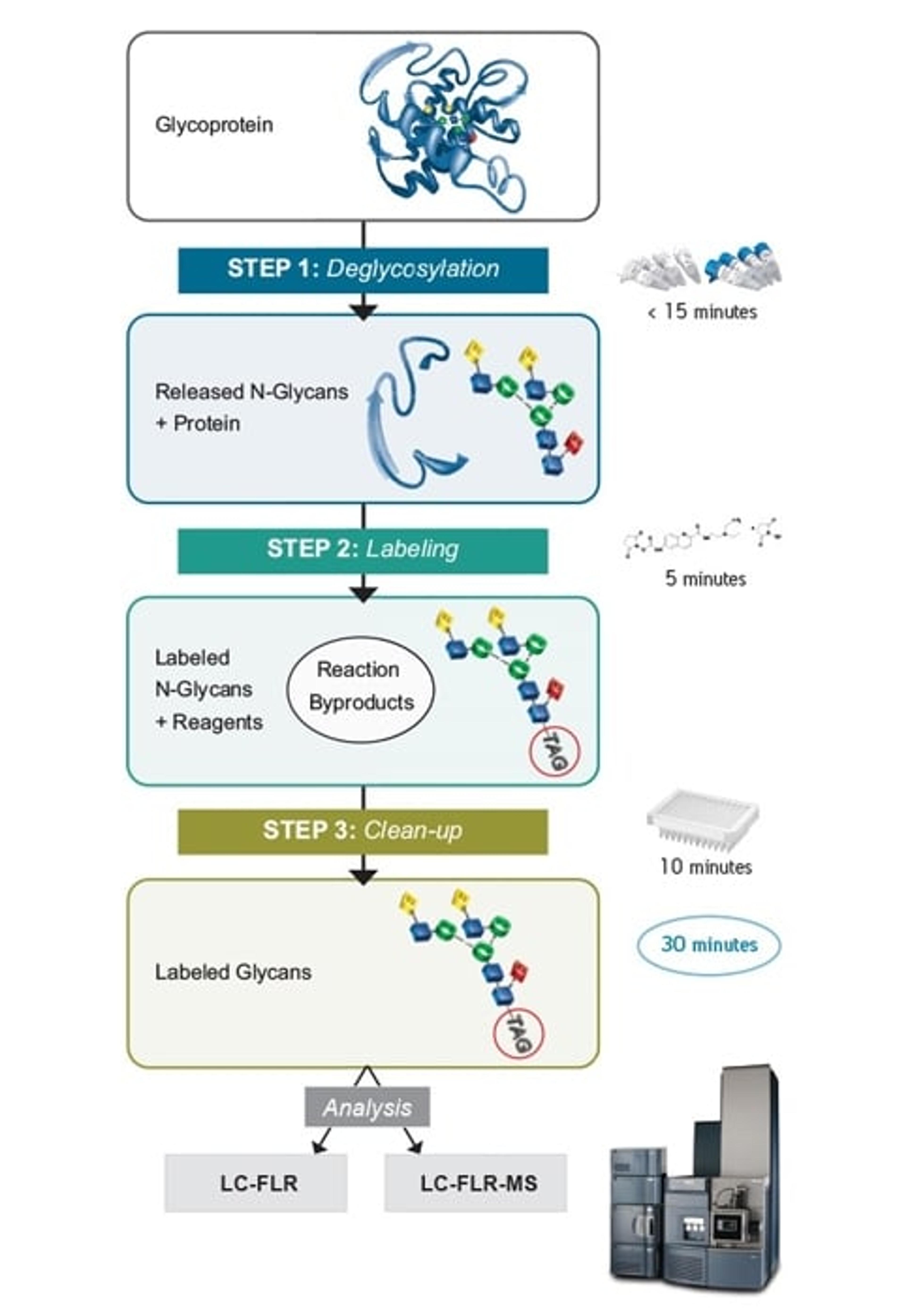
Emphasizing the impact of its innovations, Waters revealed that its GlycoWorks RapiFluor-MS N-Glycan Kit has already saved biopharmaceutical laboratories industry wide approximately four years of work in just its first year of availability. These calculations are based on purchases by all 15 top revenue generating pharmaceutical companies and 90% of the top biopharmaceutical companies with glycoproteins in their pipeline.

Most biotherapeutic proteins available on the market today are glycoproteins. The heterogeneous glycan populations on these proteins are critical quality attributes that affect potency, stability, and therapeutic safety profiles. As a result, biopharmaceutical companies must provide detailed structural information pertaining to the glycans attached to their biotherapeutics when submitting new applications to regulatory authorities and on an ongoing basis throughout the manufacturing process. Waters estimates about 4.4 million released glycan analyses are performed per year, and that number is growing at double digit rates.

A ground-breaking technology for characterizing glycoproteins, the GlycoWorks RapiFluor-MS N-Glycan Kit combined with Waters' ACQUITY UPLC® System, the ACQUITY UPLC® FLR Detector and the ACQUITY® QDa® Detector, and enables scientists to analyze released N-glycans and achieve new levels of speed, sensitivity, simplicity while obtaining previously unattainable structural information.

Expansion of CORTECS Solid-Core LC Columns

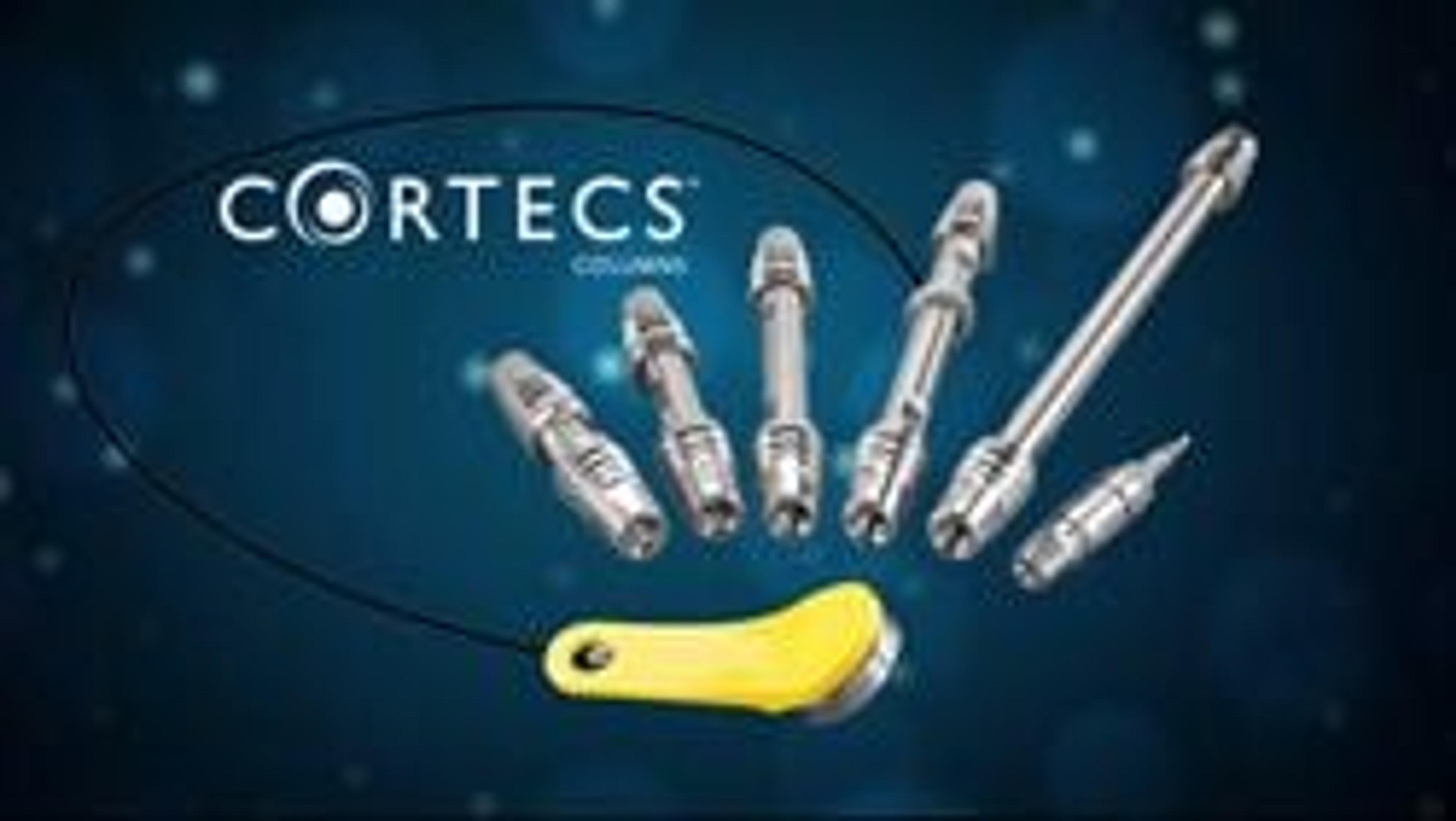
Waters has added to its CORTECS® Columns product family with the introduction of two new LC column chemistries. Built on Waters proven solid-core particle technology, the Waters® CORTECS® C8 and CORTECS® Phenyl analytical columns are designed for scientists who need to expand their chromatographic separation space while maximizing the speed, resolution and sensitivity of their small molecule HPLC, UHPLC or UPLC® separations. Capable of operating at very high column efficiencies and low backpressures, the new columns give scientists additional selectivity choices and allow them to develop methods quickly, and generate more information with every analytical run. The CORTECS® C8 and CORTECS® Phenyl chemistries are available in two particle sizes, 1.6 and 2.7 micron, and are offered in a total of 50 unique column configurations.

CORTECS® C8 Columns exhibit a lower hydrophobicity when compared to typical bonded C18 phases and are useful for separating strongly hydrophobic compounds. They are also ideal for chemists looking to transfer or scale compendial C8 HPLC methods to a more robust column technology.

CORTECS® Phenyl Columns are an excellent alternative to typically bonded C18 phases, particularly for aromatic compounds, based on the unique selectivity provided by the Phenyl bonded phase.
Links

Tags

UHPLC and HPLCHigh performance liquid chromatography (HPLC) and ultra high performance liquid chromatography (UHPLC), also known as UPLC, are analytical techniques used to separate, identify and quantitate components of complex mixtures including biological samples such as proteins and lipids as well as chemical mixtures of pesticides, drugs and oils. Both techniques are liquid chromatographic methods but differ by operating pressures (HPLC < 6000 psi < UHPLC ). Components of HPLC and UHPLC systems include columns, detectors, pumps, autosamplers and column heaters. Explore a range of UHPLC and HPLC columns for your specific sample needs including reverse phase, normal phase, ion exchange, HILIC, ion exclusion and size exclusion columns. For more specialized HPLC, explore FPLC, countercurrent LC and simulated moving bed systems. Find the best UHPLC and HPLC equipment in our peer reviewed product directory: compare products, check customer reviews and receive pricing direct from manufacturers.LC-MSLC-MS (liquid chromatography-mass spectrometry) systems and equipment are used for separation and quantitative analysis of complex mixtures, combining liquid chromatography and mass spectrometry. Quantify proteins, contaminants, pesticides or screen for drug metabolites with a high level of sensitivity. LC-MS systems and equipment include reverse phase, normal phase and specialized columns integrated with various MS detectors such as time-of-flight (TOF), quadrupole, orbitrap or ion trap mass analyzers. LC-MS/MS instruments equipped with a qTOF or triple quadrupole analyzer give greater sensitivity and resolving power to your analysis. Find the best LC-MS equipment in our peer-reviewed product directory: compare products, check customer reviews and receive pricing direct from manufacturers.NanoLCNano LC is a nano scale liquid chromatography technique typically used for proteomic applications. The nano refers to the very low flow rate of the mobile phase in the system. The advantage of nanoLC is its high sensitivity. Often the system is integrated with a mass spectrometer in nano LC-MS or nano LC-MS/MS. When using nanoLC equipment consider column choice, software and accurate and precise flow rate control.CalorimetryCalorimetry is a technique used to determine the heat released or absorbed in a chemical reaction. Calorimeters can be categorized into bomb calorimeters, constant pressure calorimeters, differential scanning calorimeters, isothermal titration calorimeters, X-ray microcalorimeters, heat-loss calorimeters, and high-energy particle calorimeters. The choice of calorimeter depends on the application.Food and Beverage AnalyzersFood and Beverage Analyzers are commonly used to provide information about the chemical composition, structure and physical properties of food materials.Food and Beverage ProcessingFood and Beverage Processing involves the preparation of food products for further analysis. Typical instrumentation includes blanchers, color sorters, cookers, grinders, and refrigeration. These are used to replicate the processes commonly used in the commercial preparation of food and beverages.Particle CharacterizationParticle characterization instruments are used to determine particle size distribution, shape, surface area, zeta potential, density and porosity of particles and materials. Multiple tecchniques are available for determining particle size, shape and count including dynamic light scattering (DLS), laser diffraction, electrozone (Coulter technique), imaging particle analysis and single particle optical sensing. Determine the density of your material with a gas pycnometer or examine its surface area and porosity with gas adsorption analyzers and mercury porosimeters. Find the best particle characterization instruments in our peer-reviewed product directory: compare products, check customer reviews and receive pricing direct from manufacturers.Thermal Analysis EquipmentThermal analysis equipment is used for measuring heat flow, weight loss, dimension changes or thermomechanical properties and is important for analyzing a material’s performance and stability. Thermal analysis equipment includes differential scanning calorimeters (DSC), thermogravimetric analyzers (TGA), thermomechanical analyzers (TMA), dilatometers, thermometers, vapor sorption analyzers, boiling and melting point apparatus. Thermal analyzers can reveal properties such as melting, crystallization and glass transitions or other processes such as oxidation, decomposition, volatilization, as well as coefficients of thermal expansion and modulus. Find the best thermal analysis equipment in our peer-reviewed product directory: compare products, check customer reviews and receive pricing direct from manufacturers.Bioprocessing / FermentationBioprocessing is the use of biological materials to perform commercial, scientific or medical research processes. Biological materials used include cells, enzymes and organisms. Usually bioprocessing requires a batch or continuous bioreactor such as a fermentor or cell culture system. The advantages of using a reactor include high productivity, easy configuration, adjustable values and automation.GlycansThermal ProcessesAutomationAutomation in laboratories and manufacturing processes enhances efficiency, precision, and scalability by reducing the need for manual intervention. It plays a critical role in improving productivity, minimizing human error, and accelerating workflows in fields like diagnostics, drug development, and industrial testing. Automation technologies include robotic systems, automated liquid handlers, and process control systems that streamline complex tasks and ensure consistent, reproducible results. Explore our peer-reviewed product directory to discover the best automation solutions, compare options, read user reviews, and get prices directly from manufacturers.Microflow CalorimeterBiopharmaceuticalsBiopharmaceuticals are proteins and other compounds (such as nucleic acids) produced by living organisms that have uses as therapeutics or for in vivo diagnostics. The most well known example of a biopharmaceutical product, and the first to be approved for therapeutic use, was recombinant human insulin.Differential Scanning Calorimetry