
Top mass spectrometry launches of 2025
A comprehensive look at the mass spectrometry technologies powering faster workflows, smarter data, and more accessible analysis across industries
26 Dec 2025
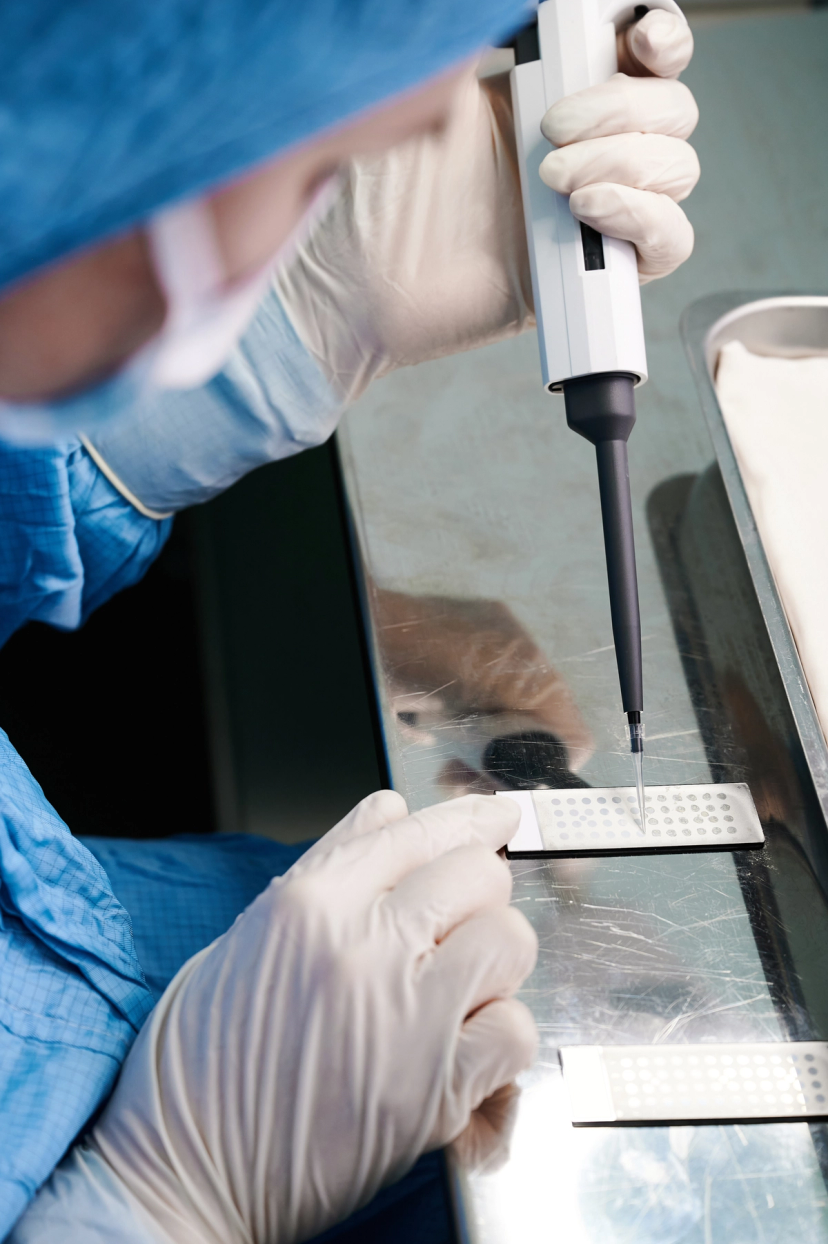
Scientist loading mass spectrometry samples
Today’s analytical landscape is evolving faster than ever, and mass spectrometry is at the center of that shift. Laboratories across environmental testing, clinical diagnostics, drug development and food and beverage quality are facing rising expectations. From detecting PFAS, VOCs (volatile organic compounds), and nitrosamines at trace levels to delivering rapid, defensible patient results under increasing regulatory scrutiny.
As we anticipate further advancements in the field in 2026, we take a brief look back at some of the latest instrumentation announcements and review spotlights this year.
Looking back at key announcements
We saw this momentum firsthand at the 73rd American Society for Mass Spectrometry (ASMS) meeting in Baltimore, where thousands of scientists, engineers, and industry leaders gathered to showcase and celebrate the latest breakthroughs. Our SelectScience® team were in attendance, connecting with experts and leading manufacturers to gain direct insight into the technologies redefining mass spectrometry in 2025. Below, we highlight the major announcements that stood out across the show floor:
- Bruker introduced two new innovations this year:
- A new timsUltra AIP System with a breakthrough Athena Ion Processor (AIP) which can deliver up to 35% more peptide and 20% more protein identifications for highest sensitivity proteomics.
- A revolutionary timsOmni mass spectrometer designed to enable functional proteoform sequencing and post-translational modification (PTM) identification and localization with unprecedented depth and speed.
- Agilent unveiled the InfinityLab Pro iQ Series, a next-generation LC-mass detection poised to set new standards for intelligent mass detection, sensitivity, and sustainability.
- Waters set a new benchmark for robustness and sensitivity for high-throughput labs with the Xevo™ TQ Absolute XR Mass Spectrometer, which uses up to 50% less power and gas, and occupies up to 50% less bench space than other products in its class.
- Thermo Fisher Scientific showcased cutting-edge solutions for enhanced omics and proteomics applications, with the goal of driving breakthroughs in biopharmaceutical discovery and translational omics.
- Thermo Fisher Scientific also unveiled the Orbitrap Astral Zoom and Orbitrap Excedion Pro, next-generation mass spectrometers designed to deliver increased speed and sensitivity to set a new performance benchmark for high-resolution, accurate mass spectrometry.
- MOBILion Systems presented plans for its next-generation proteomics platform, highlighting customer use cases from its MOBIE Platform.
- Cerno Bioscience unveiled its breakthroughs in accurate small molecule and unknown compound identification.
- Biocrates launched the MxP® Quant 1000, a high-throughput, standardized metabolomics platform designed to drive therapeutic development through high-precision profiling of over 600 metabolites.
To help scientists navigate this complexity, our How to Buy Real‑Time Mass Spectrometers guide offers clear, practical insight into next‑generation technologies and the considerations that matter most when selecting an instrument. It’s designed to support confident, application‑focused decision‑making in a market where speed, sensitivity, and workflow integration are more important than ever.
A cornerstone of today’s analytical landscape
At its core, mass spectrometry measures the mass‑to‑charge ratio of ions to identify and quantify molecules. But the real strength of mass spectrometry lies in its ability to handle complex samples, trace‑level contaminants, and high‑throughput workflows without compromising data quality. This makes it indispensable in laboratories where accuracy and confidence are non‑negotiable.
Across environmental science, mass spectrometry enables the detection of emerging contaminants, persistent pollutants, and volatile organic compounds at concentrations far below regulatory thresholds. In the food and beverage sector, it supports everything from authenticity testing to flavor profiling and contaminant screening, helping producers safeguard quality and consumer trust. Clinical laboratories rely on mass spectrometry for therapeutic drug monitoring, biomarker quantitation, and rapid microbial identification, while pharmaceutical teams use it to accelerate drug discovery, metabolite profiling, and QC release testing.
As workflows become more automated and data‑driven, mass spectrometry is evolving alongside them, offering new levels of accessibility, speed, and integration. This is the landscape in which the best mass spectrometers of 2025 stand out, not only for their technical performance, but for how effectively they support the real‑world challenges scientists face every day.
What’s next for mass spectrometry?
Mass spectrometry is moving into a new phase defined by speed, automation, and data intelligence. The rise of real‑time mass spectrometry is one of the most significant shifts, with techniques like selected ion flow tube mass spectrometry (SIFT‑MS) and proton transfer reaction mass spectrometry (PTR‑MS) becoming mainstream as industries demand immediate, actionable results. This is especially true in environmental monitoring and food and beverage quality control, where rapid detection of contaminants and trace‑level compounds is becoming essential.
At the same time, compact and field‑deployable systems are expanding mass spectrometry beyond traditional laboratories, enabling on‑site testing and more agile workflows. These platforms are increasingly valuable for environmental field teams and production‑line QC labs that need fast, reliable answers without complex instrumentation.
Clinical and biopharmaceutical labs continue to drive innovation in MALDI‑TOF technologies, but the same advances for faster identification, expanding libraries, and improved automation are also benefiting environmental microbiology and food safety testing. Meanwhile, AI‑assisted spectral interpretation is beginning to streamline data processing, reduce manual review, and support users with varying levels of expertise across all sectors.
Finally, the move toward open‑source and interoperable data ecosystems is reshaping how laboratories manage, share, and analyze MS data, giving scientists more flexibility and control over their workflows.
Together, these developments point toward a future where mass spectrometry is more accessible, more intelligent, and more deeply integrated into real‑time decision‑making across industries.
FAQ
How long does it take to read this article?
The estimated reading time is 6–8 minutes.
Where can I see mass spectrometry product reviews from scientists?
You can find independent, peer-reviewed product reviews from scientists on the Mass Spectrometry Product Reviews Directory. These reviews provide real-world insights into instrument performance and usability.
Where can I get more information on these products?
Explore the full range of instruments in our Mass Spectrometry Product Directory and download our How to Buy Real-Time Mass Spectrometers Guide for expert advice on selecting the right system for your workflow.