
Thermo Fisher Scientific announces collaboration to provide access to deep learning tools for discovery and targeted proteomics
25 May 2020
Thermo Fisher Scientific and MSAID GmbH have announced an exclusive license agreement to develop and commercialize deep learning tools for proteomics, making MSAID’s Prosit-derived framework widely accessible to proteomics laboratories. The availability of deep learning tools aims to enable improved confidence in proteomics research results, primarily in the areas of protein profiling using label-free or tandem mass tag (TMT)-based quantification, and a variety of new applications.
The new algorithm allows gains in confidence and reproducibility and will be released as part of Thermo Fisher’s newest Thermo Scientific Proteome Discoverer 2.5 software release. Users can now access deep-learning-based prediction of tandem mass spectra, allowing for the formation of entire spectral libraries on demand and facilitating the identification of peptides with up to 10 times higher confidence and the extraction of more identifications from proteomics datasets via intensity-based rescoring. In combination with Thermo Scientific Orbitrap technology, the new algorithm enables emerging applications, such as immunopeptidomics and metaproteomics, for which traditional database search and statistical approaches are often ineffective.
"Increasing the confidence of protein and peptide identifications is a growing need, given that a false discovery rate of even 1% means that 1,000 out of every 100,000 peptides might be incorrectly assigned," said Mark Sanders, director of life science mass spectrometry software, Thermo Fisher Scientific. "Applying deep learning tools enables data-independent analysis of proteomics samples with higher confidence and reproducibility, and, when used with Orbitrap technology, reduces the false discovery rate 10-fold, to merely 100 out of every 100,000 peptides."
Martin Frejno, chief executive officer, MSAID GmbH, said, "At MSAID, we reinvent the way proteomic data is acquired and analyzed by using state-of-the-art deep learning. Through our collaboration with Thermo Fisher Scientific, we can bring this technological revolution to laboratories around the world and empower the scientific community to gain exceptional insight into new and existing data."
Thermo Fisher Scientific will showcase outcomes of the collaboration and its newest products and software solutions in a company-hosted virtual event, vLC-MS.com, from May 26-28, 2020, and at the American Society for Mass Spectrometry (ASMS) Reboot Program, from June 1-12, 2020
Want more of the latest science news straight to your inbox? Become a SelectScience member for free today>>
Related products
Request Quote for All Products
Thermo Scientific™ Proteome Discoverer™ Software
Thermo Fisher ScientificIdentify and quantify proteins in complex biological samples using Thermo Scientific™ Proteome Discoverer™ software. Proteome Discoverer software simplifies a wide range of proteomics workflows, from protein and peptide identification to PTM analysis to isobaric mass tagging and both SILAC and label-free quantitation. It supports multiple database search algorithms (SEQUEST, Z-Core, Mascot, and Byonic) and multiple dissociation techniques (CID, HCD, ETD, and EThcD) for more comprehensive analyses.
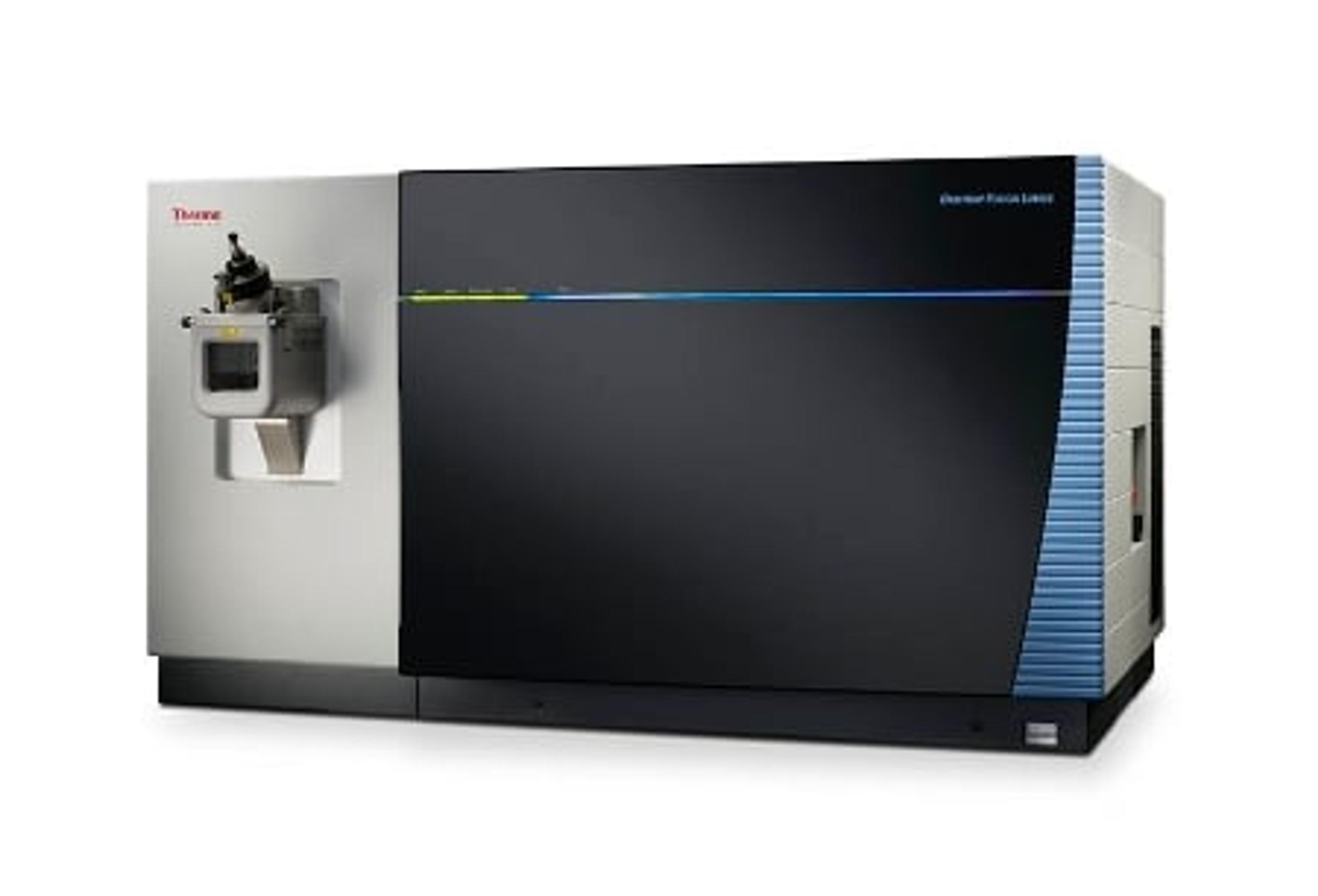
Thermo Scientific™ Orbitrap Fusion™ Lumos™ Tribrid™ Mass Spectrometer
Thermo Fisher ScientificTest new limits of detection, characterization and quantitation with the latest Tribrid™ mass spectrometer. The Thermo Scientific™ Orbitrap Fusion™ Lumos™ Tribrid™ Mass Spectrometer is designed to expand performance in advanced proteomics, biopharma and metabolomics applications, including quantitation using isobaric tags, low level PTM analysis, data independent acquisition (DIA), and top down proteomics. The new instrument features enhanced sensitivity resulting in improved analyte detection, characterization and quantitation, enabling scientists to perform more comprehensive sample analyses faster and with better accuracy than ever before. Novel Orbitrap Fusion Lumos MS Features: Novel high-sensitivity API interface combines a High Capacity Transfer Tube and an Electrodynamic Ion Funnel for increased ion flux and lower limits of detection Advanced Active Beam Guide prevents neutrals and high velocity clusters from entering the resolving quadrupole Advanced Quadrupole Technology combines high selectivity and efficiency of transfer for selected ions symmetrically across the isolation window Advanced Vacuum Technology improves transmission of high molecular weight ions to the Orbitrap analyzer Novel ETD HD—high dynamic range ETD provides significantly increased fragment ion coverage Established Tribrid MS Features: Tribrid architecture — includes quadrupole mass filter, linear ion trap and Orbitrap mass analyzers Ultrahigh resolving power up to 500,000 FWHM, with isotopic fidelity up to 240,000 FWHM at m/z 200 Acquisition rates of up to 20 Hz for both Orbitrap and linear ion trap MSn analyses Full parallelization of MS and MSn analyses with intelligent ADAPT™ (All Dynamically Available Parallelizable Time) technology Synchronous Precursor Selection (SPS) for MS and MSn experiments significantly increases the number of peptides and proteins identified and improves quantitative accuracy when using isobaric mass tags Flexibility of fragmentation — CID, HCD and optional ETD and EThcD available at any stage of MSn with detection in either the Orbitrap or linear ion trap detector enables detailed structure determination of metabolites, glycans and other small molecules Universal Method provides maximal peptide identifications without method optimization for samples of unknown concentration, reducing sample and instrument time requirements for routine peptide identifi cation experiments Intuitive and flexible drag-and-drop user interface simplifies method development and enables unique and complex workflows