
The Need for Sensitivity and Specificity in Pesticide Screening of Food Samples
In this poster presentation from EPRW, learn how scientists at LASPB are enhancing pesticide screening capabilities using the Thermo Scientific™ Q Exactive™ GC Orbitrap™ GC-MS/MS system
30 Dec 2016
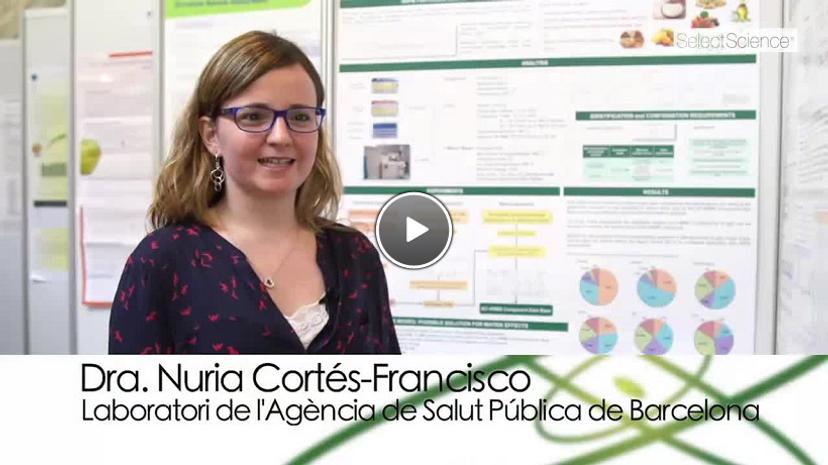

Laboratori de l'Agència de Salut Pública de Barcelona (LASPB)
LASPB Public Health Agency Laboratory contributes to the identification and control of public health problems in the community. This is done by supporting analytical monitoring programs for food safety, environmental, epidemiological surveillance and control of infectious diseases. Part of this analysis involves the screening of over 35,000 samples a year.
In this interview, filmed during EPRW 2016, Dra. Nuria Cortes-Francisco, Laboratori de l'Agència de Salut Pública de Barcelona (LASPB), describes her method development for pesticide analysis as part of a new instrument evaluation.
Using a combination of LC and GC, coupled with triple quad mass spectrometers, LASPB analyzes over 240 pesticides every day in a range of different food commodities. In the interview, Dra. Cortes-Francisco explained that sensitivity and specificity are vitally important for this type of pesticide analysis. To meet these requirements, LASPB opted to use the Thermo Scientific™ Q Exactive™ GC Orbitrap™ GC-MS/MS system.
During her interview, Dra. Cortes-Francisco explained that false negative and false positive results have been a problem for LASPB, and as a result they have developed a new method for more reliable identification and confirmation of pesticide residues in food commodities.
The current EU SANTE guidelines only require the detection of two ions and one ion ratio, however, Dra. Cortes-Francisco’s work aims to use three ions - one for quantification, and two ion ratios for confirmation. By confirming the presence of pesticides with two ratios rather than one, LASPB aims to improve the accuracy of screening.
As part of Dra. Cortes-Francisco’s evaluation, nine food commodities were spiked and then analyzed for the presence of pesticides. Her results demonstrated high sensitivity in simple samples such as apple, however, levels of detection in more complex matrices were noticeably more difficult to achieve. A key benefit of using Thermo Scientific™ Orbitrap™ technology is the variety of working modes as well as the ability to use functions such as full scan and selected ion monitoring. These benefits enabled her to solve some existing problems such as co-elution.
To conclude, Dra. Cortes-Francisco believes that this technology will increase confidence in her laboratory’s results, and allow accurate confirmation of positive results. The scope of this research also has a lot of future potential, as the technology still has many modes and capabilities that they have not yet explored.
Watch the video interview or visit the EPRW special feature to learn more.
Use this product for your research? Leave a product review today and help other scientists conducting research in your field.
Related products
Request Quote for All Products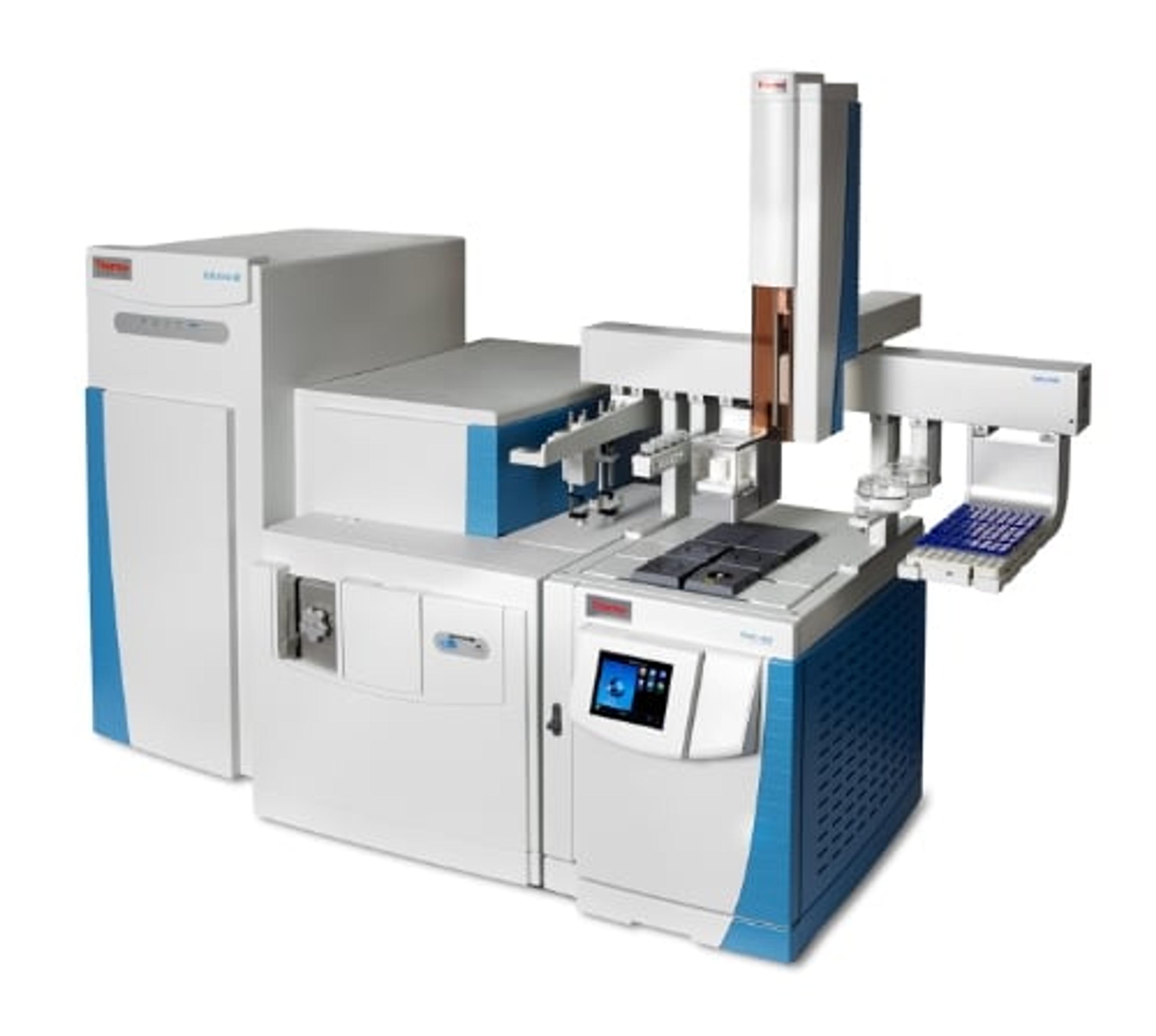
Thermo Scientific™ Q Exactive™ GC Orbitrap™ GC-MS/MS System
Thermo Fisher ScientificThe Thermo Scientific™ Q Exactive™ GC system is the first-ever combination of high resolution gas chromatography with high-resolution/accurate-mass (HR/AM) Orbitrap detection for the most comprehensive sample characterization. This easy-to-use system provides the most comprehensive characterization of samples in a single analysis for the highest confidence in compound discovery, identification, and quantitation. Building upon the flexible modularity of the Thermo Scientific™ TRACE™ 1300 Series GC, including user-exchangeable injectors and detectors, the Q Exactive GC system has the quantitative power of a GC triple quadrupole MS combined with the high precision, full scan high-resolution/accurate-mass capability that only Orbitrap technology can offer. Key Features: Advanced quadrupole technology (AQT) for high transmission of selected masses Resolving power up to 120,000 at m/z 200 Part-per-trillion-level sensitivity Thermo Scientific™ Extractabrite™ ion source for robust, rugged electron impact (EI) and chemical ionization (CI) performance Curved linear C-trap for precise ion injection HCD collision cell for higher energy collisional dissociation provides MS/MS ion characterization Intelligent identification software elucidates the nature of each injected sample. Applications: Untargeted and targeted metabolomics Food and beverage Industrial analyses Environmental Pharmaceutical Clinical and toxicology