
The consortium will assess multiple new or existing process analytical technologies (PAT), including HORIBA’s A-TEEM™ fluorescence technology
29 Jun 2021
HORIBA Scientific is proud to announce that it is participating in a new consortium formed to accelerate the development of process analytical technologies (PAT) in cell and gene therapy manufacturing. HORIBA’s new A-TEEM™ Molecular Fingerprinting technology has shown great promise for fast QC/QA of complex biological systems and is a core technology being assessed for reducing batch failures and manufacturing costs, to enable faster time to market.
Headed by the Cell and Gene Therapy Catapult, the consortium is the first of this scale, functional expertise and mission within the cell and gene therapy space. Comprising technology providers, pharmaceutical companies, therapy developers and charities, it will evaluate the application and combination of new and existing technologies from multiple industries to develop PAT specifically for cell and gene therapy (CGT) manufacturing.
HORIBA’s patented new A-TEEM Molecular Fingerprinting technology, which powers HORIBA’s Aqualog Industrial QC/QA Analyzer, is a simpler, faster, and cheaper “column-free” spectroscopic technique that simultaneously measures Absorbance, Transmittance and a fluorescence Excitation Emission Matrix (A- TEEM). Requiring little or no sample preparation, A-TEEM Is ideal for QA/QC of biopharmaceutical cell media as it can shed light on subtle biochemical changes within bio-reactors. This provides valuable insight into cell health and ensures the most efficient cell growth processes.
Working within the consortium will allow analysts to couple data from the HORIBA system with information from many other sensors to obtain a broad scientific overview of the process. Through this model of collaborative work and sharing of data, partners will accelerate their expertise in this area and gain industry specific knowledge to integrate and combine cell and gene therapy process analytical technologies into their offering.
The new PAT consortium will act as a catalyst in fast-tracking knowledge and understanding at reduced cost and investment risk to each organization. Access to this key information will allow technology providers and manufacturers to develop lower cost and more robust manufacturing processes, accelerating development of advanced therapeutics.
Dr Simon FitzGerald, Technical Manager at HORIBA UK Limited said: “This consortium offers a unique blend of expertise and capability covering technology, pharmaceutics, therapy and patient need. Our continued spirit of addressing new scientific challenges with an ever-evolving suite of core technologies comes together perfectly within this consortium, where the power of A-TEEM Molecular Fingerprinting will be truly explored and harnessed. Data and knowledge in context are key to progress - this consortium will deliver both, helping to bring advanced therapies to patients more quickly.”
Matthew Durdy, Chief Executive Officer at Cell Gene Therapy Catapult, commented, “The industry needs to make a giant leap in terms of analytical capability and the dynamic use of information to control and improve processes, product and costs. The coming together of these leaders in the field is a very important first step towards achieving this.”
The organizations that have formed the process analytics consortium include: ABER Instruments; Anthony Nolan; BD; Bio-Techne; Cambridge Consultants; Cell and Gene Therapy Catapult; ChemoMetec; C-CIT Sensors; Cytiva; Eppendorf; GlaxoSmithKline (GSK); HORIBA; IMSPEX Diagnostics Ltd; Kaiser Optical Systems, an Endress+Hauser company; Lonza; Ocean Insight; Ori Biotech; Oxford Nanoimaging; Quantex; See-Through; TeloNostiX; Terumo Blood and Cell Technologies; Univercells Technologies.
Want the latest science news straight to your inbox? Become a SelectScience member for free today>>
Related products
Request Quote for All Products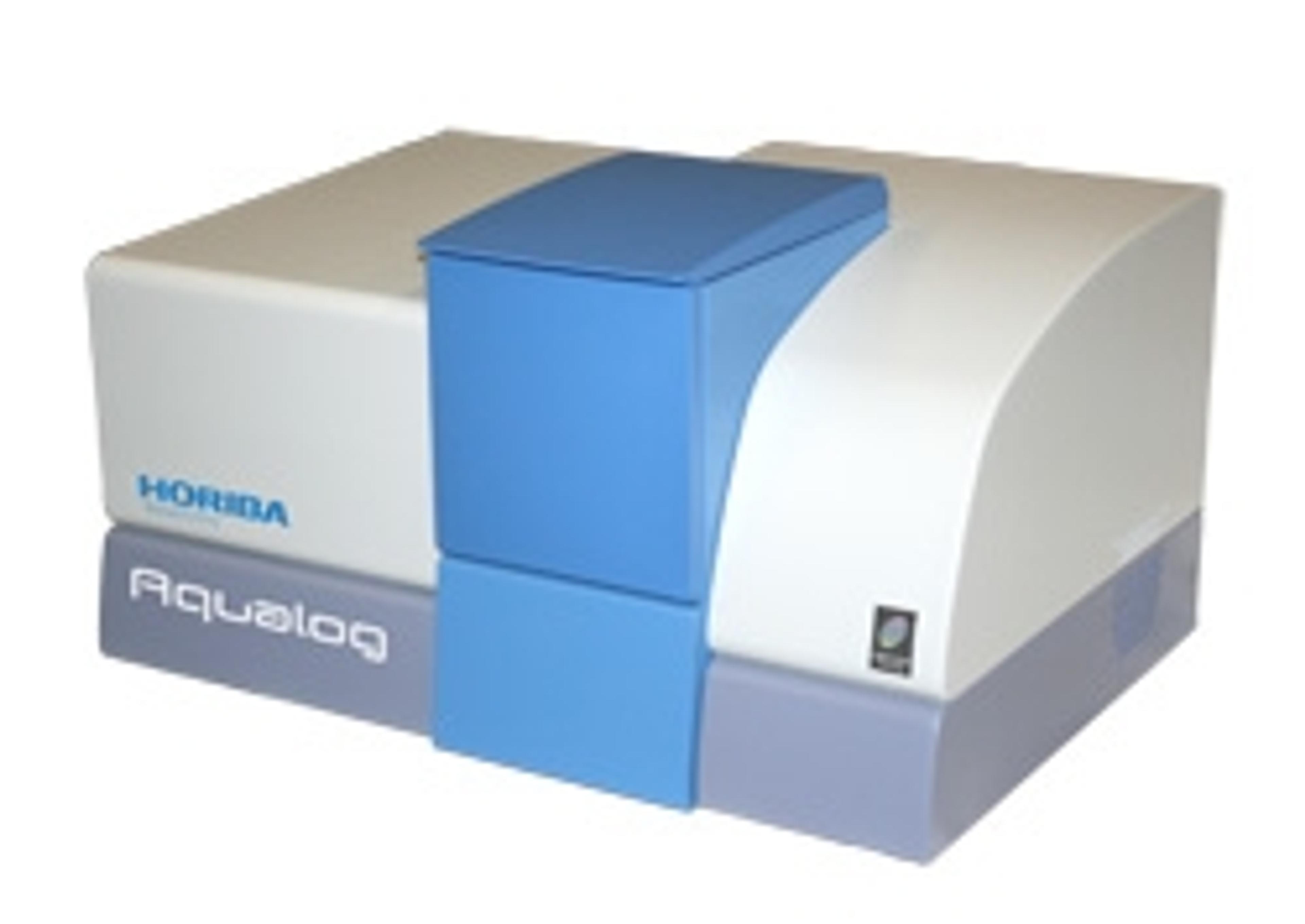
Aqualog® - The compact, Benchtop Fluorometer for CDOM
HORIBA ScientificThe Aqualog is a fluorescence instrument for rapidly measuring and identifying CDOM in water. The measurement is based on fluorescence excitation-emission matrices (EEMS) corrected for all instrumental factors. These corrections require an absorbance measurement to also be performed on the water sample. Key features:• The only instrument to measure both fluorescence and absorbance spectra in a single instrument for water quality analysis • Up to 100 fold faster data acquisition rates than any other benchtop fluorometer • Table-top instrument based on a CCD detector for fast simultaneous readout of the entire emission spectrum • Software routines automatically correct data for inner filter effects, Rayleigh line scattering, water Raman scattering, normalize the intensity scale, and export data for analysis in industry standard 3rd party packagesIts main benefits are: • Table-top instrument based on a TE cooled CCD detector for fast simultaneous readout of the entire emission spectrum, means less analysis time or more samples • Analysis of samples with orders of magnitude variation in concentration without the need for tedious dilutions • Eliminating sample aging, bleaching and dilution issues as experimental variables. AqualogTM measures fully corrected EEMs in seconds. Rapid acquisition reduces bleaching compared to ‘scanning’ instruments that require up to 100 times longer data collection, exposing the sample to damaging UV wavelengths the whole time • The instrument is fully automated• Software: The Aqualog software automatically: - masks the Rayleigh scatter lines - normalizes to traceable intensity standards (Quinine Sulfate or Raman Scattering) - offers 2-dimensional profiling of the ‘integrated’ excitation and emission spectra from EEMs - corrects and batch exports the data for multivariate analysis using the industry standard Parallel Factor Analysis (PARAFAC) method, reducing data analysis time by a factor of ten• Corrected UV-VIS absorbance detection path for stability and accuracy • Double grating excitation monochromator for superior stray light rejection • Matching bandpass for absorbance and fluorescence spectra • The optics: We only use aberration-corrected mirrors (no lenses) to increase the wavelength range, for you cannot get good anti-reflection coatings from 200 nm up through 850 nm or above. Lenses also suffer from chromatic aberrations, meaning different wavelengths focus at different depths in the samples, and consequently you lose sensitivity• Gratings: HORIBA, previously known as Jobin Yvon, has been designing and making ruled and holographic gratings for over 50 years. We use plane-ruled gratings in our instruments as opposed to cheaper holographic ones, because ruled gratings are much less dependent on polarization effects• The excitation source is a 150 W ozone-free xenon lamp. It is mounted vertically to prevent sagging and keep the illumination of the sample optimal• A photodiode reference detector monitors the intensity as a function of time and wavelength to correct for any change in output due age or wavelength, and ensure more repetitive measurements. This reference detector enables to correct both absorbance and fluorescence detector signals