
Syncell enters co-marketing agreement to advance high-resolution spatial proteomics
Combining Syncell’s Microscoop technology and Thermo Fisher’s Orbitrap Astral mass spectrometer series
21 Aug 2025
Syncell has announced a strategic co-marketing agreement with Thermo Fisher Scientific to bring a fully integrated, high-resolution spatial proteomics workflow to the market. The collaboration highlights the power of integrating Syncell’s proprietary Microscoop® technology for spatial protein purification with Thermo Fisher’s ultra-sensitive Orbitrap™ Astral™ mass spectrometer and newly released Orbitrap™ Astral™ Zoom mass spectrometer.
With this collaboration, Thermo Fisher and Syncell will enable researchers to implement unbiased spatial proteomics with high subcellular resolution to investigate the location and organization of proteins across tissues and cells without relying on predefined targets. This marks a major advance from traditional antibody-based spatial methods and introduces new possibilities for comprehensive protein mapping and discovery across biological systems in oncology, neuroscience, drug discovery, immunology, cell biology, and more.
The combined workflow integrates Syncell’s Microscoop Mint — a high-precision system that performs real-time, microscopy-guided spatial protein purification — with the Orbitrap Astral mass spectrometer series, delivering unmatched acquisition speed, proteome depth, and spatial resolution. Together, these technologies unlock a hypothesis-free approach to subcellular proteome analysis in fresh and formalin-fixed, paraffin-embedded (FFPE) tissues as well as in cell culture samples.
“The integration of the Syncell Microscoop technology with the Astral Orbitrap mass spectrometer has transformed our capacity to interrogate biology,” says Dr. Luisa Iruela-Arispe, chair of the Department of Cell and Developmental Biology at the Northwestern Medicine Feinberg School of Medicine.
"By uniting the nanometer-scale spatial resolution of the Syncell Microscoop technology with the ultra-sensitive detection of the Astral mass spectrometer, we have achieved an analytical capability that pushes the boundaries of cell signaling, revealing spatial and chemical detail that has never before been accessible,” she adds.
“This collaboration with Thermo Fisher reinforces our mission to democratize access to high-resolution, unbiased spatial proteomics,” says Dr. Jung-Chi Liao, CEO and founder at Syncell. “Microscoop's spatial purification technology is an excellent match with Thermo Fisher’s Orbitrap Astral mass spectrometer series. By integrating our systems, we are setting a new gold standard for high-resolution proteomic discovery at the cellular and subcellular level.”
Want the latest science news straight to your inbox? Become a SelectScience member for free today>>
Related products
Request Quote for All Products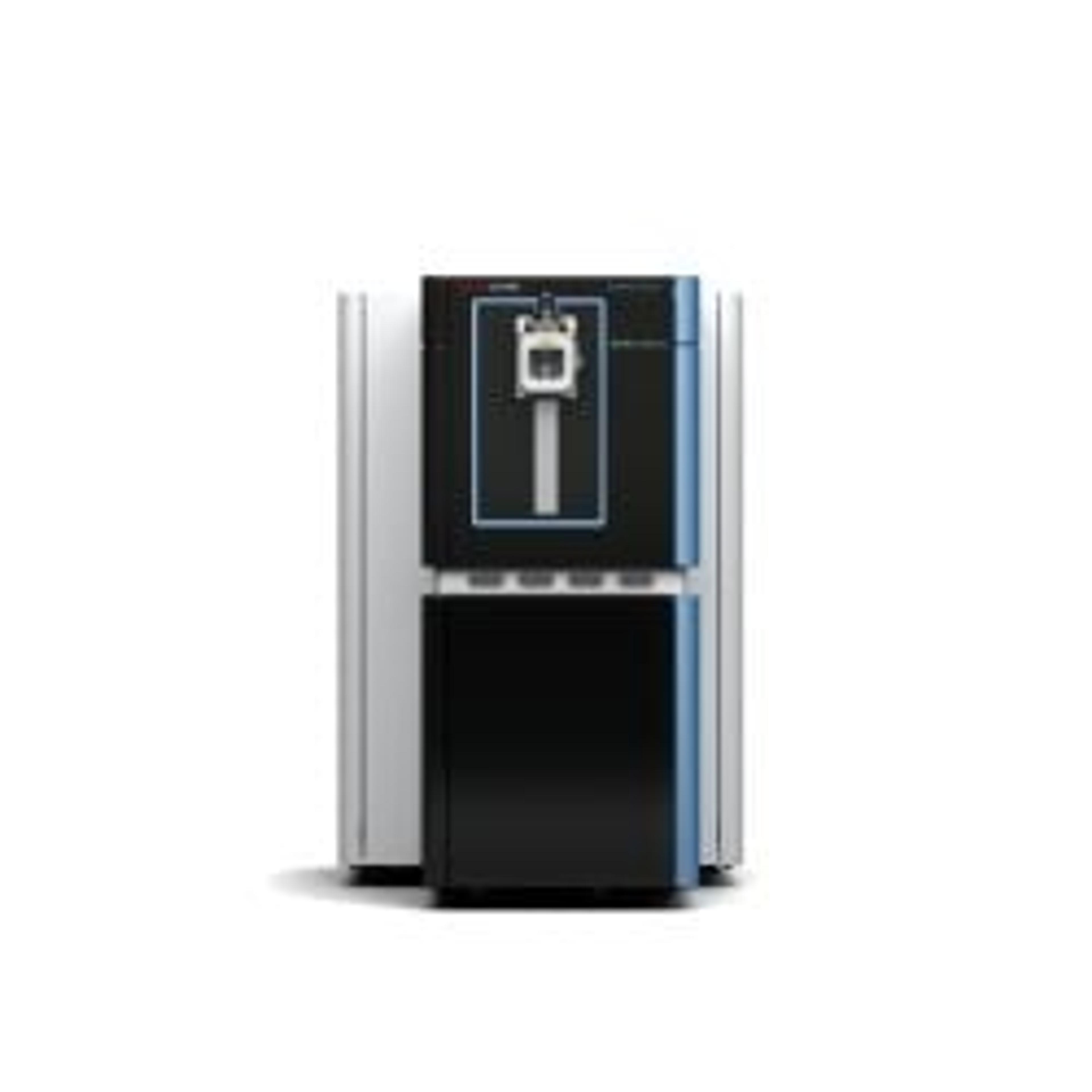
Thermo Scientific Orbitrap Astral mass spectrometer
Thermo Fisher ScientificThe Thermo Scientific™ Orbitrap™ Astral™ mass spectrometer is powered by the synergy of a high-resolution quadrupole mass filter, Thermo Scientific™ Orbitrap™ analyzer and novel Thermo Scientific™ Astral™ analyzer to achieve unsurpassed performance and experimental flexibility. The combination of the three mass analyzers enables the rapid acquisition of exceptional quality high resolution accurate mass (HRAM) full scan and MS/MS spectra with high sensit