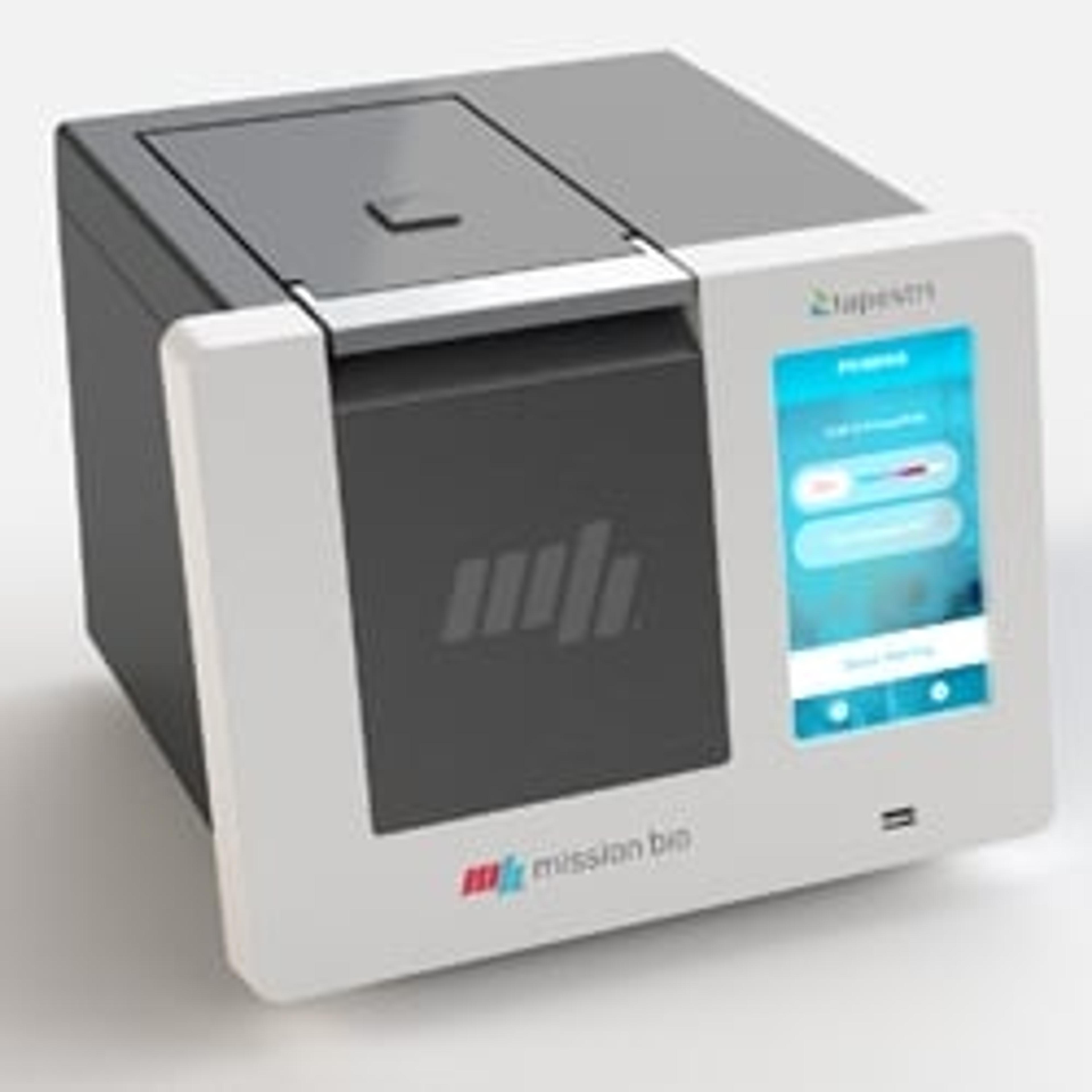
Study using Mission Bio’s Tapestri platform reveals clonal diversity underlying AML and therapy resistance

The study leverages the Tapestri Platform to illustrate the single-cell atlas of acute myeloid leukemia (AML) with multi-omics, describing the clonality underlying therapeutic resistance

27 Oct 2020

Diane Li
Assistant Editor

Industry news

Mission Bio, Inc., the pioneer in single-cell DNA and multi-omics analysis, has announced the publication of a study demonstrating the power of its Tapestri Platform® to establish the single-cell genomics atlas of acute myeloid leukemia (AML) samples, providing unique insight into disease evolution and treatment resistance. Leveraging the Tapestri Platform’s industry-first capabilities, the study is the first to correlate genotype and phenotype at the single-cell level — insight crucial to the development of more impactful treatments. The study, published in Nature Communications, was led by Koichi Takahashi, M.D., Ph.D., at MD Anderson Cancer Center.

The clonal diversity and complexity in cancer can impact disease progression, therapy response, and disease recurrence. While bulk sequencing has been used to assess the mutational landscape of AML, it is limited in its inferences on mutation patterns across clones, or cell populations, risking inaccurate interpretations that mischaracterize disease biology and subsequent therapy development. The additional ability to examine the correlation between mutations and protein expression patterns at the single-cell level gives a more complete understanding of cancer, with insight into the clonality that underlies treatment response and resistance.

To obtain an accurate understanding of the clonal architecture of AML, researchers at MD Anderson Cancer Center used the Tapestri Platform, Tapestri Single-cell DNA Panels, and custom oligo-conjugated antibodies for single-cell DNA analysis and simultaneous single-cell mutation and protein profiling. A total of 154 samples from 123 AML patients were analyzed, and more than 700,000 cells were sequenced. While mutations detected using Tapestri were highly concordant to bulk sequencing data, single-cell multi-omics analysis provided additional insights to mutation co-occurrence and exclusivity patterns, single-cell copy number variants (CNVs), and clonal evolution and mutational histories. The interplay of protein expression patterns with mutations from single cells illuminated a fuller picture of the dynamics behind cancer’s response and resistance to targeted therapies.

“It’s always been a dream for us to study the connection between genotypic and phenotypic diversity among individual AML cells, to understand how they evolve in response to therapies,” said Takahashi. “With the Tapestri Platform, we finally have a tool that empowers this understanding, with enormous implications and potential for clinical management of AML.”

This is the first peer-reviewed publication to showcase the industry-first and only single-cell multi-omics capabilities of the Tapestri Platform. It follows Mission Bio’s recent Series C round of funding and its expansion into biopharma and cell and gene therapy markets.

“It’s been an inspiration to see this pioneering work from Dr. Takahashi, leveraging the Tapestri Platform for simultaneously genotyping and phenotyping single cells,” said Charlie Silver, co-founder and CEO. “We’re honored to power these breakthroughs, and we’re excited that the platform is delivering great impact in assessing therapy response and resistance across multiple cancer indications.”

Do you use Mission Bio products in your lab? Write a review today for your chance to win a $400 Amazon Gift Card>>

Tapestri Platform

Mission Bio

Clonal Resolution with Single-Cell Precision Complex disease evolves, so understanding genetic variability — including mutation co-occurrence at the single-cell level — is vitally important for clinical researchers to break the cycle of treatment response, resistance and relapse.

(0)

Links

Tags

AntibodiesAntibodies are used in techniques such as confocal and fluorescence microscopy, flow cytometry, ELISA, ELISPOT, immunohistochemistry, western blotting and immunopreciptation. Select specific antigen reactivity, high specific affinity, low non-specific binding, monoclonal or polyclonal, primary or secondary antibodies and associated conjugates such as an enzyme or dye for visualization.Genome AnalysisGenomics, the study of genomes, includes functional genomics, evolutionary genomics and comparative genomics. There are many genomic technologies such as DNA sequencing of whole genomes, computational biology and bioinformatics. DNA and nucleic acids must be isolated and concentrated from cells for analysis with kits, automated analyzers and software. Other useful technologies for studying genomics include PCR, microarrays and electrophoresis.HematologyIn Haematology / Hematology, complete blood cell counts (or full blood counts) are obtained using automated blood count analyzers to enumerate blood cell types.  Hematology also encompasses haemostasis and coagulation, thrombophilia and hemophilia, plasma viscosity and ESR analysis, hemoglobinopathies, cell morphology and haematinic measurement.ImmunologyImmunological techniques measure and characterize immune responses. Immunology kits and analysis systems often use techniques such as ELISA, radioimmunoassay (RIA) and immunodiffusion assays, Immunohistochemistry, and flow cytometry. Immunologists use equipment such as flow Cytometers, plate readers, plate washers and fluorescent microscopes.Gene Expression and Molecular CloningMolecular cloning is a set of techniques that utilizes vectors to transfer recombinant DNA into host cells and is an essential tool for investigating the expression of genes and proteins in bacterial or mammalian cells. A variety of vectors optimized for gene cloning and expression in a range of host organisms are available, alongside competent cells for genetic replication. Here, you can explore a range of molecular tools, high-quality genomic and cDNA libraries, premade clones, transformation and transfection reagents and mutagenesis or gene expression detection assays and expression arrays. Find the best gene expression and molecular cloning products in our peer-reviewed product directory: compare products, check customer reviews and receive pricing direct from manufacturers.Biopharmaceutical AdvancesBiopharmaceutical advances follow the development of pharmaceuticals derived from biotechnology, also known as biotechnology medicines. Biopharmaceuticals may be produced from cell lines, plants, or microbial cells. Important considerations of biopharmaceutical use include application, cost, production process and purification.Clinical ChemistryBiochemistry (or clinical chemistry) involves the analysis of bodily fluids using chemical tests. Techniques used include HPLC, chromatography, spectroscopy, mass spectrometry, immunochemical, electrophoresis, turbidometric / spectrophotometric assay, MRI and ISE analysis. Tests are often carried out on plasma or serum but urine (urinalysis) and fecal specimens are also processed.Clinical GeneticsMolecular Genetics covers the analysis of hereditary genetic disease and chromosomal abnormalities. Genetics can be analysed using DNA, RNA, and protein microarrays, PCR, RT PCR and DNA sequencing. Genetic equipment includes genetic workstations, thermal cyclers, cooling blocks and electrophoresis products. Diagnostic kits are used for DNA / RNA extraction and purification.Clinical MicrobiologyMicrobiology is the study of microorganisms including protists, prokaryotes, fungi, and, often, viruses. Microorganisms are a useful research tool as genetic vectors and, in immunology, for antibiotic susceptibility testing, cellular biology and genetics. Microorganisms commonly grow readily in incubators with microbial culture media; this can contain chromogenic supplements to differentiate between cell lines. Estimate your culture’s density of microorganisms with colony counters, or screen and select colonies for desirable clones with automated colony pickers. Additionally, equipment is available to monitor environments for the presence of microbes and identify with microbial identification instruments. Find the best microbiology products in our peer-reviewed product directory: compare products, check customer reviews and receive pricing direct from manufacturers.LeukemiaMonoclonal AntibodiesMonoclonal antibodies (mAbs) are lab-made molecules that can bind to specific antigens on cells, making them highly effective in treating cancers, autoimmune diseases, and infections. These targeted therapies are transforming the treatment landscape for many conditions. Browse our peer-reviewed product directory to find monoclonal antibodies for research and clinical applications; compare products, check reviews, and get pricing directly from manufacturers.Therapeutic AntibodiesTherapeutic antibodies are antibodies engineered for use in treating diseases. They can be designed to target specific antigens, blocking harmful interactions or modulating immune responses. Therapeutic antibodies are critical in treating conditions like cancer, autoimmune disorders, and infectious diseases. Explore the best therapeutic antibody products in our peer-reviewed product directory; compare options, check reviews, and get pricing directly from manufacturers.Single Cell GenomicsTherapeuticsTherapeutics are treatments designed to alleviate or cure diseases. These include pharmaceuticals, biologics, and gene therapies, which work by targeting specific disease mechanisms. Advances in personalized medicine and biologics offer new hope for patients with conditions that were previously difficult to treat. Browse our peer-reviewed product directory to find therapeutic solutions for various diseases; compare products, check user reviews, and get pricing directly from manufacturers.Phenotypic ScreeningPhenotypic screening assesses cellular responses to compounds, enabling drug discovery and target identification. This technique is pivotal in finding effective treatments for complex diseases. Discover phenotypic screening platforms and tools with peer-reviewed comparisons and pricing in our directory.