Shimadzu signs collaboration agreements to develop an 'Oxygenated compound analysis system' for biofuel research

This system aims to combine Shimadzu gas chromatography with the patented technology jointly owned by TOTAL, UPPA, and UO

19 Jan 2021

Diane Li
Assistant Editor

Industry news

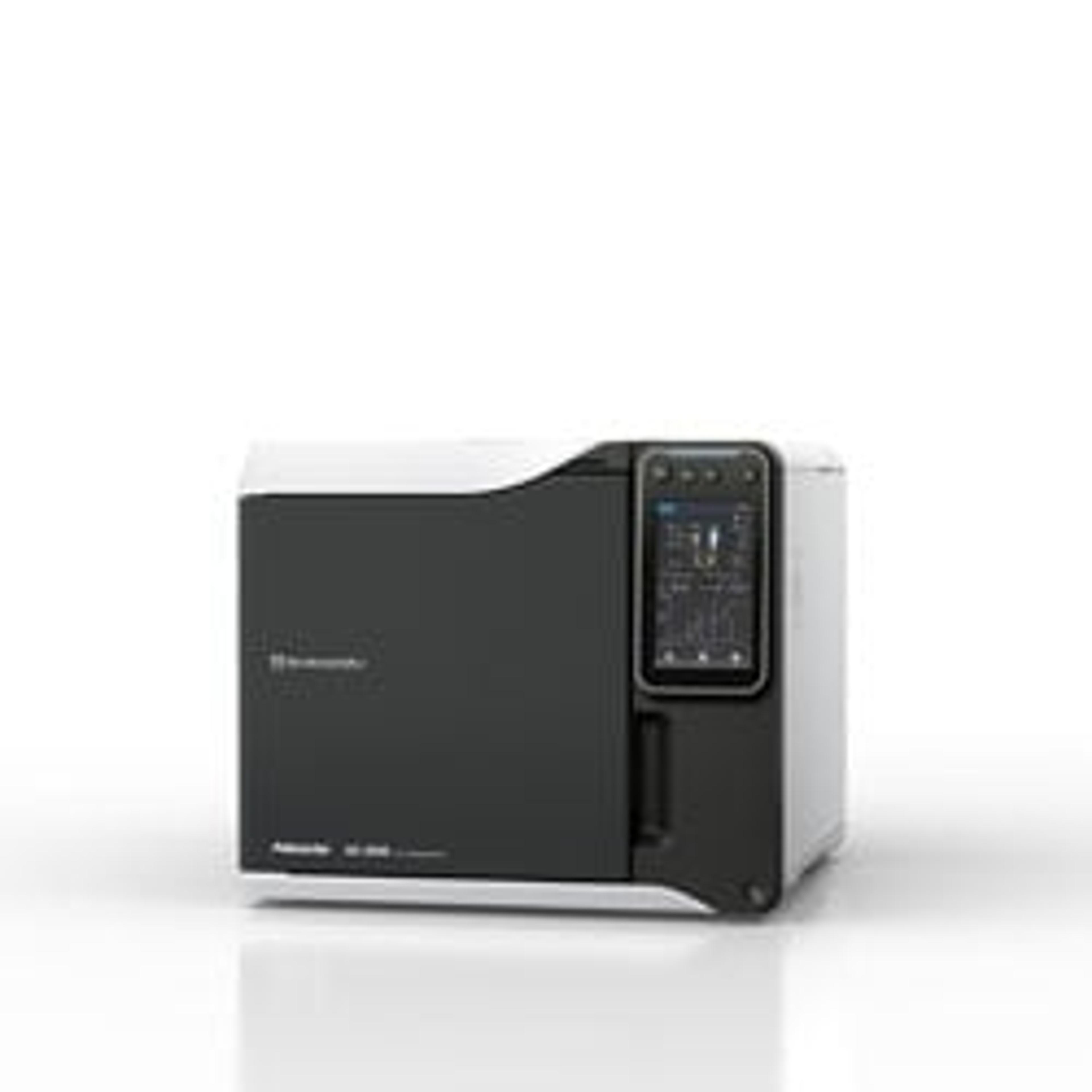
Shimadzu has signed comprehensive collaboration agreements in the clean energy field with TOTAL SE, University of Pau (UPPA) in France, and University of Oviedo (UO) in Spain. The four parties aim to develop an "Oxygenated compound analysis system" within two years to research biofuels. This system is a breakthrough analyzer combining Shimadzu gas chromatography with the patented technology jointly owned by TOTAL, UPPA, and UO.

To achieve carbon neutrality by 2050, we must reduce our dependence on fossil fuels by using biofuels and bioethanol for more carbon-neutral transportation, as biofuels emit less than half the CO2 of fossil fuels over their lifecycle. Biofuels generally contain oxygenated compounds, such as organic acids, aldehydes, and phenols, that cause the fuel's transformation. It would not be difficult to remove them if the compounds could be identified. However, since bio-derived biofuels contain many unknowns oxygenates, it is technically challenging to identify them efficiently, and an industry-standard analytical method has not been established yet.

TOTAL, UPPA, and UO have patented a breakthrough technology, "The compounds separated by a gas chromatograph are decomposed to the elemental level, and the oxidation catalytic reaction is promoted to be detected using a mass spectrometer (MS).".With this patented technology, the identification process of oxygenated compounds in biofuels can be reduced to several tens of minutes from hours. The traditional method is "Examine and select hundreds of chromatogram peaks one at a time (the MS spectrum pattern indicating the presence of a compound)." Besides, analysis results can be obtained regardless of the user's skill level. The "Oxygenated compound analysis system" developed by Shimadzu, TOTAL, UPPA, and UO will improve research, development, and manufacturing processes to expand biofuels' utility.

“This innovation is the result of the collaboration between TOTAL R&D and the Universities of Pau and Oviedo and is perfectly in line with TOTAL's climate ambition to get Net Zero by 2050 together with society. The transformation of biomass into products requires a precise measurement during industrial processes, we are happy to work with Shimadzu to accelerate this innovation to meet industry neutrality targets.” Said Marie-Noëlle Semeria, CTO Senior Vice President, Group R&D of TOTAL

“It has been 50 years since Shimadzu began to produce gas chromatograph mass spectrometers domestically in Japan in cooperation with European manufacturers. During this time, we have developed many unique products through various innovations. We are very honored to be able to work again with renowned European universities and companies to develop technologies that contribute to the environment.”Said Shuzo Maruyama, General Manager, Analytical & Measuring Instruments Division, Shimadzu Corporation.

Do you use Shimadzu products in your lab? Write a review today for your chance to win a $400 Amazon gift card>>

Links

Tags

Gas ChromatographyGas chromatography (GC) is an analytical technique used to separate and quantitate mixtures of small and volatile compounds. Gas chromatographs or GC systems include components such as GC columns, detectors, pumps and autosamplers. Choose from packed or capillary GC columns, flame ionization (FID), photoionization (PID) electron capture detectors and selective or non-selective detectors. Find the best gas chromatographs in our peer-reviewed product directory: compare products, check customer reviews and receive pricing direct from manufacturers.Sample PreparationSample preparation can improve the quality and speed of separation techniques. Products to assist sample preparation include filtration equipment, evaporators, membranes and sieves.Mass SpectrometryMass spectrometry (MS) is a powerful analytical technique used to identify and quantify molecules based on the mass-to-charge ratio of gas-phase ions. It provides detailed information about the structure, composition, and properties of compounds and is widely used across fields such as environmental monitoring, materials science, drug discovery and development, food and beverage testing, and wider chemical research. Key MS techniques include tandem mass spectrometry (MS/MS), liquid chromatography–mass spectrometry (LS-MS) and inductively coupled plasma (ICP-MS). Choosing from these wide range of techniques and technologies can be a daunting task, so keep up to date with scientific applications, performance expectations, and customer reviews here all in one place. Visit our product directory to receive quotes direct from the manufacturer. Gas Generators and AnalyzersGas generators are used for supplying or monitoring a regular flow of a high purity gas such as nitrogen, hydrogen or zero air for applications such as gas chromatography. Gas analyzers can be used in supply chain processes and laboratory experiments with portable analyzers for monitoring CO<sub>2</sub> and O<sub>2</sub> levels as well as trace gases. Regular flow can be produced with gas control modules and flow meters. Find the best gas generators and analyzers in our peer-reviewed product directory: compare products, check customer reviews and receive pricing direct from manufacturers.Environmental Monitoring and TestingEnvironmental monitoring and testing uses handheld portable analyzers, kits, spectrometers or chromatography systems for air, water, soil, food and other sample testing. Useful features of analyzers such as BOD and COD include portability, easy calibration, automation and sensitivity.  Environmental test kits for pH, water, moisture, etc, should be accurate, sensitive, reliable, fast and easy to use.Companion DiagnosticsCompanion diagnostics are tests, often <i>in vitro</i>, that are used to determine whether a therapeutic product will be safe and effective for use on an individual. They also identify which patients will benefit most from them. Companion diagnostic tests are often developed in conjunction with the pharmaceutical industry.Compound IdentificationBiofuelGas AnalysisGas analysis is used to measure the composition of gases in various environments, such as industrial processes, air quality monitoring, and environmental studies. Techniques like gas chromatography and mass spectrometry are commonly used. Explore gas analysis tools in our peer-reviewed product directory; compare products, check reviews, and get pricing directly from manufacturers.Environmental AnalysisEnvironmental analysis describes a variety of tests that determine the effect of chemicals, processes and particulates such as persistent organic pollutants (POPs) have on the environment.Compound ScreeningCompound screening is a method used to discover specific compounds that could be promising candidates for pharmaceutical use. This potential is identified when compounds interact with the target protein during screening and could therefore be carried forward in the drug development process.Gas ChromatographyGas chromatography (GC) is an analytical technique used to separate and analyze gases or volatile liquids in a sample. It is widely used in environmental testing, food safety, pharmaceuticals, and forensic science. GC is ideal for identifying and quantifying compounds that are gaseous or can be vaporized without decomposition. Browse our peer-reviewed product directory to find the best gas chromatography systems, compare products, check reviews, and get pricing directly from manufacturers.