
Shimadzu Releases GCMS-TQ8040 Triple Quadrupole Gas Chromatograph Mass Spectrometer
19 May 2014
Shimadzu's new GCMS-TQ8040 inherits the performance of the GCMS-TQ8030 triple quadrupole gas chromatograph mass spectrometer (GCMS), which provides ppt (1 trillionth) level sensitivity and ultra-high-speed analysis. At the same time, the GCMS-TQ8040 offers significantly improved throughput and operability. This product features excellent productivity via simultaneous analysis, smart operability, high sensitivity, and high speed. In addition, it can be used as a "GCMS Smart System" by combining it with special Smart Database series software.
As phase one of the Smart Database series, sales of Smart Pesticides Database will start concurrently. This database supports the analysis of residual pesticides in foods, with data on approximately 480 pesticide components used worldwide, thereby contributing to food safety.
Background to the Development
Triple quadrupole GC-MS/MS systems are utilized for a wide range of applications, including the analysis of drugs and metabolites in blood, analysis of residual pesticides in foods, and detection of environmental pollutants in tap water and environmental water. In recent years, the number of components to detect has increased, while their quantities have become miniscule. Accordingly, in addition to instrument performance, the need has grown for improved operability, simultaneous multicomponent analysis, and support for the development of optimal methods.
In response to these needs, Shimadzu has developed the GCMS-TQ8040. Equipped with new firmware protocols and a method creation program, the system achieves excellent productivity and higher level operability without sacrificing high sensitivity, high selectivity, and high speed. Since sensitivity is not lost, even during simultaneous multicomponent analysis, the GCMS-TQ8040 can simultaneously analyze 400 or more components, more than twice the capability of existing models. As a result, analyses that had to be divided across multiple cycles can now be performed in a single cycle. Depending on the conditions, the analysis time can be shortened from 120 minutes to 40 minutes, 1/3 the conventional time.
When used in combination with the Smart Database, a user can create optimal methods automatically and start analysis without the need for complicated procedures.
Features of the GC/MS-TQ8040
1. Two New Technologies – Smart MRM and Firmware Protocol – Enable Simultaneous Multicomponent Analysis without Compromising Sensitivity
The software now incorporates Smart MRM, a method creation function that automatically sets the optimal measurement time for each component. Furthermore, a new firmware protocol has been introduced to heighten data loading efficiency. Data is only acquired for the elution time for the target components, in accordance with the method file created by Smart MRM. This enables the simultaneous analysis of more than double the number of components for existing models, without compromising sensitivity, even during simultaneous multicomponent analysis. With conventional systems, it takes two or three methods to measure 400 pesticide components; now, they can be aggregated in a single method. In addition, by reducing the number of analysis cycles, maintenance frequency and the need to replace columns and other consumables has also been reduced.
2. Software Features New Functions to Support the Creation of GC-MS/MS Analysis Methods
The GCMSsolution control software has been significantly improved to achieve smart operability from the user's point of view. The software incorporates a program for supporting method creation and provides tools for optimizing analysis parameters. This allows easy, automatic creation of methods, even in MRM analysis requiring a number of parameter settings. In case of creating MRM method with the entry of new 60 compounds, a manual method creation that took about five hours manually can now be accomplished in just ten minutes.
Features of Smart Pesticides Database
In combination with this database, the GCMS-TQ8040 can be used as a system specialized for the analysis of residual pesticides in foods. This product covers approximately 480 pesticide components used worldwide. Furthermore, it can be customized to suit GC conditions not configured in the database, or to suit additional registration of new compound information. In addition, the Smart MRM function allows automatic creation of analysis methods, thereby reducing the costs and time associated with analysis. Additional databases will be developed for use in other fields, including environmental, pharmaceutical, and the life sciences.
Related products
Request Quote for All Products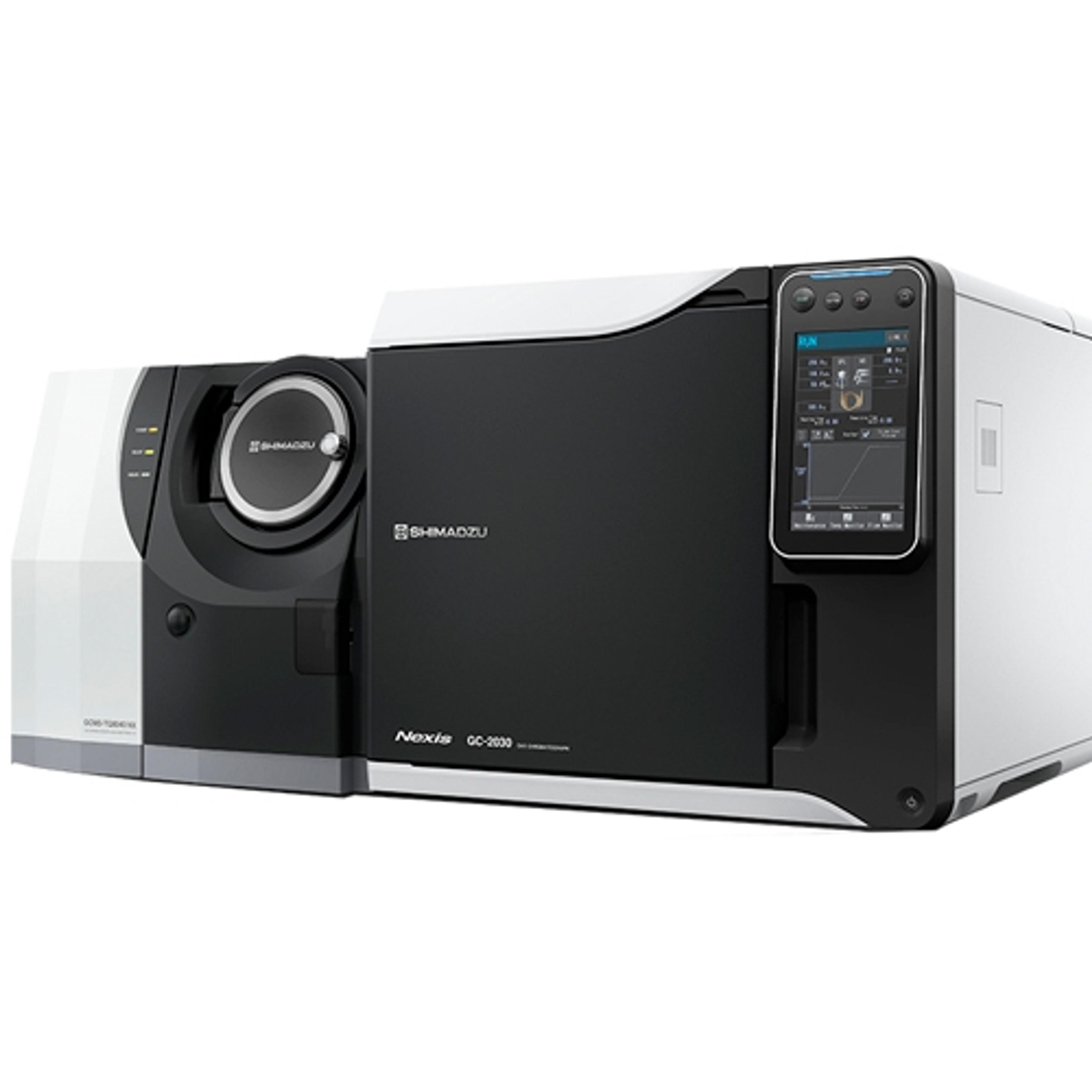
GCMS-TQ8040 NX Triple Quad Gas Chromatograph Mass Spectrometer
Shimadzu CorporationFeaturing Smart Productivity for high-efficiency sample throughput, Smart Operation for quick and easy method development, and Smart Performance for low detection limits and Scan/MRM, the GCMS-TQ8040 NX is a cost-effective, easy-to-use triple quadrupole GCMS for routine analytical work. With over 32,000 MRM transitions in a single run, the GCMS-TQ8040 NX with Smart MRM can combine over 400 compounds into a single MRM method without sacrificing sensitivity or selectivity, doubling or even tripling laboratory productivity. This results in added throughput before routine maintenance is required and faster return on investment. The Shimadzu GCMS-TQ8040 NX MRM Optimization Tool automatically determines optimum transitions and collision energies for all compounds in a single sequence, and seamlessly incorporates them into the Smart Database Series for fully automated MRM method development. Using flexible MS events, the Smart MRM function routinely determines the best dwell and loop times for >400 compounds in a single method, providing optimum precision and sensitivity. The GCMS-TQ8040 NX can acquire data in the classic MRM mode, or in synchronous Scan/MRM mode for simultaneous qualitative and quantitative results. The Scan/MRM mode simultaneously acquires accurate library-searchable mass spectra and low-level MRM quantitation in a single analysis – a critical function when sample volume is limited. Shimadzu’s proprietary UFsweeper™ technology achieves high-speed MRM analysis up to 800 transitions per second. The Advanced Scanning Speed Protocol (ASSP™) provides high-speed scanning control at 20,000 u/second. ASSP and simultaneous Scan/MRM analysis mode provides high-quality library searchable fragmentation spectra, and accurate low-level quantitative data in a single analysis. This efficient design provides optimum performance in all analysis modes: MRM, SIM, Scan, Scan/MRM, Scan/SIM, Neutral Loss, Product Ion Scan, Precursor Ion Scan and combination modes.