
Revolutionary Open-Access Laboratory Facilitating Innovative Research
Learn how innovations from Waters keep this lab at the cutting edge
3 Aug 2015
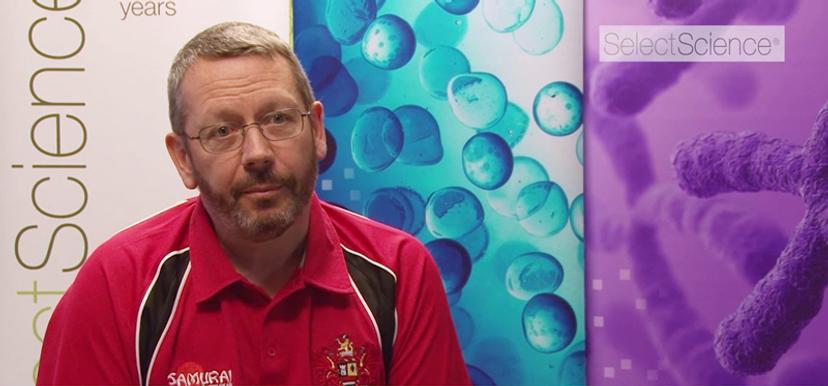
Dr John Langley, Associate Professor in Mass Spectrometry at the University of Southampton, UK
At the University of Southampton, UK, Dr John Langley, Associate Professor in Mass Spectrometry, has to keep his lab at the forefront of separation science. In this exclusive interview, he explained why he made the change from HPLC to UPLC, and how open access analysis has improved research.
"One of the challenges for us is to try and keep the facility at the cutting edge," Dr Langley told us. Like any lab, Dr Langley needs keep ahead of the game to ensure he has funding, but as a core facility serving all researchers in chemistry at the University of Southampton, he needs to make sure that he has technology “before scientists even realize they need it". His facility serves more than 100 post-graduate researchers in 15-20 research groups, and needs to be able to analyze "anything they make or extract".
HPLC to UHPLC
For Dr Langley making the change from HPLC to UHPLC was obvious. "We needed improved resolution and chromatography," he said, and chose the Supercritical Fluid (SFC) route for "better sensitivity and the improved robustness of the technique". The range of chemistry Dr Langley deals with ranges from "simple small acid biomarkers to complex oilfield chemistries", so he needed a system that would provide accurate data for every application.

University of Southampton The University of Southampton is a public university located in Southampton, England. Southampton is a research intensive university and a founding member of the Russell Group of elite British universities.
Open-access research
Where Dr Langley's facility is truly cutting edge is that "50% of the instruments are run in an open access environment". Without this, all samples and analysis would need to be run by a member of staff at the facility, leaving researchers waiting for days to receive their results. Now, "the data can get back to the students in five minutes," revealed Dr Langley, allowing research to be undertaken far more efficiently.
This innovation has not been ignored by the scientific community, with increasing collaborations across Europe, including groups across the UK and in Sweden, studying topics from high-throughput fluoro-chemistry to lipidomics.
The huge flexibility available in this analytical space has come from Waters. Dr Langley described how instruments such as the UHPLC ACQUITY system, the UPC2 and a range of bench-top quadrupoles have all the techniques his team needs to analyze everything and anything they get sent, and this innovation has carried over into the open-access facility too.
Dr Langley also works closely with Waters in the development and optimization of new techniques such as Ultra Performance Convergence Chromatography-MS. With increasing pressure from researchers to acquire better data and more of it, open-access facilities are the way forward.
Watch our talk with Dr Langley, or catch up on everything from ASMS 2015 here.
Related products
Request Quote for All Products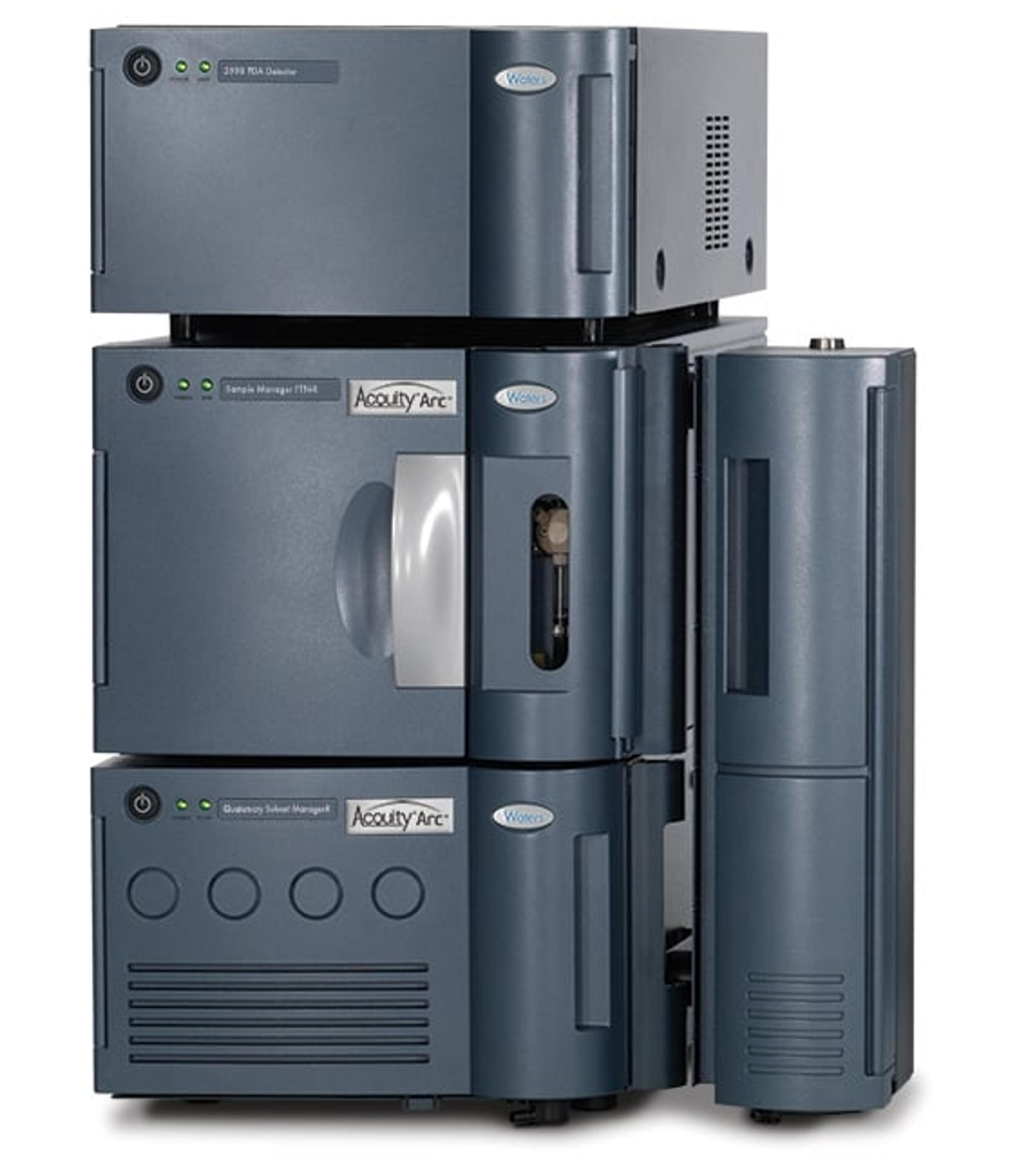
ACQUITY UPC² System
WatersConvergence Chromatography with the ACQUITY UPC² System Bring streamlined workflow, expanded selectivity, and an orthogonal technique to your laboratory. Convergence chromatography (CC) is a broad-based, complementary analytical platform that is taking its place alongside of LC and GC as one of the three essential separation technologies for modern laboratory analysis. This technique provides another, reliable choice as an analytical platform that is orthogonal to reversed-phase LC (RPLC), while significantly streamlining the entire analytical workflow. In convergence chromatography, the separation is achieved by manipulating the density and composition of a supercritical fluid-based mobile phase. Because of the very high diffusivity of the mobile phase, can be achieved. Additionally, the diversity of stationary phase and mobile phase (co-solvent) options provides access to the largest selectivity space available to any separation technique. The ACQUITY UPC² System is a holistically designed UltraPerformance Convergence Chromatography (UPC²) system that utilizes liquid CO2 as the primary mobile phase. The system leverages the chromatographic principles and selectivity of normal-phase chromatography while providing the ease-of-use of RPLC, enabling you to address routine and complex separations challenges. ACQUITY UPC² System: Discover what's been missing from your analytical toolbox With the ACQUITY UPC² System, scientists can now separate, analyze, and understand compounds that have challenged all other LC and GC technologies including: Hydrophobic and chiral compounds Lipids Thermally-labile samples Polymers It's also the perfect complement to MS due to its low solvent load and high resolution, narrow peaks and fast separations. ACQUITY UPC² System Features: Compressed carbon dioxide (CO2), the primary mobile phase, is less costly and less toxic than liquid mobile phases or carrier gases. Variable volume injection delivers 0.5 µL to 10 µL as well as the ability to match column and injection volume with minimal sample loss and need to change loops. Higher throughput and productivity allows you to analyze more samples per day with faster re-equilibration of columns and shorter cycle times, increasing laboratory productivity. Co-solvent and column switching provides flexibility in method development for faster solvent screening and faster column screening.