
QBC Malaria Diagnostic Kits to be Launched in Sudan
5 Jan 2012
Woodley Lab Diagnostics has announced that it is to form a partnership with Sudanese distributor DoHia International, to launch the new QBC ParaLens Advance Fluorescence Microscopy System and Malaria Test in Khartoum, Sudan. The agreement follows a successful presentation delivered by Woodley Diagnostics and the Liverpool School of Tropical Medicine, to leading Sudanese pathologists.
Malaria is the leading cause of morbidity and mortality in Sudan. The World Health Organization states that symptomatic malaria accounts for 20-40% of clinical outpatient visits in the country and approximately 30% of hospital admissions.
The QBC Malaria Diagnostic kits use fluorescence microscopy to detect Plasmodium parasites. The easy to use kit requires samples to be collected in a single capillary type tube which contains all of the staining agents required for the test. The QBC tube is then centrifuged, concentrating the parasites in the red cell layer beneath the buffy coat. The parasites can then be viewed as multiple pinpoints of fluorescence within the red cells layer.
The QBC Malaria Diagnostic kits provide easy sample collection and processing with fast preparation times. They also concentrate samples to simplify review and provide greater sensitivity than possible with conventional stains, particularly in cases of low parasitemia.
When used with the QBC ParaLens Advance fluorescent microscope attachment, a low cost attachment designed to fit on standard light microscopes to upgrade them to LED fluorescence microscopy, the system becomes a highly effective tool in the global fight against malaria. All Plasmodium species can be identified and quantified by the QBC Paralens system. Species differentiation is also possible enabling the clinician to administer the correct treatment option.
Mike Wickham, Managing Director of Woodley Equipment Company, UK commented “Woodley Equipment, alongside the Liverpool School of Tropical Medicine, are very proud to have been invited to Khartoum in Sudan to deliver a presentation on the latest malaria diagnostic methods including the QBC technology. Introducing QBC will provide great benefits to this endemic country by equipping clinical and diagnostic hospitals and labs with the latest technology to more effectively fight the battle against malaria”.
Related products
Request Quote for All Products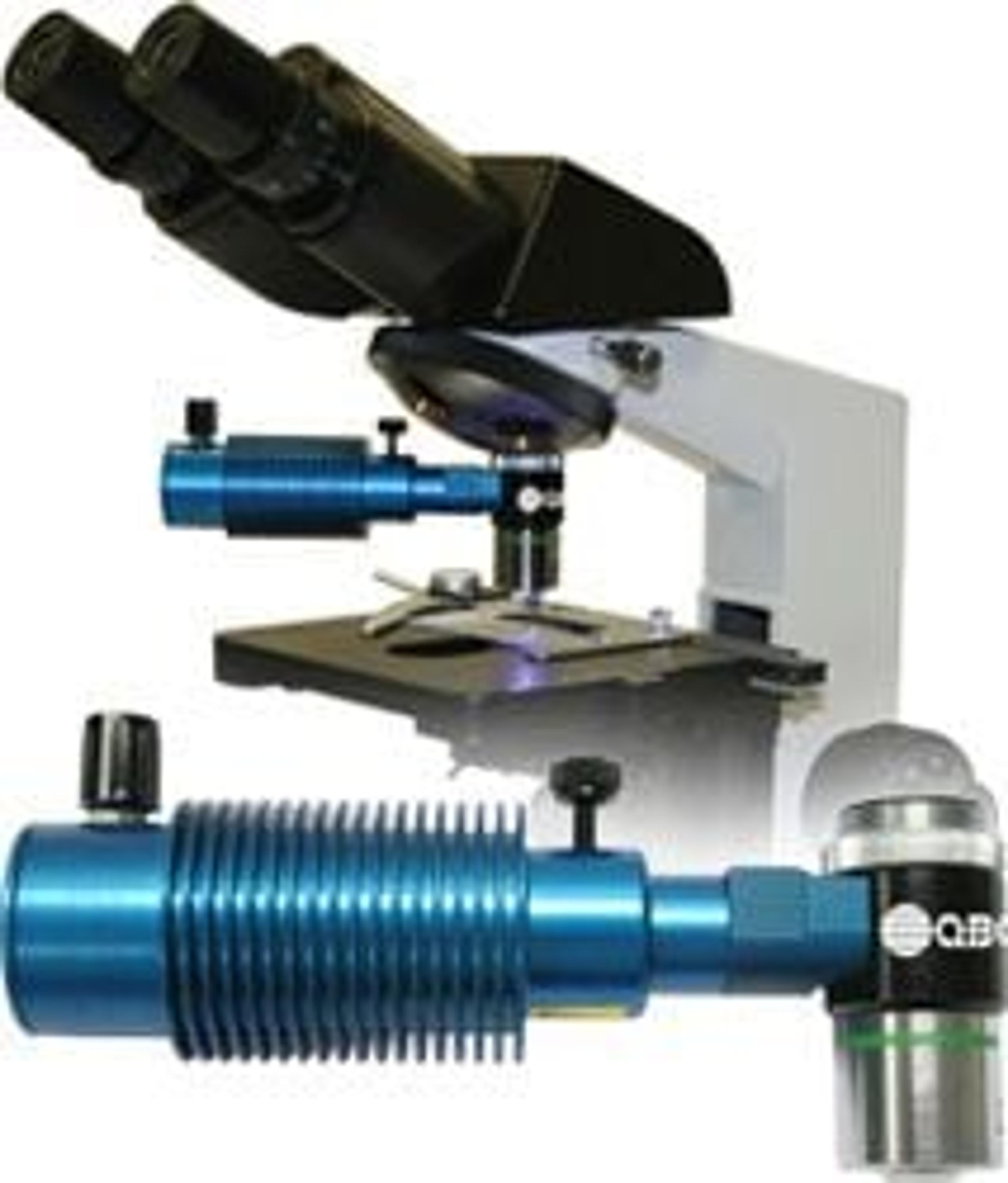
QBC ParaLens Advance Fluorescent Microscope Attachment
Woodley Equipment Company LtdThe QBC ParaLens Advance microscope attachment is a unique solution to fluorescence microscopy in that it combines the critical components of an epi-fluorescence microscope, namely the light source and filter set, with a microscope objective in a compact, durable format that can transform virtually any compound light microscope into an epi-fluorescence microscope. Utilising LED technology, the ParaLens light source lamp has a life of 20,000 hours, far exceeding that of standard fluorescence scopes, and can be powered by low voltage DC sources, such as a solar pack or laptop computer USB port. Moreover, the LED source is mercury-free and produces no UV radiation. Designed for Functionality: The ParaLens Advance is available with a light source-filter combination that supports fluorescence applications that utilise blue excitation and emission light in the green to red spectrum (e.g., FITC fluorescence). This combination allows for a very broad range of applications such as TB detection, malaria diagnosis, indirect fluorescence assays, antibody-based staining studies, gene/protein expression studies, water testing, and many other functions. The attachment is available with 40x, 60x (oil), and 100x (oil) objectives and a solar/battery pack power source, as well as USB, car cigarette lighter, and battery clamp power cords are available for use in resource limited settings. The ParaLens is packaged in a rugged custom case that is perfect for transport and storage in the field and other rough settings.