
New Webinars Explore Feed Strategy Challenges Using Mini Bioreactors Detailing how to Achieve Consistent Feeding Regimes for Reproducible Scale-up
24 Sept 2014
TAP Biosystems (now part of the Sartorius Stedim Biotech Group), a leading supplier of innovative cell culture and fermentation systems for life science applications, today announced that it will be presenting two new bioprocess development webinars on Thursday, October 9th, 2014. The first is at 9am BST / 10am CEST / 1.30pm IST / 5pm KST and the second webinar is at 8am PDT / 11 am EDT / 4pm BST / 5pm CEST. The live events will detail how to use the ambr250™ high-throughput automated mini bioreactor system for optimizing reproducible feeding regimes to accelerate scale-up bioprocess development of protein-based therapeutics.
During the hour long webinars, bioprocessing expert, Mwai Ngibuini, ambr250 Product Manager at TAP Biosystems, will discuss some of the challenges equipment manufacturers face when trying to model feeding regimes in small scale bioreactors. He will detail current methods used to overcome these issues and explain how the features of the ambr250 mini bioreactor are being utilized to precisely control feed additions. He will also present technical data from industrial pharmaceutical researchers using ambr250 in their bioprocessing development of mammalian cell lines to produce antibody therapeutics. This data compares the system’s performance to benchtop and pilot scale bioreactors, thus validating how using reproducible feed regimes in a mini bioreactor can improve scalability in upstream process development.
To access the free webinars on October 9th, scientists can register using the company website link below.
Mwai Ngibuini, ambr250 Product Manager at TAP Biosystems commented: “Mini bioreactors offer a strategy for rapidly assessing a large number of process parameters and reducing bioprocess development time. However, many don’t allow consistent feeding regimes, which can lead to run-to-run variability and becomes a challenge when trying to use that data to scale-up the process.”
Ngibuini added: “I am delighted to be hosting these webinars to present industrial, proof-of-concept data which demonstrate consistent feeding strategies using ambr250. I look forward to discussing with scientists attending the webinars how they could apply the ambr250 as a true scale-down model in their workflow and the ways in which this could help reduce manufacturing costs and accelerate development of their protein-based therapeutics.”
Related products
Request Quote for All Products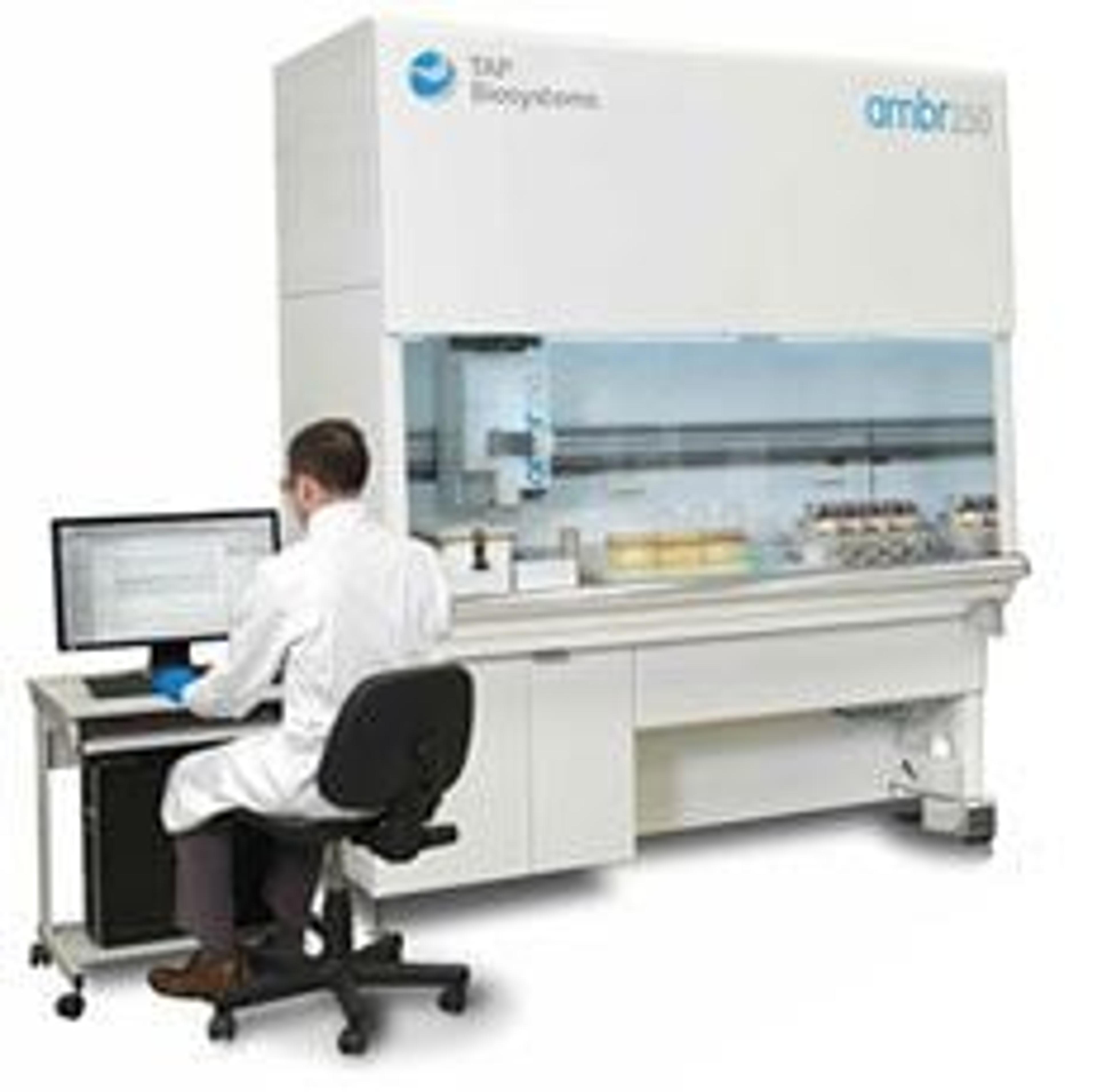
ambr 250 - Bioreactor System
TAP Biosystemsambr 250™ is a new bioreactor system for parallel fermentation using single-use bioreactors controlled by an automated workstation. The new system, developed with two major industrial partners, builds on TAP’s successful microbioreactor technology, adding increased fermentation volumes, as well as individual bioreactor temperature and impeller control. ambr 250 provides an efficient, high throughput scale-down model for process development.New, single use 100-250ml reactor vessels have been developed for use with the system – avoiding the need to clean reactors and sensors between runs. The design includes a novel “easy connect” process enabling all gas, liquid and sensor connections to be made, quickly and simply, for fast turnaround between experiments.ambr 250 - Bioreactor System Benefits: Fully automated system - media fill, inoculation, sampling and feeding Individual control for each bioreactor vessel - temperature, impeller speed, pH and DO Integrated control of multiple bioreactors (12 or 24) A better tool for process development of microbes Rapid evaluation of a wide range of conditions and cell line/strain performance Excellent scalability to large-scale, bench top bioreactors Process development for biopharma and industrial biotech Process robustness experimentation in support of QbD studies Automation of DOE approaches to process automation