
New and Emerging Techniques in POPs Analysis
Dr Esteban Abad, Institute of Environmental Assessment and Water Research – Spanish Council for Scientific Research
5 Jan 2016
Persistent organic pollutants (POPs) are environmental contaminants characterized by their persistence, long-range transport and biomagnification in food chains and bioaccumulation in humans. Polychlorinated dibenzo-p-dioxins (PCDDs), dibenzo-furans (PCDFs) and dioxin-like polychlorinated biphenyls (dl-PCBs) are commonly known as dioxins and furans and internationally recognized and the most important toxic members of POPs. The detection and confirmation of dioxins requires a high level of analytical performance.
Until recently, EU legislation required the use of HRMS based on magnetic sector analyzers as a standard approach for confirmatory analysis of dioxins in feed and food. However, recent technological advances in GC-MS/MS instruments have enabled other alternatives (Commission Regulation (EU) No 589, 2014 and Commission Regulation (EU) No 709, 2014). These analytical techniques achieve the required sensitivity and selectivity for dioxin analysis. As result, GC-MS/MS is now permitted for use in the EU to control the maximum levels for dioxins in food and feed as a full confirmatory method. When using GC-MS/MS, specific performance criteria for dioxin confirmation must be met in addition to the criteria described by the European Commission regulations.
In this presentation, the results of several experiments performed using triple quadrupole for dioxin analysis in food and feed samples is displayed. In addition, other GC- MS approaches which in the near future could be also suitable to be considered for same purposes will be noticed.
Watch presentation on-demand now.
Related products
Request Quote for All Products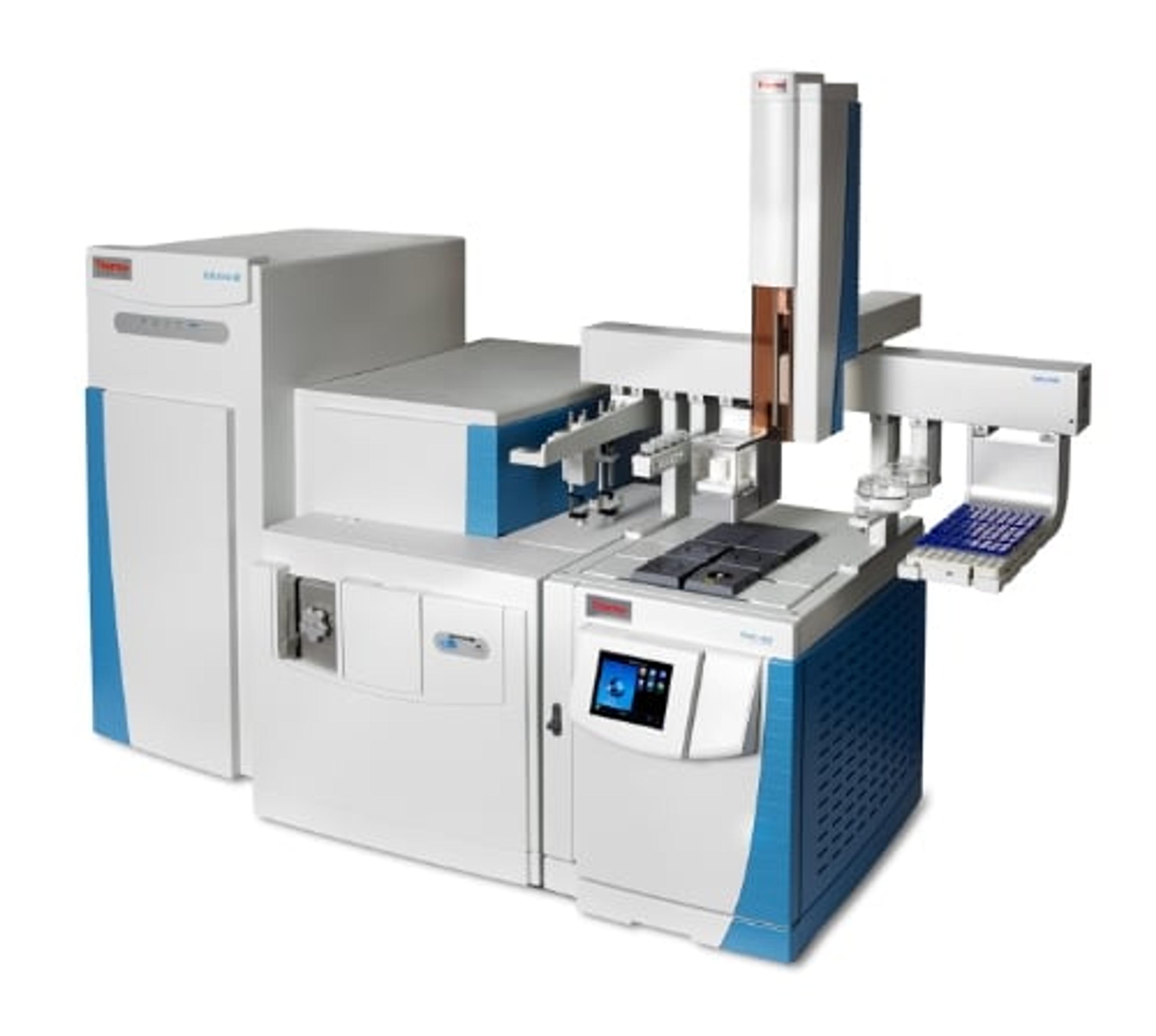
Thermo Scientific™ Q Exactive™ GC Orbitrap™ GC-MS/MS System
Thermo Fisher ScientificThe Thermo Scientific™ Q Exactive™ GC system is the first-ever combination of high resolution gas chromatography with high-resolution/accurate-mass (HR/AM) Orbitrap detection for the most comprehensive sample characterization. This easy-to-use system provides the most comprehensive characterization of samples in a single analysis for the highest confidence in compound discovery, identification, and quantitation. Building upon the flexible modularity of the Thermo Scientific™ TRACE™ 1300 Series GC, including user-exchangeable injectors and detectors, the Q Exactive GC system has the quantitative power of a GC triple quadrupole MS combined with the high precision, full scan high-resolution/accurate-mass capability that only Orbitrap technology can offer. Key Features: Advanced quadrupole technology (AQT) for high transmission of selected masses Resolving power up to 120,000 at m/z 200 Part-per-trillion-level sensitivity Thermo Scientific™ Extractabrite™ ion source for robust, rugged electron impact (EI) and chemical ionization (CI) performance Curved linear C-trap for precise ion injection HCD collision cell for higher energy collisional dissociation provides MS/MS ion characterization Intelligent identification software elucidates the nature of each injected sample. Applications: Untargeted and targeted metabolomics Food and beverage Industrial analyses Environmental Pharmaceutical Clinical and toxicology