
Major Drug Discovery Target Offers Promising New Cancer Treatment
Professor Patrick Gunning discusses the multidisciplinary approach that is helping his team to fast-track the development of small molecules for treating cancer
12 Oct 2017

Professor Patrick Gunning, Ph.D. The Gunning group develops inhibitors of proteins that drive the most rare and lethal of human cancers
Signal transducers and activators of transcription (STATs) are a group of cytosolic proteins that regulate the expression of several genes associated with the uncontrolled growth and immortality of cancer cells. Molecules that target and inhibit STAT protein function are therefore of great interest to scientists developing new cancer therapeutics. SelectScience® speaks with Patrick Gunning, Ph.D., Canada Research Chair in Medicinal Chemistry and Professor of Chemistry at University of Toronto Mississauga, to learn about his exciting advances in the development of small molecule inhibitors of the STAT3 and STAT5 oncoproteins.
Gunning, whose work focuses on developing small molecule inhibitors for targeting and treating cancer, explains that STAT3 is hyperactivated in over 70% of all human cancers – making it a major target for drug discovery. While this protein is present in most cells, in cancer it is permanently switched on, driving the expression of genes that lead to uncontrolled cell growth and survival. Over the past 10 years, Gunning and his team have taken on the daunting challenge of identifying molecules that inhibit STAT3 function. This effort has paid off, leading to the creation of Janpix Inc., an oncology-focused startup co-founded by Gunning that launched with $22 million in funding to advance STAT-targeting cancer therapies.
Get more great content like this sent to your inbox: Register as a SelectScience member today.
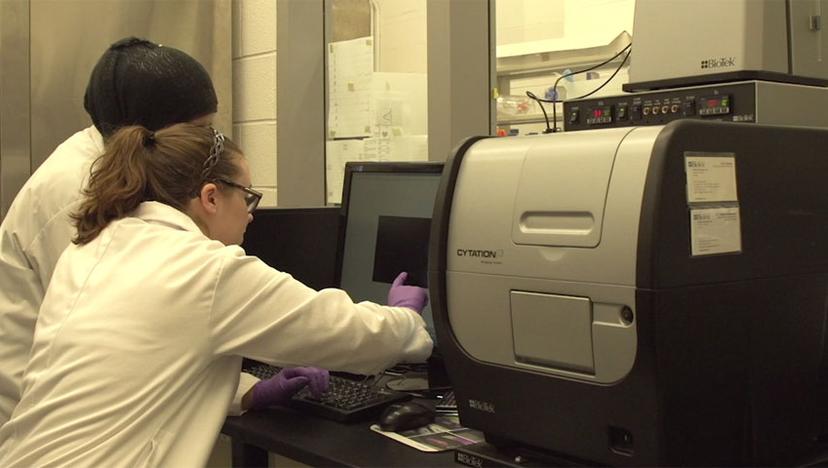
When analyzing the function of potential STAT inhibitors, it is important to know the location of the STAT protein within the cell. If the STAT3 inhibitor molecule is functioning correctly it will stop the translocation of STAT3 from the cytoplasm to the nucleus and effects of this can be observed. Gunning highlights the BioTek Cytation™ cell imaging multi-mode reader as playing a crucial role in this research by enabling the visualization of STAT proteins and the effects of inhibitors in cancer cells, adding another dimension to the team’s research. He tells SelectScience that the Cytation™ has proved reliable for his team and really helped to accelerate the process of drug discovery.
Service has been incredible. We really haven’t had any issues whatsoever – and there’s not many instruments that I can say that about.
Professor Patrick Gunning, Ph.D. University of Toronto Mississauga
Gunning describes how his group takes a multidisciplinary approach to drug development, incorporating in silico, organic, biophysical, cell biology and pharmacokinetic analyses. It is this collaborative and driven process that has helped to fast-track molecules to advanced preclinical trials.
In the past three years, research in the Gunning group has also focused on another member of the STAT family of proteins, STAT5. Unlike STAT3, STAT5 only recently came to focus as a target prominent in hematological cancers. Current work by the group has already identified a number of candidate small molecules that inhibit STAT5 function, proven in preclinical trials. Gunning comments that he hopes these molecules will also go into advanced preclinical trials and lead to a STAT5-targeting drug candidate.
In the future, Gunning hopes that the equipment and infrastructure in place will help his group to produce more advanced preclinical molecules rapidly and routinely. This will help to identify molecules that are more targeted and safer for patients with cancer.
Learn more about research in the Gunning lab or find out more about BioTek Cytation™ cell imaging multi-mode reader technology.
Related products
Request Quote for All Products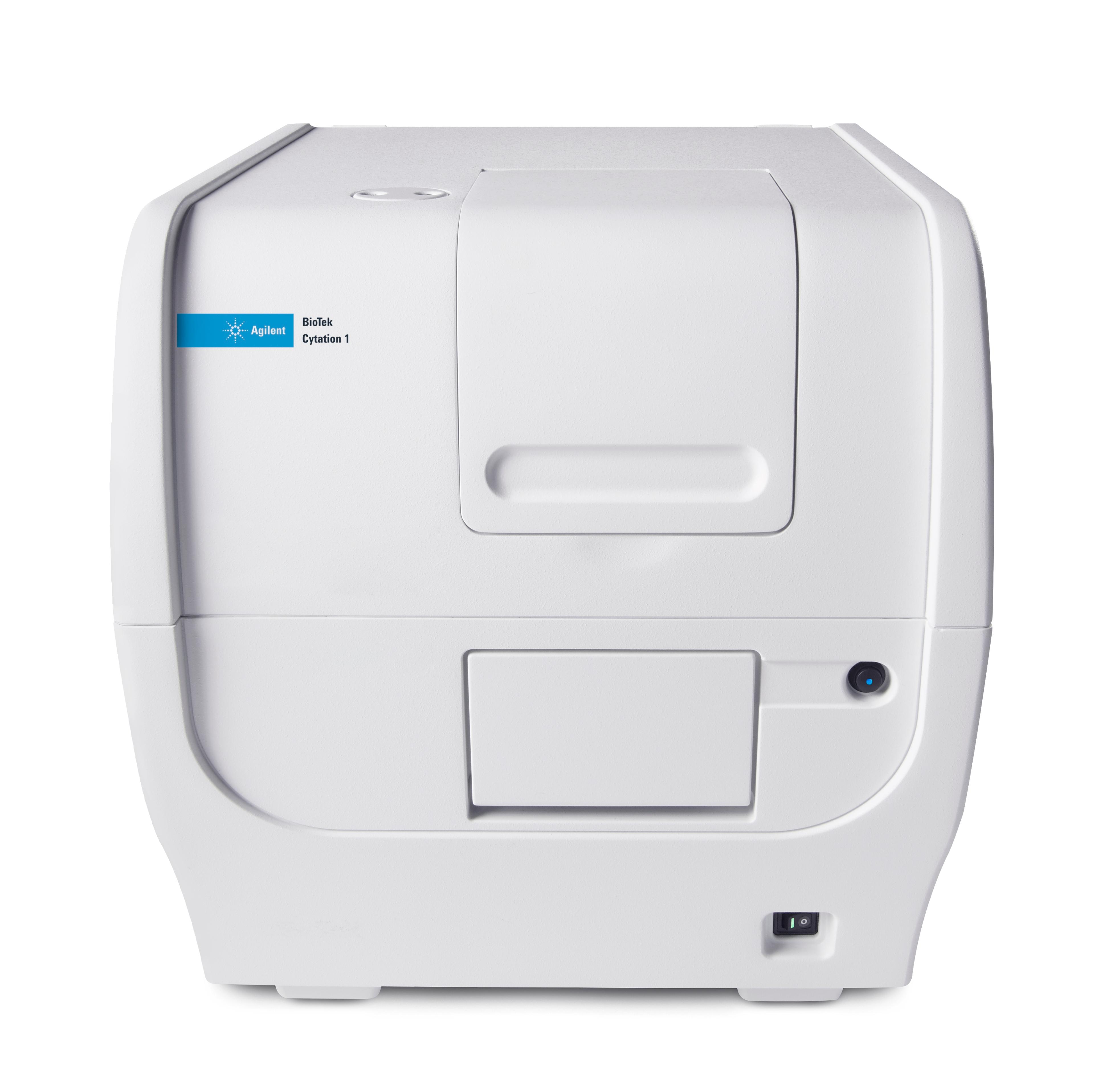
Agilent BioTek Cytation 1 Cell Imaging Multimode Reader
Agilent TechnologiesCell Imaging Multi-Mode Reader