Leveraging technology in quality control: The power of partnership

Marcelo Shigueru Kamei shares how the latest chromatography solutions help his team at Cristália laboratory stay a step ahead as they manufacture quality pharma products

26 Oct 2020

Sarah Thomas
Associate Editor

Editorial article

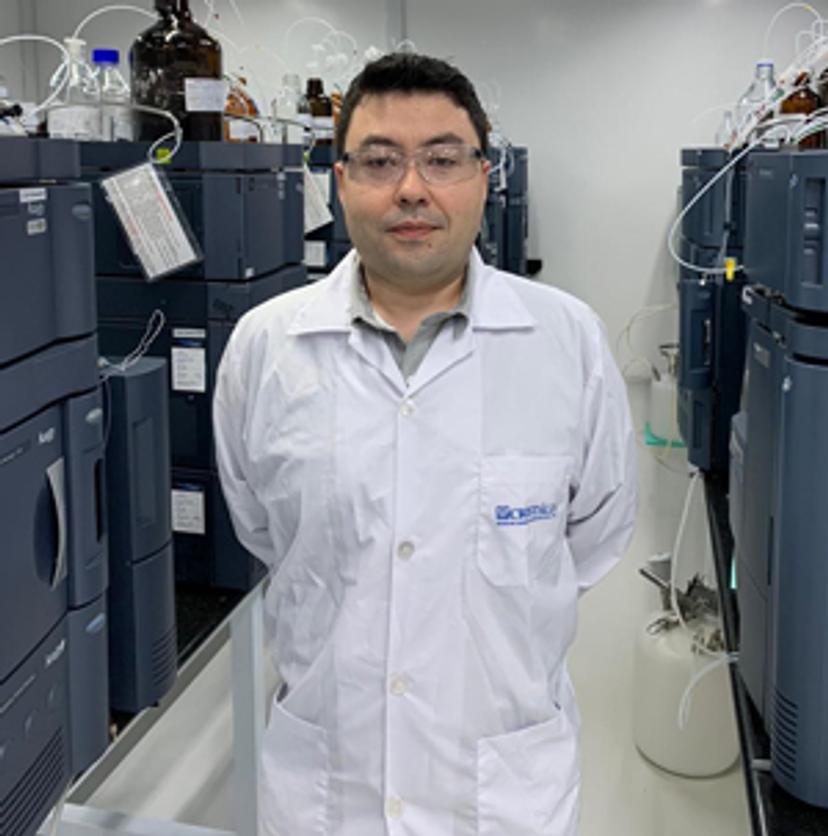
Marcelo Shigueru Kamei, Manager of Analytical Development at the Cristália Laboratory

The pharma world is dedicated to developing effective and valuable treatments for patients with an unwavering commitment to the quality of its products. Cristália, Brazil’s homegrown pharma-biotech complex, prides itself in contributing to this same mission. Embracing cutting-edge technology, the Cristália analytical team actively innovates and enhances methodologies that ensure product quality. Here, Marcelo Shigueru Kamei, Manager of Analytical Development at the Cristália Laboratory, reveals how Waters’ harmonized suite of software, hardware, and services has proved invaluable in their operations.

Dedication to quality

Cristália’s bio-industrial complex in São Paulo is one of the most modern facilities in the country. The analytical development sector has its laboratories in a space of 2,450 m² and comprises a team with more than 150 employees, including technicians, trainees, graduates, masters and doctors. These experts develop and validate the analytical methods that are applied to control the quality of pharma products in Cristália’s portfolio with a singular purpose: quality for the final consumer. Analytical methods are exhaustively challenged to ensure that they will be able to unequivocally attest to the necessary quality of the product. In addition to analytical methods, the team provides support for new product innovation and development, generating all essential product registration documents to meet various health agency requirements. Kamei considers his team a great example of championing an ‘all-in’ commitment to the company’s focus on quality, new product development, and innovation.

Cristália’s analytical department has a dedicated set of chromatographers specializing in the latest separation science techniques across a diverse set of products. The park possesses state-of-the-art capacity covering almost every available chromatography technology, be it high or ultra-high-performance, such as ionic separation, gel permeation, separation by normal and reverse phases, as well as detection by various methods of ultraviolet, light scattering, refractive index, fluorescence, aerosol loaded and mass spectrometry.

Cristália’s analytical department specializes in the latest separation science techniques

Finding a valued partner

Managing a ‘universe of equipment’, as Kamei phrases it, is not an easy task. His lab sought a partner who could efficiently harmonize the operation of all systems, while at the same time could offer Cristália a suite of proven technologies backed by a team of knowledgeable and accessible service and support specialists. This all-encompassing partner needed to have a strong market history, be capable of optimizing generated data, be well-regarded by national and international regulatory agencies, and meet all safety and reliability standards. Additionally, the partner needed to offer some kind of financial savings for the department and be able to deliver good cost-benefit.

The team’s search led them to Waters

“Waters being a market pioneer in chromatography hardware and software solutions was an added advantage. In addition, the Empower™ Chromatography Data System offers a very versatile data acquisition and processing system that can be used to control even chromatographs from other brands.” Kamei went on to explain: “In the pharmaceutical market, Empower software is synonymous with quality and safety.” Waters' versatile data acquisition and processing system allowed the laboratory to easily control all chromatographs in the area. As a centralized operations and service partner, Waters' integrated methodology empowered the team with agile decision making, which Kamei considers to be a great value addition.

Partnering with Waters has provided another advantage: direct access to a qualified and prompt technical team, a resourceful application team that provides continual staff training, along with a supportive commercial team. While Cristália has continued its service contracts with third parties for other equipment, Kamei states: “The proximity that the Waters team has in relation to our operation is certainly very valuable, they are able to provide solutions that make sense for our needs.”

A future of endless possibilities

The pharmaceutical industry is quick to adopt new technologies, especially when such changes help improve treatment quality. Cristália shares this attitude as it aims to provide quick and sustainable results. “We develop great partnerships with our third parties and research institutions in the pursuit of technological innovations, new products and treatments,” states Kamei. He adds that actively participating in conferences, events and work groups has been instrumental in understanding the latest technologies. The Cristália team applies these developments not only to their new ventures, but also in upgrades to their core portfolio, either as improvements in their formulations or in their manufacturing processes.

Kamei notes that currently labs favor ‘classic’ chromatography techniques, but this is likely to change. “I believe that the future is focused on more accurate techniques with less generation of toxic waste,” he elaborates. He hypothesizes that capillary liquid chromatography may potentially take center stage due to its high separation capacity with the added advantage that it generates near-zero levels of solvent residues. As companies seek approval for increasingly complex biomolecules, multidimensional chromatographic techniques for resolving complex separations may also become popular. “When it comes to the science of separations, the possibilities are endless,” concludes Kamei.

Keep your lab at the forefront of science

Learn more about Waters’ comprehensive solutions, industry-leading informatics, and flexible services designed to work in harmony and deliver synergistic value. Take advantage of Waters’ new FlexUP Technology Renewal Program and easily replace your older instruments with state-of-the-art technology to stay protected from obsolescence and its high degree of risk. Whether you have a Waters system or another manufacturer’s, eliminate the issues associated with older instrumentation or software by cost-effectively managing the lifecycle of your laboratory’s assets. Learn more at www.waters.com/FlexUP.

Empower™ Chromatography Data System

Waters

The Empower Chromatography Data System is Waters’ compliance-ready chromatography data software (CDS) for advanced data acquisition, processing, and reporting that simplifies the management of chromatography test results.

(25)

Links

Tags

UHPLC and HPLCHigh performance liquid chromatography (HPLC) and ultra high performance liquid chromatography (UHPLC), also known as UPLC, are analytical techniques used to separate, identify and quantitate components of complex mixtures including biological samples such as proteins and lipids as well as chemical mixtures of pesticides, drugs and oils. Both techniques are liquid chromatographic methods but differ by operating pressures (HPLC < 6000 psi < UHPLC ). Components of HPLC and UHPLC systems include columns, detectors, pumps, autosamplers and column heaters. Explore a range of UHPLC and HPLC columns for your specific sample needs including reverse phase, normal phase, ion exchange, HILIC, ion exclusion and size exclusion columns. For more specialized HPLC, explore FPLC, countercurrent LC and simulated moving bed systems. Find the best UHPLC and HPLC equipment in our peer reviewed product directory: compare products, check customer reviews and receive pricing direct from manufacturers.Fluorescence SpectroscopyFluorometers and spectrofluorometers (also called fluorescence spectrometers) are used to measure the intensity and wavelength of fluorescent light emitted from a sample after excitation by illumination. Spectrofluorometers utilize monochromators to select the desired wavelengths, whereas filter fluorometers employ a set of filters. Spectrofluorometers for measuring steady-state fluorescence and lifetime fluorescence (or time-resolved fluorescence) are available, as well as fluorescence microscopes and microplate readers. Find the best fluorescence spectroscopy products in our peer-reviewed product directory: compare products, check customer reviews and receive pricing direct from manufacturers.LC-MSLC-MS (liquid chromatography-mass spectrometry) systems and equipment are used for separation and quantitative analysis of complex mixtures, combining liquid chromatography and mass spectrometry. Quantify proteins, contaminants, pesticides or screen for drug metabolites with a high level of sensitivity. LC-MS systems and equipment include reverse phase, normal phase and specialized columns integrated with various MS detectors such as time-of-flight (TOF), quadrupole, orbitrap or ion trap mass analyzers. LC-MS/MS instruments equipped with a qTOF or triple quadrupole analyzer give greater sensitivity and resolving power to your analysis. Find the best LC-MS equipment in our peer-reviewed product directory: compare products, check customer reviews and receive pricing direct from manufacturers.Mass SpectrometryMass spectrometry (MS) is a powerful analytical technique used to identify and quantify molecules based on the mass-to-charge ratio of gas-phase ions. It provides detailed information about the structure, composition, and properties of compounds and is widely used across fields such as environmental monitoring, materials science, drug discovery and development, food and beverage testing, and wider chemical research. Key MS techniques include tandem mass spectrometry (MS/MS), liquid chromatography–mass spectrometry (LS-MS) and inductively coupled plasma (ICP-MS). Choosing from these wide range of techniques and technologies can be a daunting task, so keep up to date with scientific applications, performance expectations, and customer reviews here all in one place. Visit our product directory to receive quotes direct from the manufacturer. UV-Visible SpectroscopyUltraviolet-visible (UV-Vis) spectrophotometers are used to measure the interaction of UV and visible light with a sample, including transmission, reflectance & absorbance. The two major instrument classes are single-beam or double-beam spectrophotometers. More specialized equipment includes colorimeters, spectroradiometers and refractometers. Portable and microvolume spectrophotometers are also available. For the modular spectroscopy lab, explore a range of light sources for combination with a spectrograph/spectrometer and optics. Find the best UV-Vis spectroscopy products in our peer-reviewed product directory: compare products, check customer reviews and receive pricing direct from manufacturers.Development SoftwareComputational techniques used in both the chemistry and biology aspects of drug development, for data acquisition, data analysis, processing and storage. Software is used for analysis of ADME results, toxicology, clinical trials and regulatory processes. RegulatoryPharmaceutical regulations impact on all areas of drug development, manufacture and control and supply. Services are provided from the early stages of drug development and clinical trials through to dossier submission, approval and marketing. Regulatory also includes submission of analytical studies from the pharmaceutical product and safety. Software PlatformsSoftware platforms are useful for various stages of laboratory experiments from data collection to data storage and processing. For instance lab software is available for system control, data management, data analysis and qualification / validation.Quality ManagementQuality ControlQuality control is needed in all production processes. Quality control is a monitoring procedure or set of procedures that are put in place to ensure that a manufactured product adheres to a defined set of quality criteria. ChromatographyChromatography is a powerful technique used to separate and analyze components of mixtures based on their chemical properties. It is widely used in fields like biochemistry, pharmaceuticals, and environmental analysis. By exploiting differences in the interaction of substances with a stationary phase and a mobile phase, chromatography enables precise purification and quantification of compounds. Whether you're working with complex biological samples or industrial chemicals, chromatography is essential for obtaining high-quality results. Browse our peer-reviewed product directory to find the best chromatography systems, compare products, read customer reviews, and get pricing directly from manufacturers.Quality TestingQuality testing ensures that products meet required specifications and safety standards in various industries, including pharmaceuticals, food, and materials. It is essential for maintaining product quality and consumer safety. Explore quality testing tools in our peer-reviewed product directory; compare products, check reviews, and get pricing directly from manufacturers.PharmaceuticalsPharmaceuticals are medicinal drugs used in healthcare to diagnose, prevent, cure and treat illnesses. Pharmaceuticals that are excreted after use appear in wastewater and can have detrimental effects on the environment.