
Leica Biosystems introduces new high-speed laser cassette printer
HistoCore LIGHTNING C Laser Cassette Printer helps laboratories improve specimen identification and tracking while reducing costs
21 Sept 2026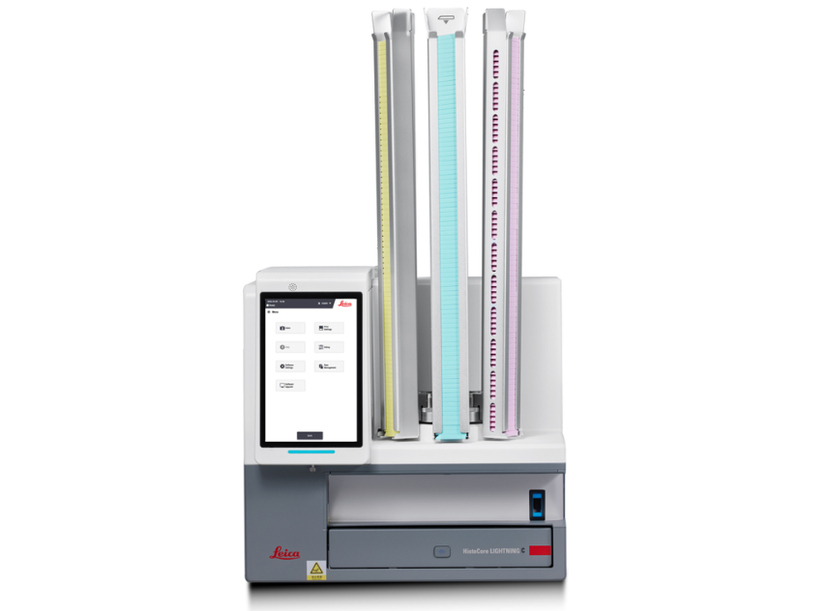
HistoCore LIGHTNING C Laser Cassette Printer
Leica Biosystems has reinforced its commitment to connected pathology workflow efficiency with the global launch of the HistoCore LIGHTNING C Laser Cassette Printer, designed to help pathology laboratories standardize critical histology workflows, improve traceability and move from sample to answer with greater speed and certainty.
Pathology laboratories are navigating some of today’s hardest workflow challenges: rising case volumes, increasing test complexity and persistent staffing constraints. Even small inefficiencies in early workflow steps can create large downstream delays, rework and risk.
Reliable cassette identification is critical to maintaining traceability throughout the diagnostic process, yet traditional labeling methods can introduce inconsistency, manual steps and ongoing maintenance demands.
As laboratories continue to advance digital pathology and explore AI-enabled tools, consistency and traceability at the front end of the workflow become increasingly important to the quality of downstream images, data and diagnostic insights.
The HistoCore LIGHTNING C Laser Cassette Printer addresses these challenges by delivering fast, consistent and durable specimen identification at the very start of the histology workflow. Designed for use with validated Leica Biosystems cassettes, the system uses high-quality UV laser printing to produce clear and durable markings, including barcodes and 2D codes, to support reliable traceability as samples move from processing through diagnosis.
With printing speeds of up to 2.5 seconds per cassette and capacity for up to 600 cassettes, laboratories can optimize throughput, reduce bottlenecks and maintain workflow continuity, even under growing demand. By eliminating the need for ink and ribbons, the system helps laboratories reduce maintenance requirements, minimize downtime and lower total cost of ownership.
Automated color recognition and LIS compatibility further optimize operations by matching cassette color to predefined templates, reducing manual intervention and helping prevent identification errors so laboratories can standardize critical foundational workflow steps.
“Histology laboratories are often expected to do more with limited time, space and resources, while still needing confidence that every specimen is accurately identified across the diagnostic journey,” said Anupama Mokkapati, Senior Vice President of Core Portfolio and Global Supply Chain at Leica Biosystems. “The HistoCore LIGHTNING C Laser Cassette Printer helps laboratories enhance foundational workflow steps by combining speed, durable print quality and seamless integration to support accurate, timely results to patients.”
Want the latest science news straight to your inbox? Become a SelectScience member for free today>>
Links
Tags
Frequently asked questions
Show frequently asked questions
How does the Leica Biosystems HistoCore LIGHTNING C improve pathology workflow efficiency?
The HistoCore LIGHTNING C prints each cassette in up to 2.5 seconds and holds up to 600 cassettes. Its UV laser printing, automated color recognition and LIS compatibility help pathology laboratories increase throughput, reduce bottlenecks and standardize histology workflows.
How does the HistoCore LIGHTNING C support specimen traceability?
The laser cassette printer creates clear, durable markings — including barcodes and 2D codes — on validated Leica Biosystems cassettes. This reliable cassette identification supports specimen traceability from processing through diagnosis while reducing manual intervention and helping prevent identification errors.
Why can the HistoCore LIGHTNING C lower pathology laboratory operating costs?
The HistoCore LIGHTNING C uses UV laser printing without ink or ribbons. Eliminating these consumables helps pathology laboratories reduce maintenance requirements, minimize downtime and lower total cost of ownership while maintaining consistent cassette identification.