
Inside AACR Annual Meeting 2026
Meeting co‑chairs Dr. Paul Mischel and Dr. Alice Shaw share the themes, challenges, and scientific momentum shaping this year’s must‑attend event
16 Apr 2026
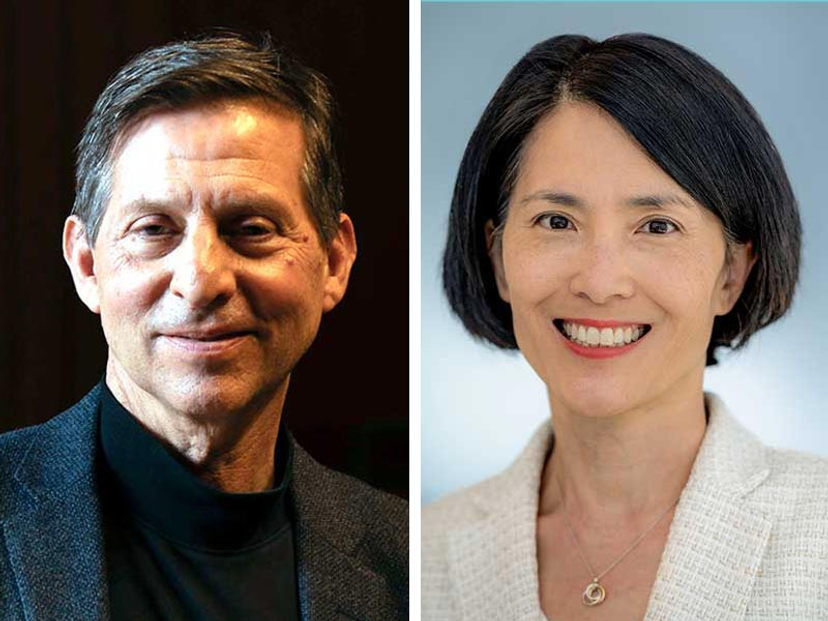
Paul S. Mischel, MD, FAACR, and Alice T. Shaw, MD, Ph.D., FAACR
As anticipation builds for the AACR Annual Meeting 2026, we spoke with co‑chairs Dr. Paul Mischel and Dr. Alice Shaw to uncover the scientific priorities and emerging opportunities shaping this year’s program. Their vision reflects a meeting designed to accelerate discovery, deepen collaboration, and spotlight the innovations poised to transform cancer research.
Taking place in San Diego from April 17 to 22, the meeting is expected to draw more than 22,000 participants worldwide. With a program spanning artificial intelligence, early detection, and novel therapeutic strategies, AACR 2026 promises a comprehensive look at the breakthroughs driving the next era of cancer science.
How did you become involved in AACR and in chairing this year’s meeting?
Dr. Mischel: I had the privilege of giving one of the opening plenary talks last year and saw firsthand the remarkable impact the AACR Annual Meeting can have. This year, I have the pleasure of working closely with my co-chair, Dr. Alice Shaw, as well as our President Dr. Lillian Siu, AACR’s great team, including Dr. Lisa Haubein and Dr. Elena Irollo, and, of course, AACR’s remarkable CEO, Dr. Marge Foti. I am deeply impressed by the integrity, professionalism, and sense of purpose of the people with whom I have worked to put this meeting together. Being a co-chair is a privilege and a responsibility, and I am thrilled to have the chance to do it, and to do it with my extraordinary colleagues.
Dr. Shaw: I first became involved with AACR when I was a postdoc in Tyler Jacks’ lab about 20 years ago. Since then, I have worked with AACR in many different capacities, for example, as an invited speaker, member of the scientific program committee, and co-chair of the clinical trials committee for previous Annual Meetings. More recently, I have had the honor of serving on the AACR Board of Directors, where I have been able to witness firsthand the extraordinary commitment and impact of this organization on cancer research nationally and globally, with the Annual Meeting serving as the premier global forum for cancer researchers. So when I was invited to chair the 2026 Annual Meeting along with Dr. Paul Mischel, I jumped at the opportunity! It has truly been an honor to work closely with Dr. Mischel, our program committee, our AACR President Dr. Lillian Siu, AACR’s CEO Dr. Marge Foti, and all of the AACR staff who have worked tirelessly over the last year to plan what I believe will be an outstanding scientific meeting.
What key themes define the 2026 program?
Dr. Mischel: There are a great many important themes that will be deeply explored at this meeting, from mechanistic biology to new diagnostic and therapeutic developments, to gene-environmental interactions. The meeting also dives into the impacts of environments (...) for example, why are so many younger people getting cancer? Artificial intelligence (AI) will also be an area of deep focus. I would also like to highlight the main themes from this year’s tagline. In this period when progress for people with cancer is under threat, coming together around these themes is of the utmost importance. What we are collectively doing as a community is simply too important to be stopped, and these themes are at the center of how we will work together to continue to make a difference and to accelerate progress.
- Precision - refers to leveraging our increasingly powerful knowledge (...) to prevent, detect, and target cancer more effectively. This ability has been a sea change (...) yet there is so much more to do.
- Partnership - is at the heart of it. Powerful new technologies are leading the way. No one lab, one country, or one type of scientist or doctor has all the answers. Together, though, we very well might. It is amazing the progress that can happen quickly if we collaborate with a clear goal in mind.
- Purpose – whose life hasn’t been affected by cancer, either in themselves or a loved one? Imagine what it would be like if we can do more to change the outcome for so many more people with cancer across the globe.
- Advancing Cancer Science to Save Lives Globally – Cancer Science is at the heart of making a difference in the lives of many people with cancer. Science is the path forward, and it doesn’t exist in one country, or one continent, or one part of the world. Cancer potentially affects every person on this planet, not even to mention lots of other animals, like the dogs so many of us love! Together, we can make a difference and move so much faster.
Dr. Shaw: The key themes of this year’s Annual Meeting are captured well in the tagline for the meeting: “Precision, Partnership, Purpose: Advancing Cancer Science to Save Lives Globally”. We selected “Precision” to reflect how basic research has translated into increasingly precise or personalized therapies that have fundamentally transformed the treatment landscapes of many different cancers. And with this increasing precision in our cancer therapies, we are seeing not only improved efficacy but also improved safety and tolerability, which is essential to ensuring quality of life for our patients. “Partnership” is a particularly important theme of this meeting as our collaborations with each other are absolutely critical to accelerating discoveries and translation to the clinic. These collaborations are more complex than ever, spanning academic institutions; basic, translational, and clinical researchers; industry collaborators; regulatory and funding agencies; and patients and patient advocacy groups. These collaborations must also extend globally to ensure we address and reduce the global burden of cancer. Finally, “purpose” captures our shared mission as a scientific community to leverage scientific breakthroughs and innovation to improve and extend the lives of patients with cancer, with a long-term vision to prevent and cure cancer altogether.
Which emerging areas of cancer biology are generating the most excitement?
Dr. Mischel: There are so many, but to name a few – AI, lineage switching, glues and degraders, deeper understanding of immune mechanisms, ecDNA, early cancer detection, and gene-environment interactions.
Dr. Shaw: Many of the most exciting areas will be showcased in our plenary sessions. The Opening Plenary will include four scientific luminaries. Charles Sawyers will focus on lineage plasticity, an increasingly well-recognized mechanism of therapeutic resistance across different tumor types. Carl June, a pioneer in CAR-T therapy, will address resistance and interactions between CAR-T cells and cancer cells. George Winter will share the pioneering work he's led in targeted protein degradation, enabling us to drug previously undruggable targets and unlock new therapeutic opportunities. Finally, Regina Barzilay is driving the application of AI tools to enhance therapeutic discovery and improve cancer detection and risk assessment.
What are the biggest challenges in translating discoveries into effective treatments?
Dr. Mischel: The system for translation of science into medicine worked for more simple concepts, such as when broad mechanisms were being targeted that were common amongst cancer patients, for which large randomized controlled trials could give reasonable answers. With new technologies that enable deep molecular understanding of each person’s cancer using tumor tissue and now even blood, the diversity of mechanisms involved in cancer development, progression, and resistance, and the increasing ability to possibly target them with new modalities, has increased the complexity greatly. There is a need for developing translational models – from how we structure and organize clinical trials, to how we pay for them, to what the standards of evidence are – that are rapidly changing. I have confidence that science will enlighten, and I hope that we as a society will collectively have the commitment to do the right things so that people with cancer, and those who love them, can benefit from the remarkable advances brought forward by cancer science.
Dr. Shaw: There remain many important challenges in translating basic discoveries into effective cancer therapies. One of the key challenges centers on identifying and validating targets for drug discovery. Cancer cells are extraordinarily complex at the biologic level with hundreds to thousands of acquired alterations, and determining which alterations are key drivers or targets that can be therapeutically exploited versus simply passengers can be extremely difficult. Another major challenge is drugging a novel target, including establishing the optimal modality. A third challenge is identifying which patients are most likely to respond to and benefit from new therapies, making robust biomarker analyses critical. Finally, preclinical models are often much simpler than human cancers and do not recapitulate the complex underlying biology, and hence can overestimate the impact of a new therapy in the clinic, so more predictive models would help increase the probability of success.
What tools or technologies will transform the field in the coming years?
Dr. Mischel: The one at the top of the list is AI. At its simplest, it provides an extraordinary ability to have essentially the library of all that is currently known. However, the promise of AI is much greater and will be a game-changer in the development of new and more accurate diagnostics and new therapeutics. In addition, molecular technologies are advancing rapidly, and increasingly powerful genome-editing tools are transforming the landscape. This can all be for the good of people.
Dr. Shaw: Like Paul, I believe that AI will be transformative and will impact all aspects of cancer research and clinical care in the coming years. Given this impending impact, we worked closely with AI experts on our program committee to embed AI-related topics throughout the scientific and educational programs. AI will not only be showcased in the opening plenary session (with Regina Barzilay’s presentation) but will have its own dedicated plenary session on Monday, April 20 (“AI Revolution in Cancer Research”). This AI-focused plenary session will bring together leaders at the frontier of AI in oncology and will span the entire continuum from foundational discovery to real-world clinical implementation. Additional sessions will highlight the emerging power of AI/AI tools in genomics and precision medicine, biomarker discovery, histopathology, and radiology. AI is also already transforming how we design, execute and analyze phase I, first-in-human trials, which should help accelerate the path of novel therapeutics to initial proof of concept.
Cancer research increasingly relies on cross‑disciplinary collaboration. How does AACR foster this?
Dr. Mischel: AACR has been an inspiring model of collaboration. Our tagline for this year’s meeting highlights it – partnership. To have deep impact, we need to go from mechanism to understanding, to diagnostics, therapeutics, and clinical trials. No one lab, one university, one company, one country, has it all. It is through partnership and coming together that we can make rapid progress for the benefit of all.
Dr. Shaw: For years, AACR has fostered collaborations across fields and disciplines to enable breakthrough discoveries in cancer. Through the Annual Meeting as well as a variety of joint and specialized cancer conferences, AACR is uniquely positioned to bring together basic scientists, translational researchers, clinicians, population scientists, industry partners, leaders from government agencies and many others—essentially the entire community. In addition, AACR fosters collaboration through its many journals, research grants (for example, team science awards) and educational programs.
What advice would you give young scientists attending AACR for the first time?
Dr. Mischel: Recognize that no one can stop science; this is too important, and you are part of the answer. Take this responsibility seriously, dive in, be yourself, be inquisitive and open, talk with people, even the “famous” professors who would like to talk with you more than you realize. Lastly, understand that you can be part of the solution. It is a privilege and a responsibility. It is in your hands, and you are not alone.
Dr. Shaw: The AACR meeting is very large and can feel very overwhelming the first time you attend. I would strongly recommend using the AACR Meetings app and, ahead of the meeting, mapping out all the sessions you plan to attend. There is an incredible amount to learn, and if there is a session you miss due to another overlapping session, you can catch it online through the on-demand recordings. Beyond learning and exposing yourself to new areas, I think the AACR meeting is also a wonderful way to connect with peers at other institutions, senior scientists, and leaders across academia and industry. The poster sessions can be very high-yielding in terms of learning, networking, and forming collaborations. In addition, I would strongly recommend the Meet-the-Expert sessions. These are smaller and more interactive than the typical sessions, and they are a great venue to engage directly with leaders in the field.
For all the latest AACR news, visit our comprehensive show coverage page!
Meet the experts
Alice Shaw, MD, Ph.D.
Dr. Shaw is a physician-scientist and medical oncologist who specializes in lung cancer. She currently serves as the Chair of the Department of Medical Oncology at Dana Farber Cancer Institute and the Canellos Endowed Professor of Medicine at Harvard Medical School. Her research focuses on targeted therapies and drug resistance in oncogene-driven cancers.
Paul Mischel, MD
Dr. Mischel is a physician-scientist and the Fortinet Founders Professor, Vice Chair for Research in the Department of Pathology, and Deputy Director, Translational Science for Sarafan ChEM-H, at Stanford University. His lab studies extrachromosomal DNA (ecDNA) in cancer. He leads Team eDyNAmiC of the Cancer Grand Challenges Program. His work has identified a central role for ecDNA in cancer.