
Human‑relevant drug testing reaches new throughput milestone
How Emulate's 96-chip AVA™ Emulation System is helping pharmaceutical companies transition to human-relevant testing under new FDA and UK regulatory guidelines
11 Feb 2026
In April 2025, the U.S. Food and Drug Administration (FDA) announced a plan to phase out animal testing in drug development, starting with monoclonal antibody therapies and biologics, to be replaced with more effective human-relevant models. This new approach aims to improve drug safety and accelerate evaluation, importantly reducing animal testing, reducing R&D costs and, in turn, drug prices.

Dr. Lorna Ewart, Chief Scientific Officer, Emulate, Inc.
Emulate's Chief Scientific Officer, Dr. Lorna Ewart, discusses the company's journey to become the first organ-on-chip platform with an accepted FDA qualification plan, a pivotal step in a regulatory landscape that is shifting toward human-relevant testing and explores what preclinical testing means in 2026 and beyond.
For Dr. Ewart, these changes are welcome. She oversees the company's biological product development and regulatory strategy, and she, along with her colleagues at Emulate, has been working tirelessly toward the regulatory acceptance of organ-on-chip technologies for many years.
From the beginning, Emulate's goal has been to build a more predictive model of human physiology. Their pioneering work began at the Wyss Institute at Harvard University, where the landmark Science paper ‘Reconstituting Organ‑Level Lung Functions on a Chip’ was published in 2010. Emulate, Inc. was later founded in 2014 to translate this research into commercial organ‑on‑chip technologies.
Emulate’s Cooperative Research & Development Agreements (CRADAs) with the FDA throughout the years have allowed the agency’s scientists to work with and evaluate the technology. "This collaboration has allowed us to understand from the regulatory scientists how they think about tools like Organ-on-a-Chip technology, and how they consider data that comes from those chips," Ewart notes.
Today, Emulate continues to stand at the forefront of research and it was the first company to have an accepted qualification plan under the FDA's Innovative Science and Technology Approaches for New Drugs (ISTAND) program. 2026 is set to be another big year, with a pending full qualification package, the final step toward full FDA approval.
"The regulators have been and continue to be supportive of using alternatives to animals," Ewart explains. "The ISTAND program was really a recognition that there are 21st-century technologies that would be useful to regulators to inform the regulatory decision process. Previously there was no formal qualification pathway to enable that, so that is where ISTAND comes in."
Ewart is excited about the promise of the program, commenting, "Hopefully, if we speak again this time next year, I'll be able to say to you, 'We're the only Organ-Chip that's qualified!'"
The toxicology challenge
For toxicologists, the need for organ‑on‑chip technologies is well‑established. Traditional preclinical testing relies on twospecies, yet results from these non‑human models can often be contradictory.
“Sometimes one model will indicate a compound is toxic, while another suggests the opposite,” Ewart recalls from her years as a project toxicologist. “And then everyone turns to you and asks, ‘What does this mean for humans?’ and the honest answer is, we simply can’t be certain.”
This uncertainty, alongside growing evidence that even standardized animal protocols do not reliably predict first‑in‑human outcomes, has intensified the search for more predictive alternatives.
Accelerating adoption of human-relevant testing platforms
The FDA roadmap has solidified an already palpable shift toward human-relevant platforms, and the European Commission is in hot pursuit, with an anticipated publish date for its roadmap being early 2026. As such, the transition to New Approach Methodologies (NAMs) is becoming a global imperative. It is therefore critical that researchers take the time now to explore which drug development technologies are most appropriate for their work moving forward.
Undeniably, the impact of the roadmap launch is already visible. "In the last, I'd say, six months since these regulatory changes have permeated into people's everyday work lives, I'm now starting to see more and more people think about how they're going to design their experiments, and think about a human-relevant approach first," Ewart observes.
Scaling discovery with the AVA™ Emulation System
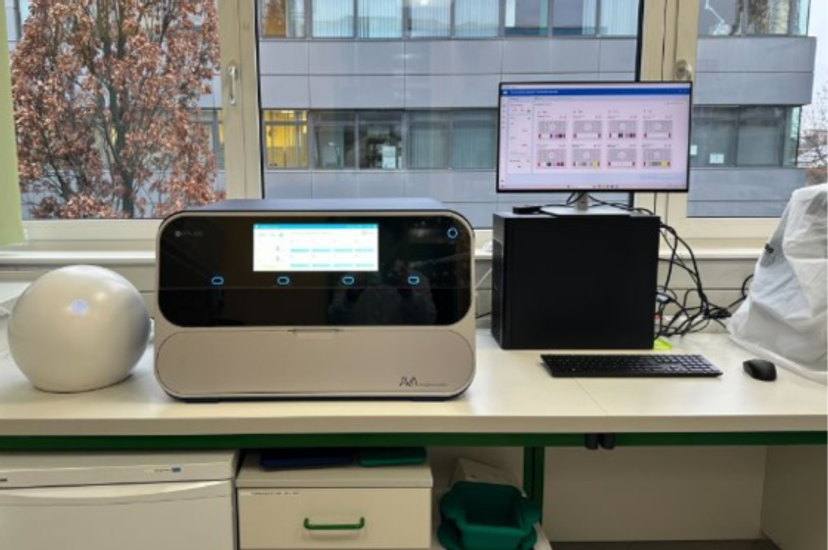
The AVA™ Emulation System in from Emulate
While regulatory qualification establishes scientific validity, practical adoption requires throughput. Emulate's AVA™ Emulation System addresses this.
Designed as what Emulate calls an "Ad Vivo Architect," AVA bridges the translation gap between traditional in vitro studies and in vivo models by supporting up to 96 individual Organ-Chip samples, or ‘Emulations’, per experiment. The system integrates three critical functions into a single benchtop unit: high-throughput microfluidic culture, full environmental control, and real-time automated imaging.
At the heart of AVA is Chip‑Array™, the multi‑chip consumable that supports harmonized, parallel experimentation across models. Chip-Array combines 12 individual Organ-Chips into the footprint of a standard 96-well plate, enabling multichannel pipette compatibility, automated liquid handling, and seamless integration with existing lab workflows. Meanwhile, automated microscopy capabilities eliminate in-lab monitoring time, generating AI-ready datasets that can inform regulatory submissions.
For toxicology departments facing mounting pressure to demonstrate human relevance at scale, AVA achieves what was previously thought impossible: reducing consumable costs by four-fold and hands-on time by more than half, while delivering the statistical power of microplate-level experimentation with the physiological fidelity of organ-level biology.
Where is the roadmap heading for 2026 and beyond?
Despite the challenges that remain, there is now a clear sense of direction for the pharmaceutical industry. Regulatory momentum, coupled with growing confidence in human‑relevant approaches, has ushered in what Ewart describes as “a genuine period of coexistence.” Rather than replacing animal models overnight, she sees the industry moving toward hybrid submissions and more strategic deployment of multiple tools, an approach that reduces reliance while preserving the caution required to keep patients safe.
Over time, this measured progress could enable meaningful reductions in animal use, such as shifting from two species to one when supported by a suite of robust in vitro systems. The long‑term vision of eliminating animal studies entirely is still distant, Ewart stresses, but last year’s developments show that the foundations are being laid thoughtfully rather than hastily. “We’re doing it quickly, but we’re doing it carefully,” she notes, a balance she sees as essential for lasting change.
Perhaps most encouraging is a cultural shift now emerging across labs and development teams. As recent regulatory changes filter into day‑to‑day practice, Ewart has observed more scientists starting with a human‑relevant mindset when designing experiments. It’s a subtle but powerful sign of the field’s maturation, evidence that progress isn’t just technological, but behavioral, and as that shift accelerates, she believes the momentum gathered in the past year could meaningfully move the needle in the years ahead.
Related products
Request Quote for All Products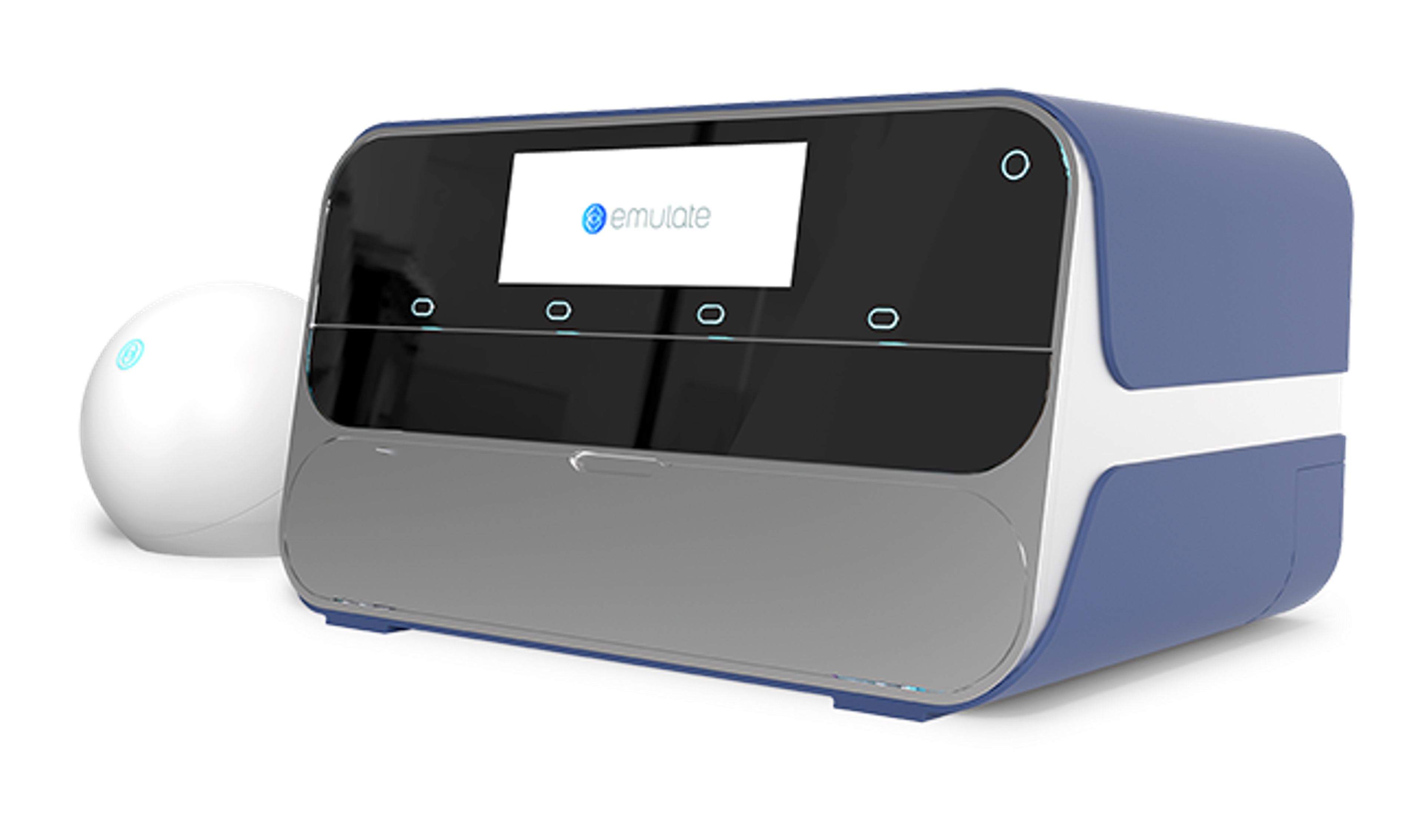
AVA™ Emulation System
EmulateAVA™ Emulation System A high-throughput Organ-Chip platform that generates human-relevant data at scale