How GeneCore at EMBL combines automation with human expertise
Miniaturization and automated liquid handling transform NGS workflows for precious sample processing
4 Mar 2026
As genomics research demands more precision from less sample material, core facilities face a critical challenge: how can they scale automation while maintaining flexibility for customized protocols?
GeneCore, the Genomics Core Facility at the European Molecular Biology Laboratory (EMBL) in Heidelberg, Germany, is a hub for genomic research, supporting projects with samples ranging from glaciers to rare species analyses. The facility is at the cutting edge of science, where automation meets hands-on experience to advance life sciences across Europe and beyond.
Here, GeneCore scientists share their insights on balancing walkaway automation with hands-on expertise, and explain why miniaturization is the next frontier.
A five-pillar approach to genomic support
GeneCore’s operations are supported by the comprehensive and robust framework designed to support genomic projects from conception to data delivery. "We provide teaching and training, sample processing and library preparation, next generation sequencing for short and long read technologies, consulting and data analysis support, and NGS data management," explains Ferris Jung, Research Technician and Senior Engineer-NGS Automation.
This integrated approach serves not only EMBL research groups but extends to external collaborators, with services offered to groups around the globe. These partnerships are varied, and the breadth of work handled by GeneCore reflects the diverse nature of modern genomic research.
"Within the EMBL we have so many different research groups, the questions that they are trying to answer range from basic research to more applied science. We also get external projects, a lot from academia or university hospitals," notes Vivianne Dorothee Niehaus, a Research Technician at GeneCore.
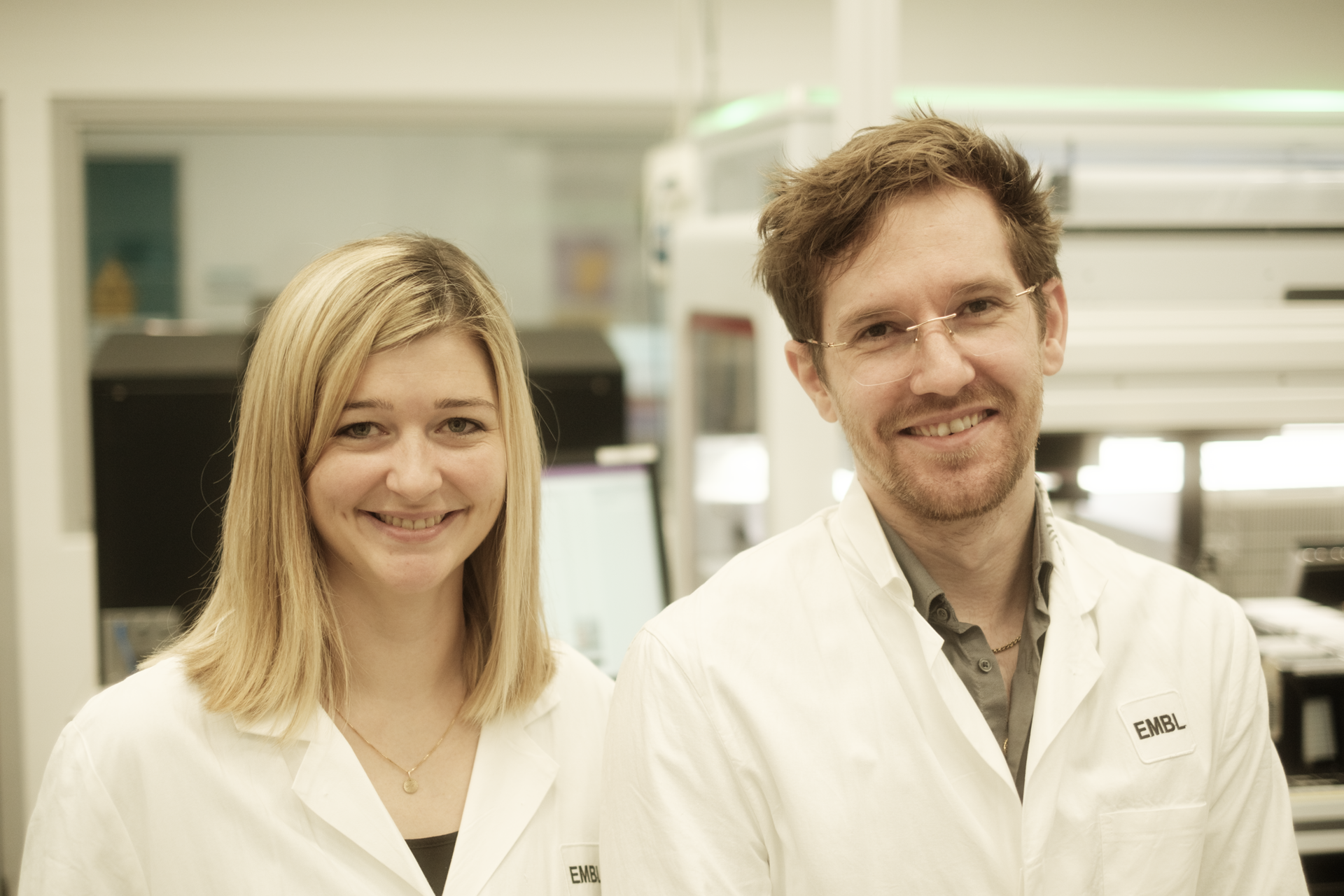
Ferris Jung and Vivianne Dorothee Niehaus are part of the expert GeneCore team at EMBL, working to enable precision genomics for challenging samples.
The need to embrace challenging genomics samples
Unusually for a core facility, GeneCore is more than happy to work with difficult samples that often fall outside standard quality parameters. "One of the GeneCore’s assets is that we are not afraid of processing challenging samples. There are a lot of facilities that would have a cutoff of quality as well as quantity: if the sample doesn't meet both, they wouldn't process the samples." Jung explains.
As such their approach requires significant expertise, and cannot rely solely on automation. "With challenging samples you need people to look at what's going on, and carry out additional steps that we know through expertise works well,” Jung notes. “It requires human eyes to actually guarantee that you are really trying to get the most of the kit.”
The GeneCore workflow is a team affair, with initial requests being followed up with an in-depth consultative stage before any samples are even sent through.
"We're not just a facility processing all samples the same way. We are happy to support even tricky projects, enabling our colleagues continuing with their research processing samples that are perhaps not so straightforward,” Niehaus emphasizes when reflecting on the team's overall philosophy. ‘In our team, our backgrounds are very different and everyone has their own expertise. That is what makes us successful."
Strategic automation for high reproducibility and throughput
GeneCore employs a nuanced approach to automation, recognizing that not all protocols benefit equally from full automation. "We have a lot of custom protocols, which makes it tricky to fully automate. As such, for these custom samples we employ semi-automation because we will never use the same exact protocol to warrant employing full automation," Niehaus explains.
However, for standardized workflows, full automation delivers significant advantages. "We also have a lot of schema A samples that are processed in the exactly same way,” she adds. “For those, we aim to fully automate such workflows. At the moment we are moving towards fully walkaway solutions, where you prepare your chemistry, load your sample, and then walk away until it's done.”
Employing automated solutions has only become easier over recent years, with user-friendly solutions which are not so demanding on a specialist’s expertise to run, and also come with clear benefits. "It frees up time, so that we can actually work on custom projects," Niehaus notes. "Furthermore, when a protocol is fully automated and is well-established, then the stability and reproducibility is much better, so we can increase the throughput."
The automation landscape continues to evolve rapidly. Manufacturers of reagents are responding to that demand by making their products more automation-friendly. "However, there's always a trade-off,” Jung cautions. “Instruments that are developed to be used easily are usually the ones that are least flexible. The more flexible an instrument gets, the more experience you need to properly and reliably automate things."
The rise of miniaturization and sustainability in genomics
Excitingly, automation enables miniaturization of NGS library preparation workflows. This has profound implications for sample requirements, ensuring the team can work on samples where availability is limited. "If you are able to miniaturize protocols, you need less sample input,” states Niehaus. “We are finding that there are more and more workflows where you have very little and very precious samples. So, miniaturization allows us to process these effectively.”
"Anything that starts pipetting volumes below 1 microliter is very exciting, and we are already seeing plenty of manufacturers that do this,” Jung adds.
In an industry which is reliant on vast plastic consumption, this push toward miniaturization also aligns with broader sustainability goals. "There is a green initiative at EMBL where we try to reduce our carbon footprint by reducing the usage of plastic," Jung notes. "If you are looking into the technologies that are developed where we actually transfer one master mix, for example, and you don't need a tip for every sample, and instead carry out a touchless transfer of the master mix into every single well, you already save tons of plastic."
Future-ready liquid handling miniaturization
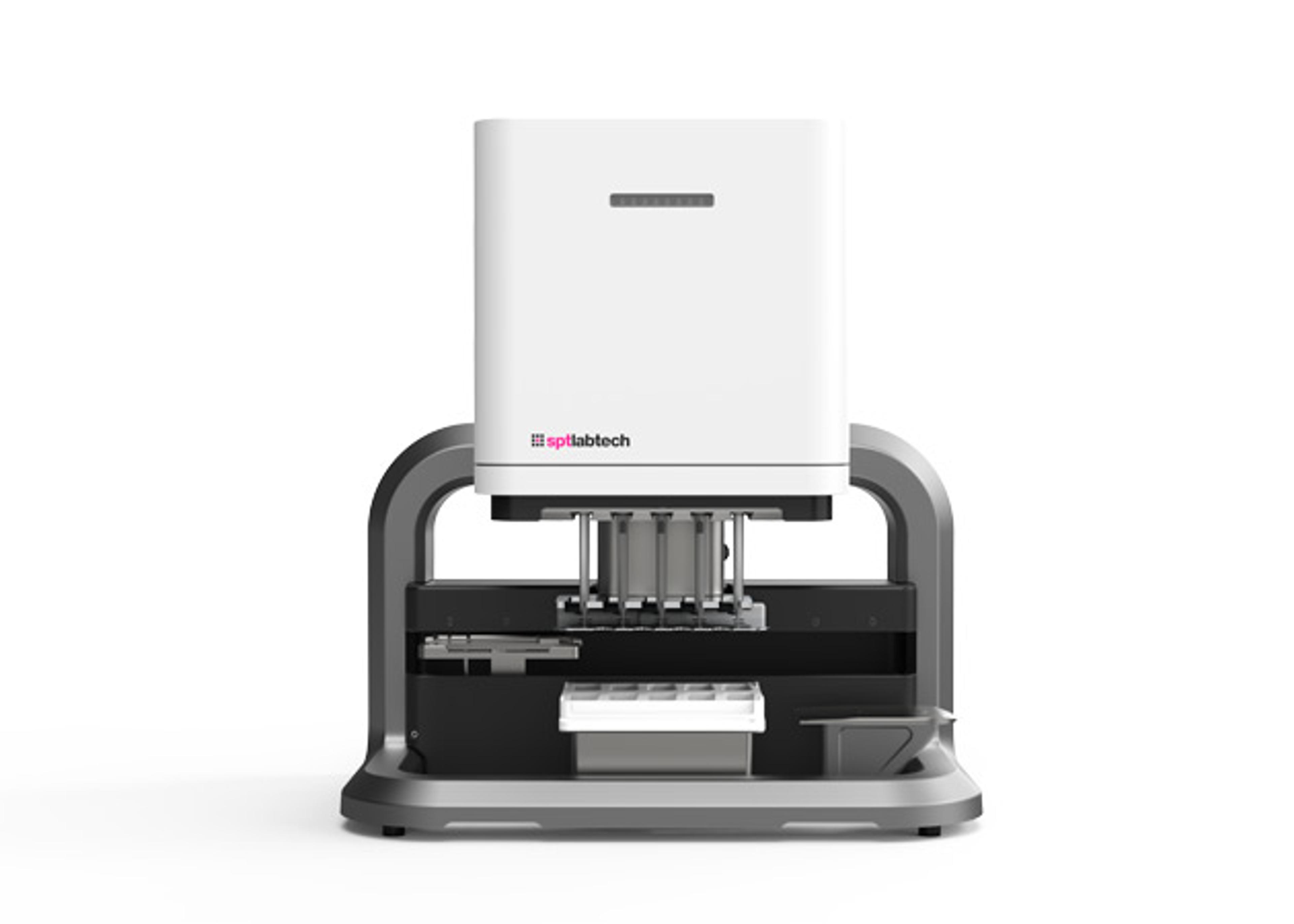
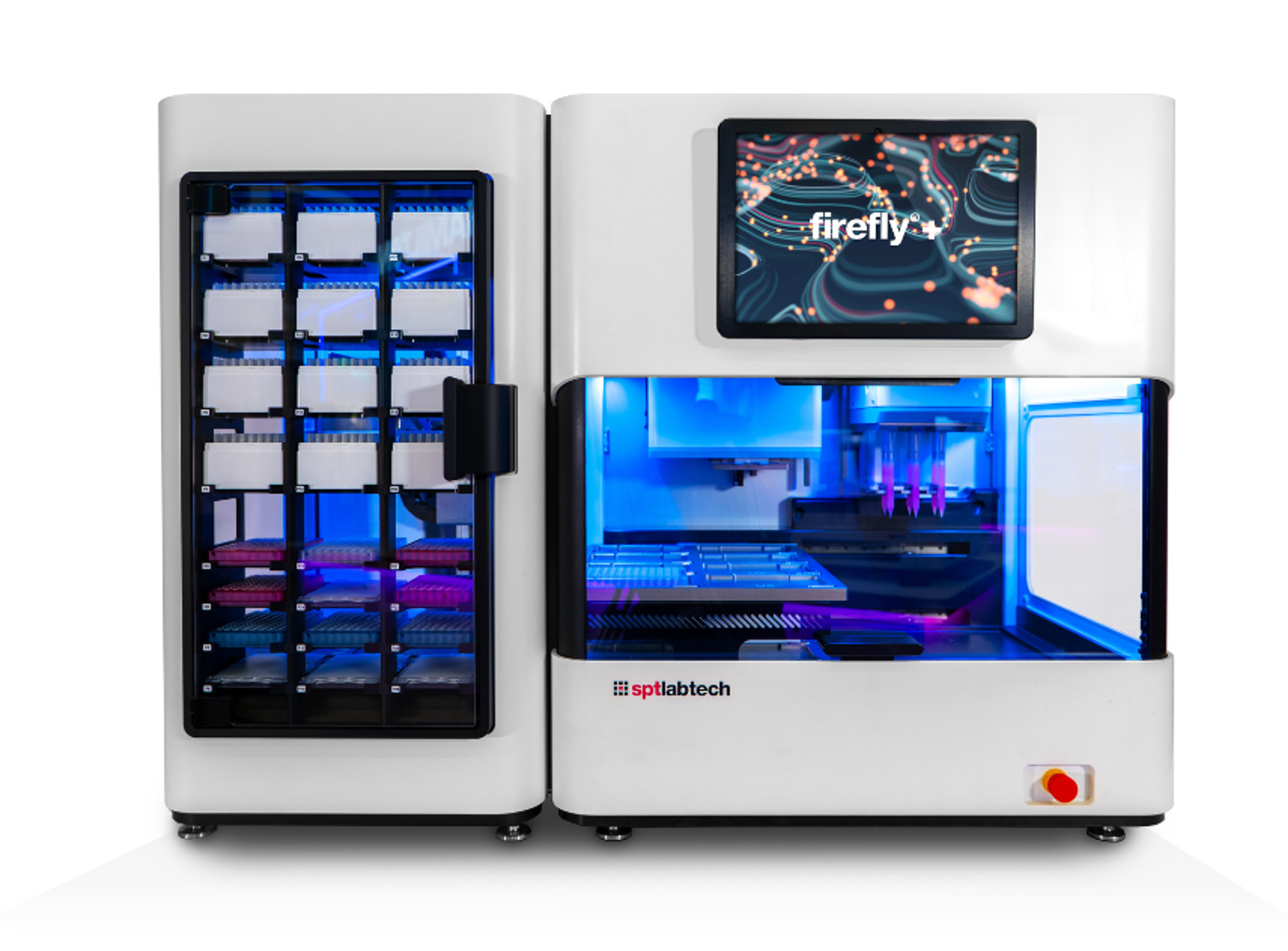
For facilities like GeneCore, technologies capable of pipetting volumes below 1 microliter, such as SPT Labtech's dragonfly® discovery and mosquito® genomics platforms, are a robust automated addition. These systems enable touchless liquid transfer, eliminating the need for disposable tips while maintaining precision at nanoliter volumes.
How core facilities offer a stronger future for life sciences research
Looking to the future, both Jung and Niehaus are advocates for core facilities. "I really appreciate the existence of core facilities and recommend that researchers use them,” says Niehaus. “We can only benefit from the experience of others, especially someone who has the expertise to support the planning and execution of projects."
This perspective is also rooted in a very real concern about research reproducibility, where we currently have a very high percentage of publications that are not reproducible. “I would love to see a change in this area. Ultimately, the idea behind research is that we benefit from the results from each other," Niehaus concludes. "When I decided to work for a core facility, I wanted to be good at one specific thing, and to support and guide people planning these kinds of experiments. I want to be involved in research that produces data we can trust and that is reproducible.”
Find more information about EMBL's Genomics Core Facility, here.
Links
Tags
Frequently asked questions
Show frequently asked questions
How does EMBL’s GeneCore Genomics Core Facility balance automation and hands-on expertise for challenging NGS samples?
GeneCore at EMBL Heidelberg combines walkaway automation with expert manual intervention to handle a wide range of genomic samples, including difficult and low-quality material that many core facilities would reject. For standardized, high-throughput “schema A” samples, the team aims for fully automated, walkaway workflows to maximize reproducibility and throughput. For custom protocols and challenging samples that fall outside standard quality parameters, GeneCore deliberately uses semi-automation and relies on the expertise of scientists like Ferris Jung and Vivianne Dorothee Niehaus. Human oversight allows additional, experience-driven steps and visual checks to ensure that even tricky or precious samples yield the best possible NGS libraries and data.
What are the five pillars of genomic support offered by GeneCore at EMBL, and how do they serve internal and external research projects?
GeneCore’s operations are structured around a five-pillar framework that supports genomic projects from conception to data delivery. According to Ferris Jung, these pillars are: (1) teaching and training, (2) sample processing and library preparation, (3) next generation sequencing for both short- and long-read technologies, (4) consulting and data analysis support, and (5) NGS data management. This integrated model supports diverse EMBL research groups working on projects from basic to applied science, and it also extends to external collaborators worldwide, including academia and university hospitals. By centralizing expertise and infrastructure in a core facility, GeneCore helps improve research planning, execution, data quality, and reproducibility across many different genomic applications.
How do miniaturization and platforms like SPT Labtech’s dragonfly® discovery and mosquito® genomics support sustainable, low-input NGS workflows at GeneCore?
Miniaturization of NGS library preparation is a key frontier for GeneCore, enabling high-precision genomics from very limited and precious samples while also supporting sustainability goals. By reducing reaction volumes, miniaturized workflows lower sample input requirements and make it possible to process rare or scarce material more effectively. Technologies capable of pipetting below 1 microliter, such as SPT Labtech’s dragonfly® discovery and mosquito® genomics platforms, provide touchless liquid transfer at nanoliter volumes and eliminate the need for disposable tips. This approach aligns with EMBL’s green initiative by significantly reducing plastic consumption and carbon footprint, while maintaining precision and enabling robust automated workflows for advanced genomics.