
Food for thought: Experts discuss the latest in food contact materials testing and unintended contaminant testing
SelectScience speaks with three leading analytical experts to discuss the key challenges in the field of food contact materials testing and its future outlook
7 Nov 2022

Identifying unintentionally added substances from packaging or other surfaces – also known as food contact materials – is a prominent research focus within the food contaminant testing field today. Analytical laboratories specializing in such untargeted analyses are concentrating method expansion efforts on compound identification, and are increasing the list of chemicals contained in fragmentation spectral libraries that enable screening of food contact materials using analytical methods.
Prof. Cristina Nerín, Professor of Analytical Chemistry at the University of Zaragoza, Dr. Yelena Sapozhnikova, Research Chemist at the Agricultural Research Service in the US Department of Agriculture (USDA-ARS), and Tim Stratton, Manager of Library Technologies at Thermo Fisher Scientific, spoke with SelectScience® in a recent roundtable discussion to share their thoughts on the evolving field of extractables and leachables in food packaging and food contact materials testing, and what this means for the future of food safety.
Regulatory requirements for food contact materials testing: compound screening lists and migration limits
There are a number of regulations, in the USA through the Food and Drug Administration, within the EU1 through the packaging and food contact substances (FCS) code of Federal Legislation (CFR)2, and in individual countries such as Germany, Canada, Australia and Japan, that govern locally the permitted levels of migration of chemicals into food products. These form a base ‘shopping list’ of mandated compounds that need to be included in analytical libraries, states Stratton. A specific migration limit (SML), a value above which health effects may occur are provided for some of the compounds, based on rates derived from toxicological studies. Manufacturers need to ensure that any regulated compounds present in their product do not exceed these SMLs.
The protocol for testing chemical migration – which can vary – is largely defined based on the food contact material, for example paper or plastic, and on the conditions the material is used in, that is, room temperature, refrigerated, or elevated temperature, notes Sapozhnikova. Providing a perspective from her laboratory, she explains, “We run migration experiments to try and identify chemicals migrating from food contact materials into food simulants, with an aim to uncover as many migrating chemicals as possible.” As the compounds tends to be very diverse – having different volatility, polarity and ionization properties – the use of different analytical techniques, such as gas chromatography, liquid chromatography, or even a mix thereof, is common.
“The highest level of compound identity confirmation is with analytical standards,” Sapozhnikova elaborates. “When we conduct migration testing, we first identify potentially migrating compounds by using different databases. Then, if we find any of these to be regulated, we run analytical standards to identify and quantify the compound. For example, we tested migration from paper-based food packaging in pizza boxes and found bisphenol A (BPA) and bisphenol S (an analog for BPA, often added to food packaging that is labeled as BPA-free). As both of these compounds are regulated in the US and EU, we went on to quantify them. Our results showed that the measured levels migrating from pizza boxes were well below the mandated SMLs, and hence were not a safety concern for consumers.”
With food contact materials testing accuracy is key: The need for confirmation through multiple strategies
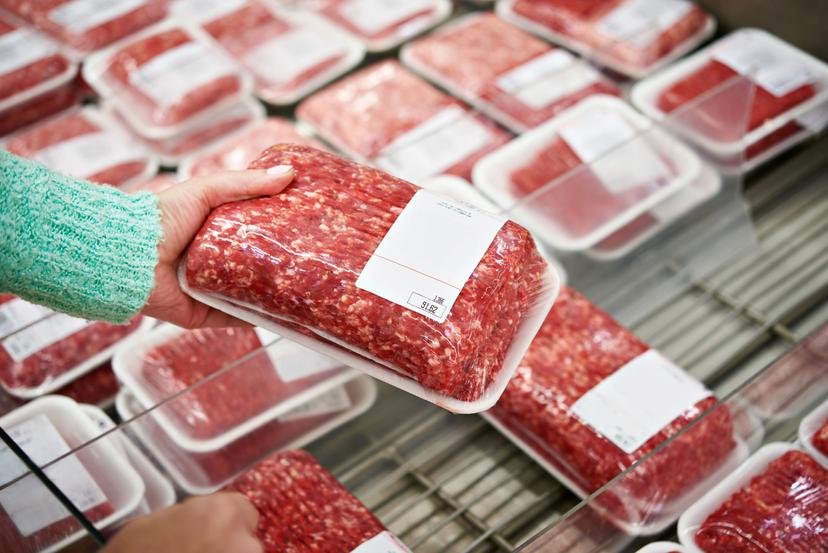
Imperative to such analysis is the accuracy of the final results. “A mistake in compound identification has serious consequences”, cautions Nerín, with repercussions on food safety, waste generation, monetary investments, and ultimately, public health. Thus, establishing a protocol for identification alone is insufficient – determining the confidence level applied to the identification is also extremely critical, she highlights.
In a recent case, Nerín’s lab noted unexpected primary aromatic amines in a sample of food contact materials being tested. The liquid chromatography triple quadrupole mass spectrometer results, transitions, paradigms, and the retention time were all exactly the same as the standards for the amines her lab ran against. However, when working with high-resolution analytical results, her team was able to find that the values were due to some impurities in the original material rather than due to true primary aromatic amines in the sample. “It made us think further on how instruments and protocols in use need to be reviewed carefully,” she continues. Additional strategies, as well as optimal acquisition conditions, are needed to provide sufficient information to configure compound identification. “Recognizing the importance of improving the confidence in an identification, we – at Thermo Fisher Scientific – are pushing to acquire MSn [multi-stage mass spectrometry] data on all of the standards in our product libraries,” adds Stratton. “This will provide end users with more detailed, diagnostic fragmentation.”
Moreover, the requirements in the evolving field of food contact analytical testing, when viewed from a global perspective, may seem unclear and inconsistent. The answer to the question ‘Which chemicals do I have to look at?’ often comes back as a very broad ‘Well, unintentionally added substances’. This makes it very intimidating to be a manufacturer working in this area looking into the future, Stratton admits. “The list of unacceptable chemicals and their limits can vary from country to country,” he mentions. “Manufacturers face a real patchwork of global regulations when it comes to the specific chemicals that need to be examined.”
The challenges posed by unintentionally added food contact materials and green packaging
The challenges in the field are not limited to regulatory ones alone. Not only are the chemicals unknown, their origin, their properties, potential methods of extracting them – or indeed whether at all they are extractable – are all question marks, highlights Sapozhnikova. The fact that these compounds can be degradation by-products of intentionally added substances or even compounds arising from the interaction between the packaging material and the food, only further complicates the matter. Due to the sheer enormity of the potential number of these compounds, “unintentionally-added substances cannot be found in current databases,” Sapozhnikova adds. Nerín emphasizes that to interpret the many unknowns in this field, having an advanced knowledge of analytical and organic chemistry, and prior experience with both the instruments and the data is essential.
This situation is exacerbated by recent challenges arising from the introduction of greener packaging alternatives. The European Commission’s push to use recyclable materials, via tax incentives, is environmentally safe, but may have the downside of adding previously used, possibly contaminated recycled materials to the production of new materials in food packaging. As Stratton aptly notes, the migration to green packaging, a new area of chemistry, thus requires its own ‘new shopping list’ of compounds that producers and testing labs need to be screening for. Multiple articles in recent years comparing virgin versus recycled materials flag this issue, legitimizing it as a real concern to be mindful of.
The role of food contact materials testing suppliers: Library expansion and workflow optimization
Speaking on the role of suppliers in the rapidly changing field of food contact materials testing, Sapozhnikova says: “Today, I see suppliers helping us is in two ways. First, by helping provide fragmentation spectral libraries which act as our go-to identification tools for migration studies and compound identification.” Some examples of resources her lab relies on include the National Institute of Standards and Technology (NIST) MS library for gas chromatography, the mzCloud™ mass spectral database for the Orbitrap™ mass spectrometer and the Thermo Scientific™ Extractable and Leachable Database from the High-Resolution Accurate-Mass MS/MS Spectral Library.
We actively work with our software teams on developing tools that leverage libraries, such as through molecular networking, to identify information on the unknowns in the sample.
Tim Stratton, Manager of Library Technologies at Thermo Fisher Scientific
A 2021 Environment International article3 catalogued 12,285 chemicals that are intentionally used in the production of food contact materials worldwide, prioritizing 608 as hazardous. When Sapozhnikova’s team became curious as to how many of the 608 were included in the databases they regularly use, they found 19%, 24% and 64% to be included in the mzCloud, the Extractable and Leachable database, and the NIST libraries, respectively. “It is good news that these hazardous chemicals have a presence in these libraries,” she states. “But more studies are needed to cover additional hazardous chemicals; all the efforts going into identifying what other compounds need to be added – such as the work done by Tim’s team – will be helpful towards this.”
The second role of suppliers, highlighted by Sapozhnikova, lies in providing relevant software and workflows. Manufacturers may already have a sense on the potentially known contaminants; however, the value-add of a supplier may be in helping with the unknowns arising from unintentionally added substances, or interaction between the packaging and the product, Stratton says. ‘’We actively work with our software teams on developing tools that leverage libraries, such as through molecular networking, to identify information on the unknowns in the sample.” Working with high-resolution data is challenging, making efficient workflows for non-targeted analysis crucial, asserts Sapozhnikova, “I use Compound Discoverer™ Software, which offers customizable workflows and databases that help drive our decision making.”
A future of optimized, high-resolution compound identification
Ultimately, ensuring efficiency and quality of the migration testing, as well as accurate identification and quantification of the migrating compounds are required to achieve a certificate of compliance in the food packaging industry. With several actors involved in producing packaging materials, rather than analyzing every compound added by each player (which will otherwise require immense analytical effort), prioritizing investments to test the final packaging format is key, Nerín advises.
According to Sapozhnikova, “The best suited analytical tools in this field are hybrid mass spectrometry instruments that can provide a lot of structural information, like the quadrupole time-of-flight or quadrupole-Orbitrap.” New developments in instrumental and informatics approaches in recent years, along with greater availability of high-resolution accurate mass instruments have aided in optimizing testing, she continues. Nerín agrees with this, “High-resolution MS, especially for non-volatile substances, has become increasingly popular in regulatory and R&D labs globally.”
Manufacturers are also taking a more proactive stance towards unintentionally added substances. “Above and beyond chemicals controlled by regulators, many manufacturers are taking a real interest in identifying the compounds in their products. Coupled with an increasing awareness among the public, this has resulted in a push to futureproof the field of food contact material testing,” Stratton concludes.
You can watch the discussion on food contact materials here >>
Read more
Find out more about food analysis:
- Leading pesticide analysis experts tackle the challenges and future outlooks of residue testing
- Experts discuss the challenges and future of mycotoxin analysis in food testing
- Food safety and labeling issues for testing laboratories [free eBook]
References
European Commission. Food.ec.europa.eu. Food Contact Materials. https://food.ec.europa.eu/safety/chemical-safety/food-contact-materials_en (accessed June 25, 2022).
US Food and Drug Administration. Fda.gov (April 16, 2021). Inventory of Food Contact Substances Listed in 21 CFR. https://www.fda.gov/food/packaging-food-contact-substances-fcs/inventory-food-contact-substances-listed-21-cfr (accessed June 25, 2022).
Groh KJ, Geueke B, Martin O, Maffini M, Muncke J. Overview of intentionally used food contact chemicals and their hazards. Environ Int. 2021;150:106225. doi:10.1016/j.envint.2020.106225
Related products
Request Quote for All Products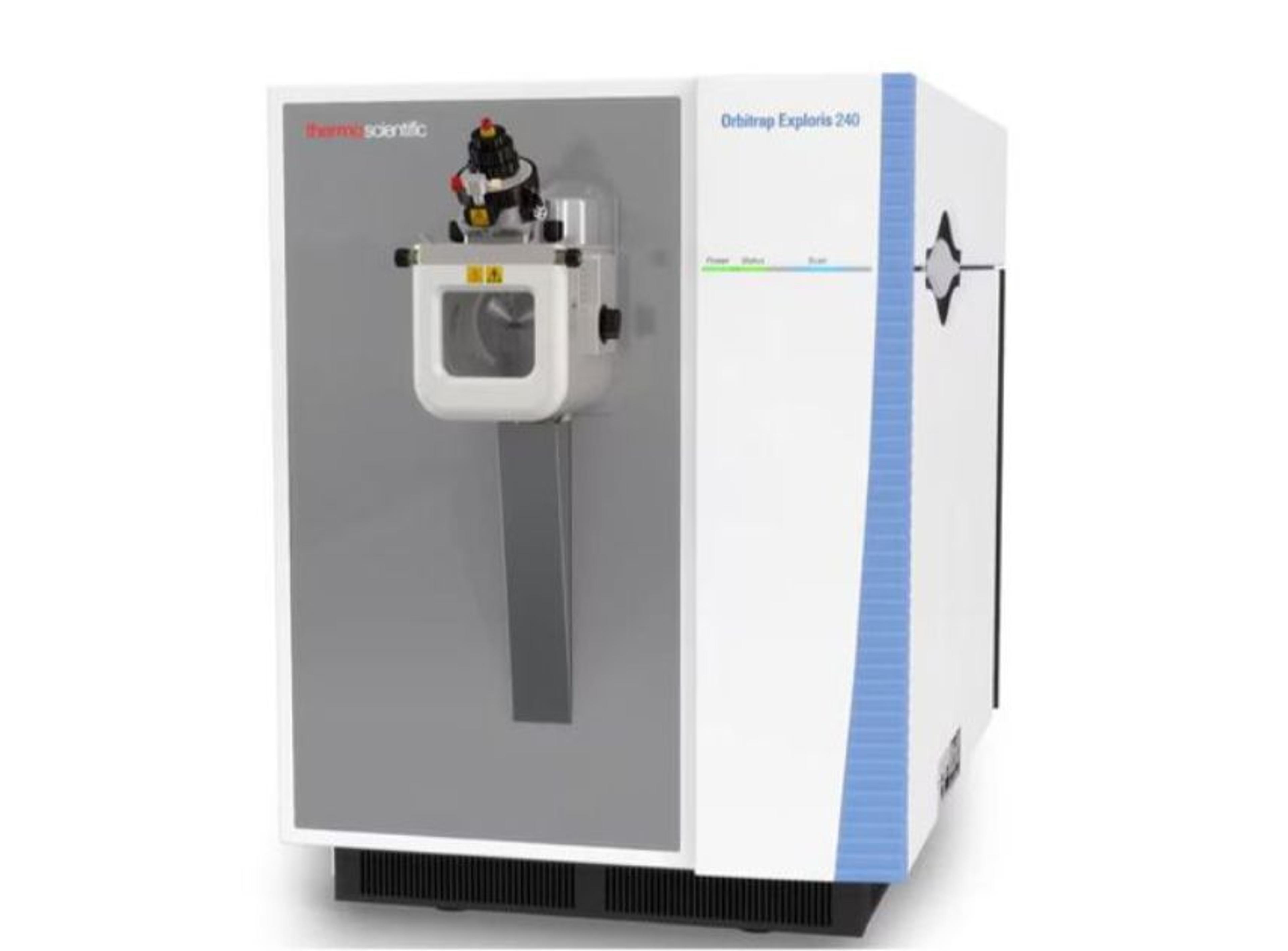
Thermo Scientific™ Orbitrap Exploris™ 240 mass spectrometer
Thermo Fisher ScientificWith leading performance, application versatility, and operational simplicity, the Thermo Scientific™ Orbitrap Exploris™ 240 mass spectrometer fast tracks your path to high-confidence discovery and identification.