
Flow Chemistry Specialist Uniqsis Introduces New Gas Addition Module for Continuous Flow Reactors
19 Jun 2011Flow chemistry specialist Uniqsis Ltd is introducing a new Gas Addition Module for the Uniqsis FlowSyn and other continuous flow reactors. The new module enables fast, controllable pre-saturation of liquid reagents with a wide range of gases and so promotes efficient gas-dependent reactions in flow, such as hydrogenation, ozonolysis, carbonylation, and direct synthesis of carboxylic acids.
Mixing gas and liquids in a controllable and reliable manner has always posed a particular challenge for flow chemists, in particular the prevention of undissolved gas bubbles which have an adverse effect on the control of pressure and residence time in flow chemistry. The ingenious pressurised tube-in-tube design of the Gas Addition Module overcomes this problem by ensuring continuous interaction between the gas and liquid at every point along its length.
The tube-in-tube design is based on semi-permeable membrane technology, whereby the semi-permeable inner tube containing the liquid (typically a solvent) is bathed by a stream of pressurised gas which is enclosed within a thick-walled impermeable outer tube. The pressurised gas is able to cross the semi-permeable membrane of the inner tube and dissolve into the liquid carried within. However, because of the semi-permeable nature of the inner tube material, the liquid is unable to cross in the opposite direction. The design was developed in a collaboration between chemists in Professor Steven Ley's group at Cambridge University and is being jointly commercialised by Uniqsis and Cambridge Reactor Design.
The Gas Addition Module is compatible with a wide range of reactive gases (e.g. CO, CO2, H2, D2, ethene, ethyne, SO2) and organic solvents (e.g. THF, MeCN, MeOH, PrOH). Capable of generating a continuous gas-saturated solvent stream in typically less than 10 seconds, it enables flow chemists to carry out a wide variety of applications with minimum effort, including heterogeneous and homogeneous gas-liquid reactions such as hydrogenation, ozonolysis, carbonylation, and direct synthesis of carboxylic acids.
A particularly convenient feature of the Gas Addition Module from Uniqsis is the availability of an optional Portable Gas Reservoir. This handy space-saving device is easy and safe to charge with gas from a larger reservoir and obviates the need to bring bulky pressurised gas cylinders into the immediate experimental area.
The Gas Addition Module can be added in-line to any FlowSyn system and other continuous flow reactors to provide a solvent feed stream pre-saturated with gas, although it can also be used as a reactor in its own right.
Related products
Request Quote for All Products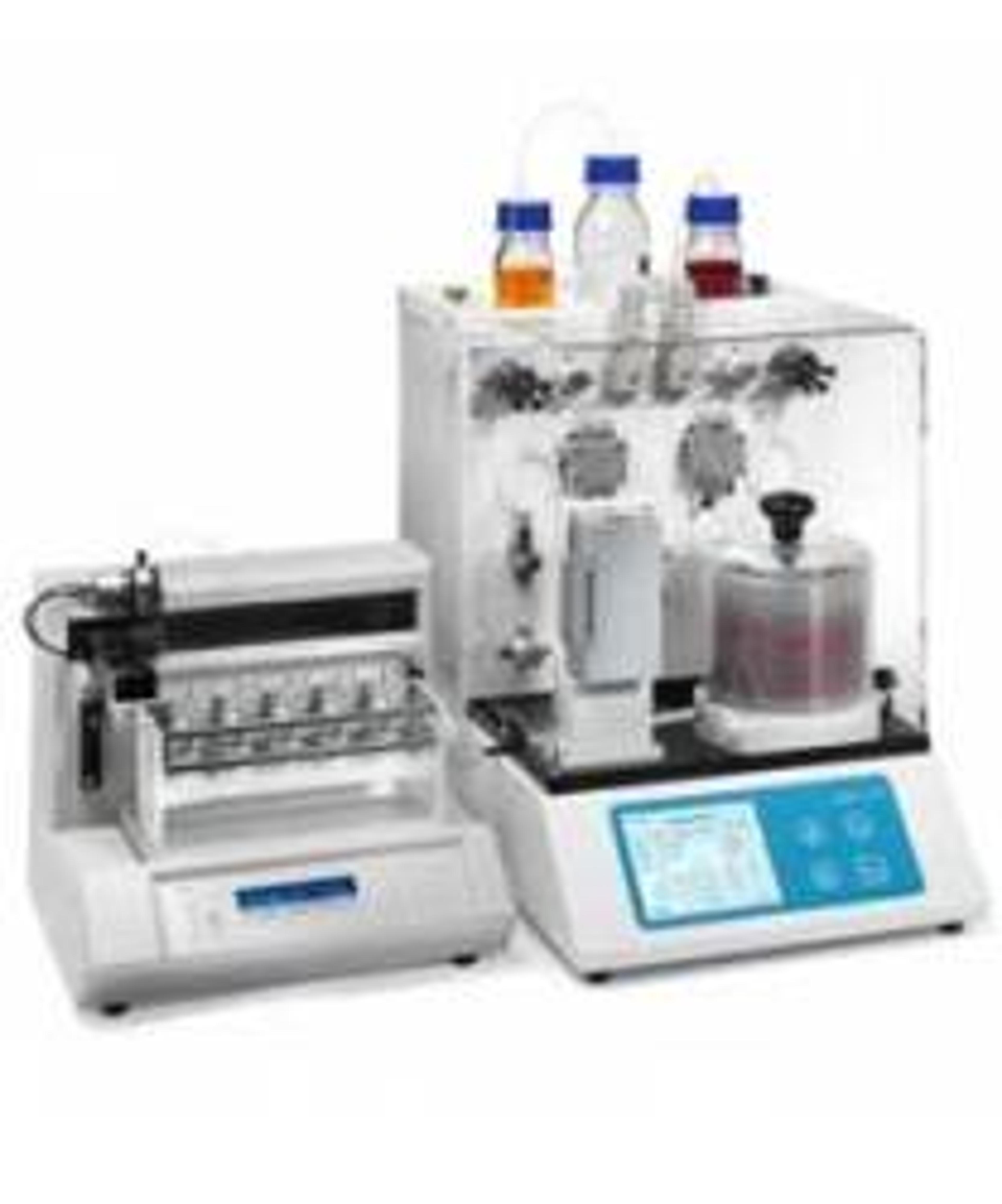
FlowSyn Continuous Flow Reactor
Uniqsis LtdFlowSyn - Making Flow Chemistry Simple FlowSyn is a fully integrated continuous flow reactor with everything you need to start doing flow chemistry including reaction optimization, synthesis and scale up. To provide maximum flexibility, a wide range of mixer and reactor options are available as well as additional modules for performing multiple experiments, or sub-ambient chemistry. • Ability to perform continuous flow chemistry under microwave-like conditions (up to 260oC). • Perform sub-ambient continuous flow chemistry using the 'Cold Coil'. • Run up to 10 automated sequential experiments with the 'Automated Experiment Package'.A pair of high pressure pumps are used to deliver reagent solutions from either stock bottles or sample injection loops through a 'T'-mixer into the electrically heated flow reactors. Reactions can be heated to 260?C and 150?C in the coil and column reactor modules respectively. Back pressure regulators of up to 1000 psi are used to pressurise the system and thus perform superheating of solvents, allowing the chemist to access'microwave like' conditions with no limitation on scale. FlowSyn is very easy to use with a high resolution user interface. The user is guided through the process for setting up a flow chemistry reaction by inputting parameters for reagent volumes, temperatures and reaction times. The user can choose to collect all of the reaction plug, or only the 'steady state' part. FlowSyn will then equilibrate and run the reaction, and finally flush the system through with solvent. Throughout FlowSyn will monitor the pressure of the system, and shut down if a problem occurs allowing FlowSyn to be safely run unattended.