
Enabling Efficient Ion Chromatography with Sensitive Conductivity and Electrochemistry Detectors
Wai Chi Man, Technical Specialist at Thermo Fisher Scientific, explains how ion chromatography can improve water contaminant analyses
10 Oct 2016
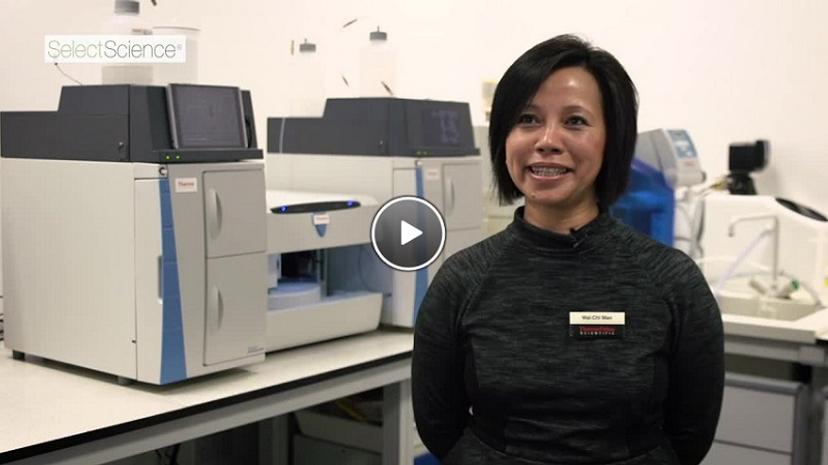
Wai-Chi Man, Technical Specialist, Ion Chromatography, Thermo Fisher ScientificEuropean Water Framework Directive The EU Water Framework Directive commits all member states to achieve good qualitative and quantitative statuses for all water bodies, laying down strategies against water pollution through identification of priority substances and monitoring of different classes of contaminants.
Ion chromatography is the dominant analytical technique for analyzing organic and inorganic ions due to its ability to detect several anions in a single analysis. High pressure ion chromatography (HPIC) is capable of detecting substances such as chlorate and when equipped with electrochemical detectors, can also detect compounds such as cyanide, sulfide and phenol – many of which carry potential health risks.
As a result, a robust and high sensitivity instrument is necessary. Wai-Chi explains that “the key benefit of the Integrion is that it can run up to 5000 psi”. “We can also have RFIC (reagent free ion chromatography) running our EG cartridges” she describes, reducing the need for manual sample preparation. Wai-Chi goes on to describe how significantly higher throughput can also be achieved using 4 micron columns, as a result of the increased pressure. In environmental labs, Wai-Chi explains that this instrument is typically “used to look at low level contaminants, such as bromate or chlorate in water, that could be harmful to the body”.
In the future, IC can be used for analyzing pollutants... using mass spectrometry to get lower sensitivity
Wai-Chi Man Thermo Fisher Scientific
Watch our talk with Wai-Chi and more interviews from the Water Contaminants Analysis for the EU Water Framework Directive Symposium.
Use the Dionex Integrion IC system for your research? Leave a product review today and help other scientists conducting research in your field.
Related products
Request Quote for All Products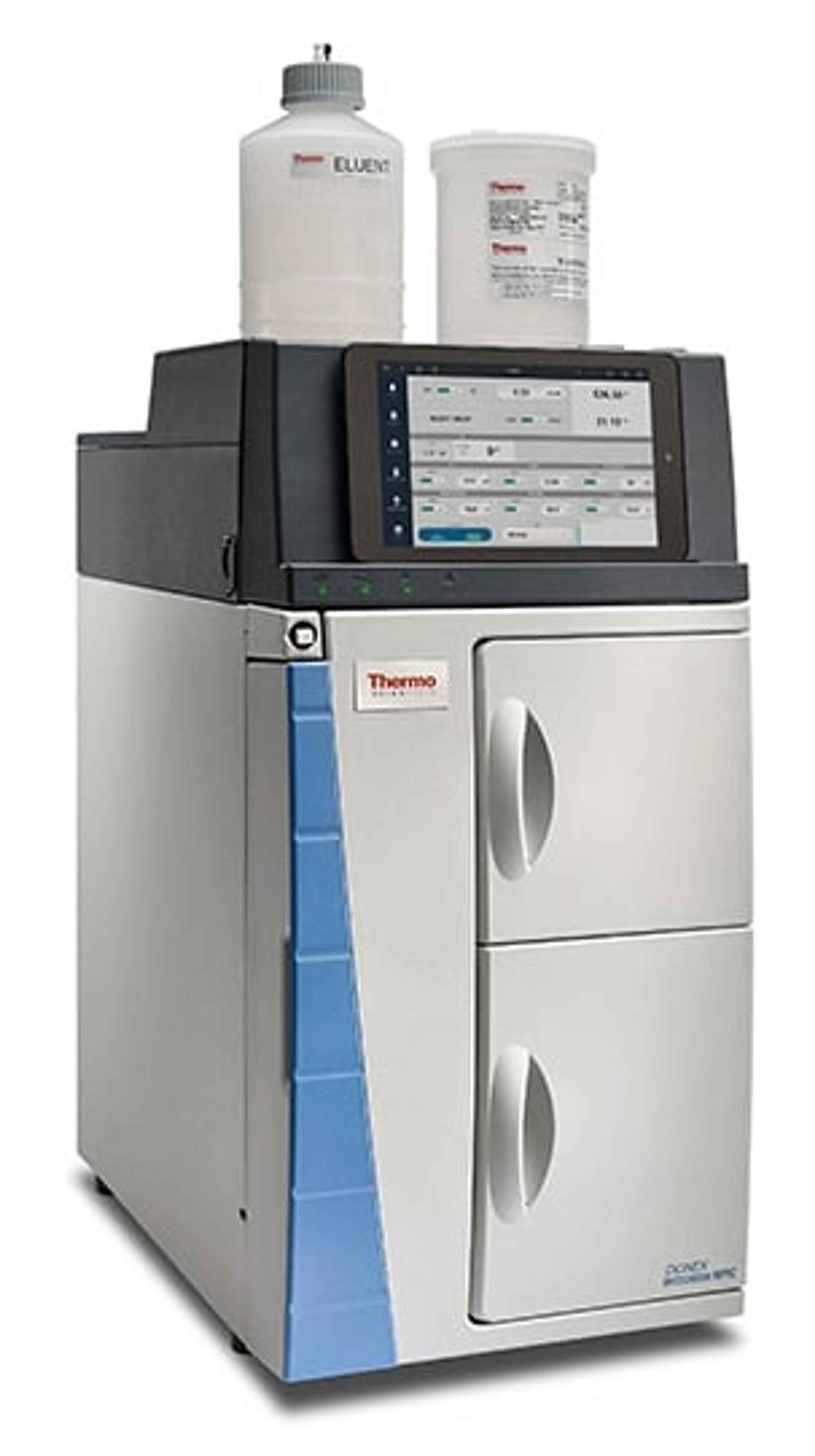
Thermo Scientific™ Dionex™ Integrion™ HPIC™ System
Thermo Fisher ScientificAs an ion chromatographer, the routine IC applications you run give the rest of us the peace of mind to use everyday resources like water, food and beverages, biofuels and pharmaceuticals without a second thought. Using this high-pressure-capable IC system to separate and quantify common ionic pollutants in municipal drinking water and wastewater can provide faster, more cost-effective methods for regulatory compliance testing. Nothing supports you in this role more than your laboratory instruments. The Thermo Scientific™ Dionex™ Integrion™ HPIC™ system is designed to be your reliable lab partner. Features: Simplified plumbing layout with integrated architecture - Layout based on logical flow-path for easy component access in a compact platform with a small physical footprint. Consumables Device Monitor - Provides positive identification of a consumable's performance metrics, preventing consumable installation errors and mismatches by automatically logging consumable use and performance. Detachable tablet with local language support - Flexible access to IC controls that speak your language Upgradeable features - In a fluid market with changing demands, the Dionex Integrion IC system offers a wide range of upgradable components, so it can grow with your needs over time. These include electrolytic sample preparation and electrolytic water purification Automated Eluent Generation (EG™) - Eliminate human errors associated with manual eluent preparation and improve method reproducibility from operator-to-operator and lab-to-lab. The Dionex Integrion IC system brings consistent results to all your applications. In this case, 100 injections of a simple sugar mixture are highly reproducible. Wide range of column support - Choose the column sizes you need for your applications, including smaller-particle-size 4 µm columns that provide faster run times and better resolution. Flexibility – two different models to choose from and option to choose right detector or column format for your application