Chromatrap Announce Native ChIP Kit for Mass Spectrometry

18 Jul 2017

Lois Manton-O'Byrne, PhD
Executive Editor

Product news

Chromatrap announces that its popular Native ChIP kit is now fully compatible for mass spectrometry (MS) as a downstream process. Combining Chromatrap®’s unique solid-state ChIP technology with MS enables researchers to obtain high quality data sets for chromatin proteomic profiling and mapping of histone modification patterns.

The Chromatrap® Native ChIP (N-ChIP) kit is widely proven to ensure a high yield of DNA so that samples can be analysed by multiple downstream processes. Leveraging Chromatrap®’s unique solid-state technology, the N-ChIP kit eliminates the use of magnetic or agarose beads allowing users to quickly and easily recover ready-to-use, purified chromatin for downstream applications, including mass spectroscopy. Coupling MS to ChIP will allow researchers to shed light on the proteomic landscape of the extracted chromatin enabling them to begin to understand how proteins interact with repressed and active regions of the genome and their role in global gene regulation.

Chromatin immunoprecipitation (ChIP) is a technique commonly used for mapping the DNA-protein interactions in cells, which are crucial for gene regulation. The technique enriches DNA fragments to which a specific protein of interest or histone modification is bound. Enriched sites can then be identified by qPCR, hybridisation to a microarray (ChIP-on-chip), or by sequencing. This powerful tool is now being further enhanced by coupling it directly to mass spectrometry, itself an invaluable and versatile tool for the characterisation of biomolecules.

In Native ChIP, the naturally occurring DNA-protein complexes are preserved in their “native” state by doing away with the need to cross-link and fix cells prior to extraction. Although there are a number of published protocols outlining methods for performing N-ChIP, Chromatrap uniquely offers researchers an efficient kit with an optimized protocol specific to this technique.

With the addition of MS to the Chromatrap repertoire of downstream applications, the company continues to expand the role of its ChIP kits across the epigenetic research sector.

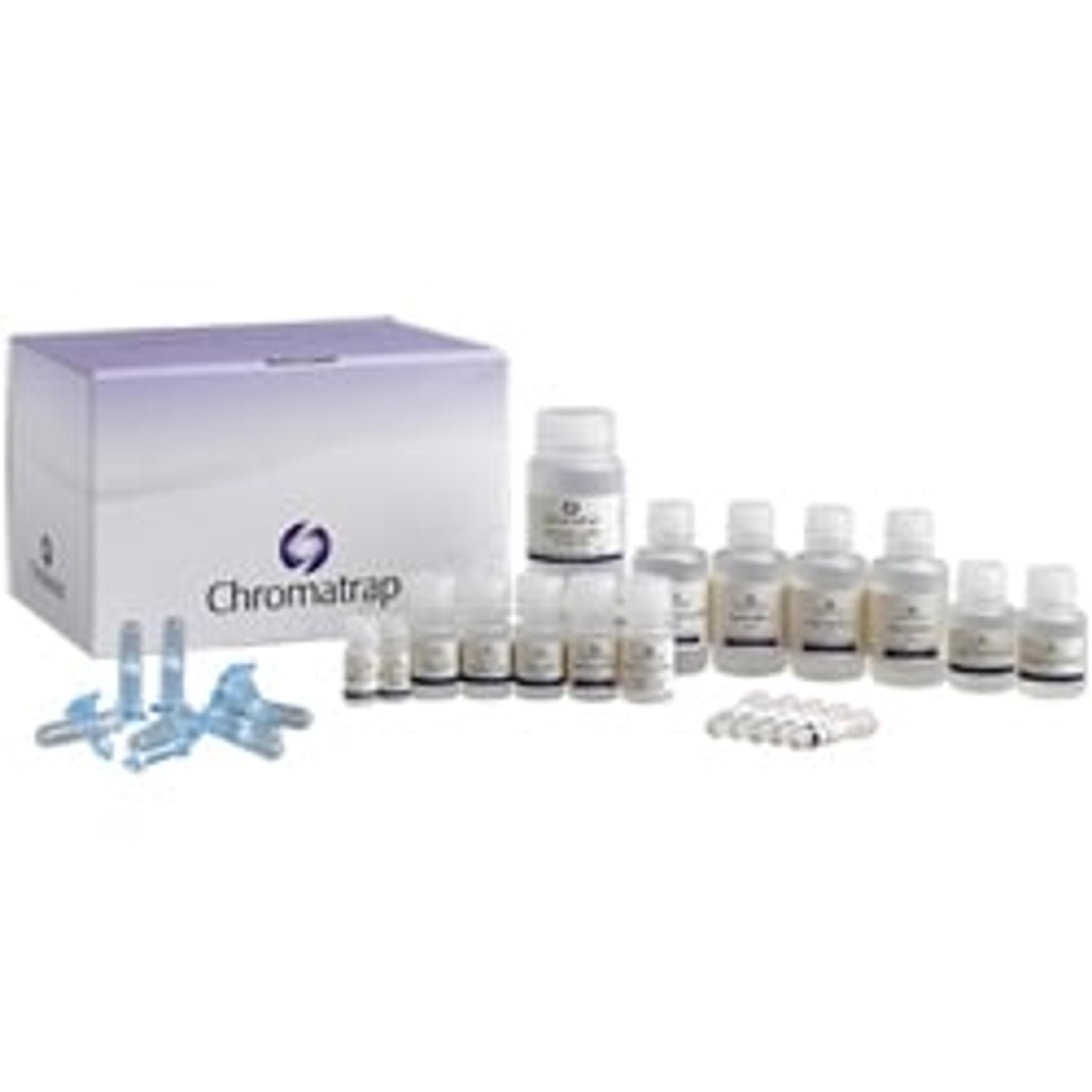
Chromatrap® Native ChIP Kit

Chromatrap

Chromatrap® Native ChIP kits provide an alternative to traditional cross-linked ChIP, which removes the need for fixing cells prior to extraction. 

(0)

Links

Tags

Mass SpectrometryMass spectrometry (MS) is a powerful analytical technique used to identify and quantify molecules based on the mass-to-charge ratio of gas-phase ions. It provides detailed information about the structure, composition, and properties of compounds and is widely used across fields such as environmental monitoring, materials science, drug discovery and development, food and beverage testing, and wider chemical research. Key MS techniques include tandem mass spectrometry (MS/MS), liquid chromatography–mass spectrometry (LS-MS) and inductively coupled plasma (ICP-MS). Choosing from these wide range of techniques and technologies can be a daunting task, so keep up to date with scientific applications, performance expectations, and customer reviews here all in one place. Visit our product directory to receive quotes direct from the manufacturer. Genome AnalysisGenomics, the study of genomes, includes functional genomics, evolutionary genomics and comparative genomics. There are many genomic technologies such as DNA sequencing of whole genomes, computational biology and bioinformatics. DNA and nucleic acids must be isolated and concentrated from cells for analysis with kits, automated analyzers and software. Other useful technologies for studying genomics include PCR, microarrays and electrophoresis.ProteomicsProteomics is the systemic bioinformatics study of proteins and amino acids, including their structure, size, function and identification. Tools used in proteomics include chromatography, blotting and gels, protein arrays, mass spectrometry and ELISA and associated analysis software. Analyzers and proteomic systems should be sensitive, high resolution, fast and may be automated for high-throughput.DNA / RNA Extraction and PurificationPurified DNA and RNA are required for numerous downstream molecular biology applications. Consequently, the importance of high-quality DNA/RNA extraction and purification equipment cannot be underestimated. Many purification kits are available and are typically optimized for nucleic acid type and source, including plasmid DNA, genomic DNA, mRNA, RNA and viral nucleic acid purification kits. Automated extraction and purification of nucleic acids can be implemented with magnetic bead separator instruments or high-throughput purification workstations. Find the best DNA/RNA extraction and purification equipment in our peer-reviewed product directory: compare products, check customer reviews and receive pricing direct from manufacturers.Protein PurificationProtein purification is a vital step in drug discovery, therapeutics, biotech and life science research. The purification process typically involves subcellular or membrane protein extraction with cell lysis kits, separation of proteins from cell debris by filtration or spin columns, and the isolation of proteins of interest from other proteins and impurities with affinity purification (including fusion protein tags and antibody binding proteins A, G and L), immunoprecipitation or chromatographic methods, such as ion exchange, size exclusion and immobilized metal affinity chromatography. All purification methods come in multiple formats for your laboratory needs, including agarose or magnetic beads, resins, columns and filter plates. Find the best protein purification equipment in our peer-reviewed product directory: compare products, check customer reviews and receive pricing direct from manufacturers.Gene Expression and Molecular CloningMolecular cloning is a set of techniques that utilizes vectors to transfer recombinant DNA into host cells and is an essential tool for investigating the expression of genes and proteins in bacterial or mammalian cells. A variety of vectors optimized for gene cloning and expression in a range of host organisms are available, alongside competent cells for genetic replication. Here, you can explore a range of molecular tools, high-quality genomic and cDNA libraries, premade clones, transformation and transfection reagents and mutagenesis or gene expression detection assays and expression arrays. Find the best gene expression and molecular cloning products in our peer-reviewed product directory: compare products, check customer reviews and receive pricing direct from manufacturers.ChIP-SequencingDNADeoxyribonucleic Acid (DNA) is the main component of chromosomes and the carrier of genetic information of living organisms. Find out here about PCR, NGS, ChIP-Seq, gel imaging, and many other techniques which can be used for the analysis of DNA.Histone ModificationEpigeneticsEpigenetics refers to heritable changes in gene expression. These changes are not caused by alterations to the DNA sequence. Three of the main systems responsible for the initiation of epigenetic change are DNA methylation, histone modification and non-coding RNA-associated gene silencing.Protein InteractionsProtein interactions are essential for understanding cellular processes, as proteins work together to carry out biological functions. Studying protein interactions can provide insights into disease mechanisms, drug development, and cell signaling pathways. Explore the best tools for protein interaction research in our peer-reviewed product directory; compare products, check reviews, and get pricing directly from manufacturers.ChromatinProtein BiologyThe analysis of protein expression, identity and function is vital for many areas of life science research and drug discovery. Some of the most commonly used techniques in protein analysis include Western blotting, electrophoresis and mass spectrometry.