
Automation Advances for Bioreactor and Cell Culture Systems

5 Jun 2017

Emily Adam
Publishing / Media

Industry news

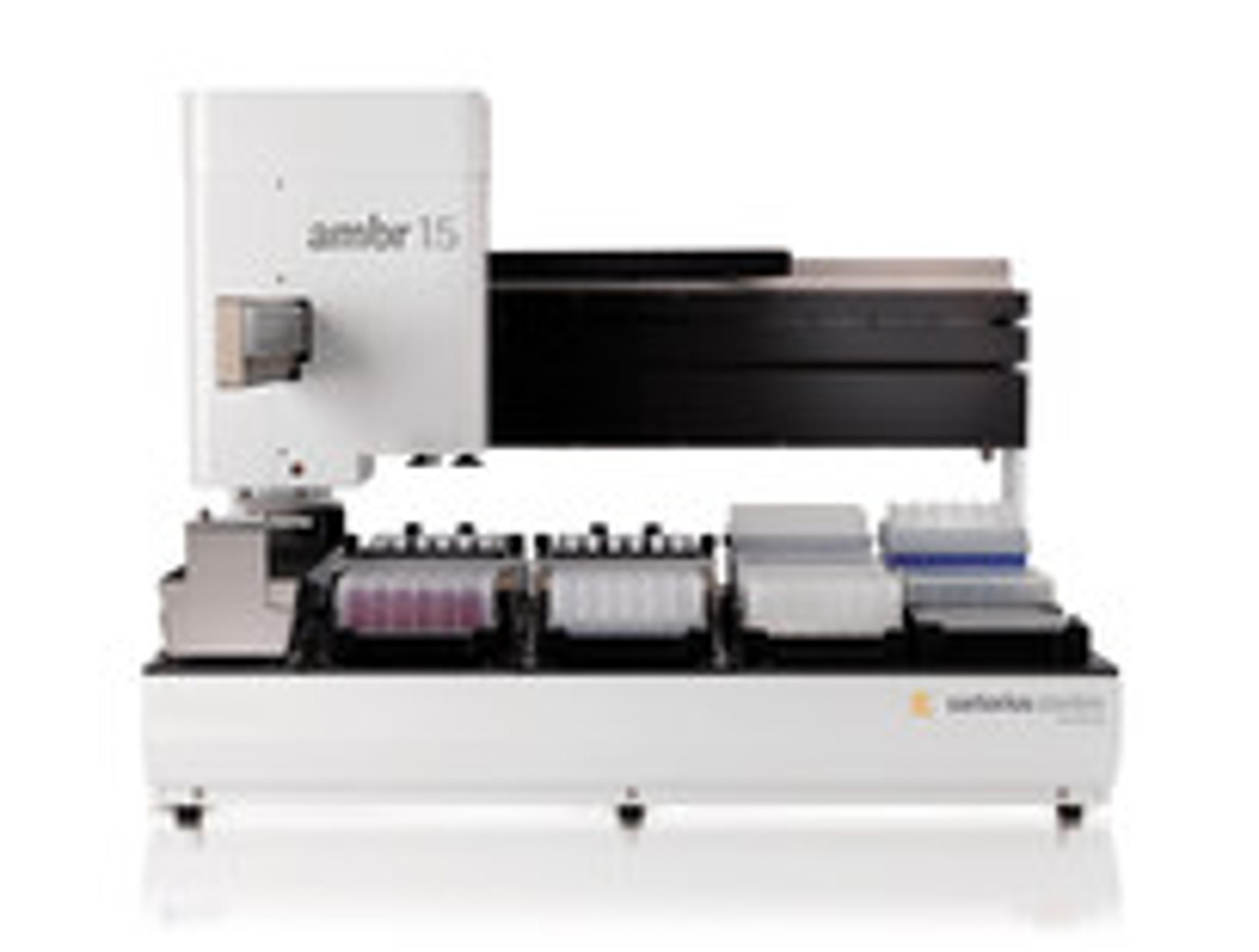
Sartorius Stedim Biotech (SSB), a leading international supplier for the biopharmaceutical industry, announced that the ambr® 15 automated micro bioreactor system combined with a Nova Biomedical (Nova) BioProfile® FLEX2 automated cell culture analyzer is on show for the first time at the Cell Line Development & Engineering Conference in San Diego, California. This newly integrated system, which is a first from SSB and Nova’s successful collaboration, enables rapid at-line sample collection and analysis of massive quantities of key cell culture data.

SSB and Nova have collaborated to seamlessly integrate the software interface that controls the ambr® 15 workstation for automated parallel processing of 24 or 48 single-use bioreactors (10–15 mL working volume) with the cell culture analysis capabilities of the innovative BioProfile FLEX2. The combined system provides a unique tool to simultaneously run, sample and analyze a massive number of cell culture conditions during cell line and media development by Design of Experiments (DoE).

Combining the ambr® 15 and the BioProfile® FLEX2 enables fully integrated automatic sample transfer, analysis and automated feedback control in each single-use ambr® 15 bioreactor. This allows collection of enormous quantities of cell culture data, including total and viable cell density, viability, cell diameter, pH, PCO2, PO2, glucose, lactate, glutamine, glutamate, ammonium, Na+, K+, Ca++ and osmolality, which can be sampled and measured with a complete cycle time of just 6–7 minutes. The ambr® 15 software simultaneously acquires the BioProfile® FLEX2 data set and processes it, for example, by performing complex in-run calculations of how much feed volume to automatically add during a run. This saves time by significantly increasing the amount of consistent clone selection, media development and culture parameter data that a scientist can generate per run.

“We have combined two highly innovative technologies. Our successful partnership with Nova has delivered complete at-line analytics capabilities for our ambr® 15 platform. Utilizing these integrated systems will support scientists to more easily run full QbD studies, without causing a sampling bottleneck or needing additional staff resources. The new system will optimize their process productivity, as well as the quality of their biologics,” stated Dr. Barney Zoro, ambr® Product Manager at Sartorius Stedim Biotech.

“There is a significant demand for fully automated cell culture analysis of small-volume culture systems like the Sartorius ambr® micro bioreactor system,” said Matthew McRae, Biotechnology Sales Product Line Manager at Nova. “We’re excited to have worked with SSB on this integration program because our BioProfile FLEX2 with maintenance-free sensors provides rapid analysis of key cell culture tests using just 265 microliters of sample. As a result, this analyzer is a highly complementary addition to the ambr® 15 while maintaining the flexibility and modularity of the first-generation BioProfile FLEX analyzer.”

To find out more about SSB’s new technology developments, please visit Booth 17 at the Cell Line Development & Engineering event in San Diego and attend our workshops on Wednesday, June 7, at 11:00 am–11:30 am.
Links

Tags

Cell / Tissue CultureCell culture or tissue culture is used to study the biology of cells or tissues and to isolate cellular products in an environment which can be manipulated and well defined. Accurately control your culture environment with bioreactors or culture incubators, bind your cells to a surface or together with an extracellular matrix. Distinguish cell types with differential media or proliferate cells with certain characteristics using selective media. Enrich your media with supplements such as growth factors, sera and vitamins. Find the best cell and tissue culture products, kits and equipment in our peer-reviewed product directory: compare products, check customer reviews and receive pricing direct from manufacturers.Cell Lines Stem Cells and Primary CellsPrimary cell cultures, established cell lines and stem cells are vital for <i>in vitro</i> and <i>ex vivo</i> experimentation. High-quality cells, optimized for your applications, alongside optimized cell substrates, growth medium and supplements, are critical for experimental success. Explore a range of cells suitable for your applications, including isogenic cell lines, competent cells, induced pluripotent stem cell (iPSC)-derived cell lines, fungal/bacterial/mammalian cell lines, stem cells and cancer cell lines. Find the best cells for your research in our peer-reviewed product directory: compare products, check customer reviews and receive pricing direct from manufacturers.Cell-Based AssaysCell-based assays are used to monitor the presence, quantity and activities of a desired cellular analyte including drug molecules or biomarkers. This can reveal information on cell health (apoptosis, cytotoxicity, viability and proliferation assays), cell metabolism, cell migration and cell signaling mechanisms. Find the best cell-based assay products, kits and equipment with our peer reviewed product directory: compare products, check customer reviews and receiving pricing direct from manufacturers.Biopharmaceutical AdvancesBiopharmaceutical advances follow the development of pharmaceuticals derived from biotechnology, also known as biotechnology medicines. Biopharmaceuticals may be produced from cell lines, plants, or microbial cells. Important considerations of biopharmaceutical use include application, cost, production process and purification.Bioprocessing / FermentationBioprocessing is the use of biological materials to perform commercial, scientific or medical research processes. Biological materials used include cells, enzymes and organisms. Usually bioprocessing requires a batch or continuous bioreactor such as a fermentor or cell culture system. The advantages of using a reactor include high productivity, easy configuration, adjustable values and automation.Software PlatformsSoftware platforms are useful for various stages of laboratory experiments from data collection to data storage and processing. For instance lab software is available for system control, data management, data analysis and qualification / validation.BiopharmaceuticalsBiopharmaceuticals are proteins and other compounds (such as nucleic acids) produced by living organisms that have uses as therapeutics or for in vivo diagnostics. The most well known example of a biopharmaceutical product, and the first to be approved for therapeutic use, was recombinant human insulin.Cell BiologyCell biology studies the structure, function, and behavior of cells. Understanding cellular processes is essential for research in areas such as cancer biology, stem cell research, and neurobiology. Techniques like flow cytometry, microscopy, and cell culture enable researchers to explore cellular mechanisms in detail. Browse our peer-reviewed product directory to find the best cell biology tools and equipment, compare products, check customer reviews, and get pricing directly from manufacturers.Cell CultureCell culture involves growing cells under controlled conditions, typically outside of their natural environment, to study cellular behavior, drug response, and disease models. Cell culture is crucial in biotechnology and biomedical research. Explore cell culture products in our peer-reviewed product directory; compare products, check reviews, and get pricing directly from manufacturers.