Analytical solutions to address the increasing complexity of therapeutic proteins – watch on demand

Explore qualitative and quantitative characterization of antibodies and proteins by CE-MS, LC-MS and an automated immunoaffinity purification (IA)-CE-MS workflow in vitro and in vivo

20 Mar 2020

Finn Price
Administrator / Office Personnel

Expert insights

As the complexity of pharmaceutical proteins increases, understanding the absorption, distribution, metabolism and excretion (ADME) of proteins has become more important to enable engineering strategies designed to optimize the therapeutic properties of candidate molecules. To this end, it is important to have robust methods, such as mass spectrometry, to characterize potential instability across a variety of sample types.

Intact mass spectrometry of therapeutic proteins offers the highest possible resolution to assess protein/peptide integrity as well as post-translational modifications. Despite the benefits of intact protein mass spectrometry, analysis from serum remains challenging. Enrichment or purification is required prior to mass spectrometry analysis of therapeutic proteins in serum due to the high abundance of endogenous serum proteins.

In a SelectScience webinar available on demand, Mei Han, senior scientist, pharmacokinetics & drug metabolism at Amgen Inc., describes the qualitative and quantitative characterization of monoclonal antibodies and protein stability, both in vitro and in vivo, by CE-MS and LC-MS.

Read on for highlights from the live Q&A session or register to watch the webinar on demand.

Watch Webinar Now

Mei Han, Senior Scientist, Amgen
Mei Han has worked in the biotech industry for 20 years since she obtained her MS from the Dept. of Chemistry and Biochemistry, Montana State University. Han is a Senior Scientist in the Pharmacokinetics & Drug Metabolism (PKDM) department at Amgen, South San Francisco.

Q: How is the sensitivity of CE/MS compared to LC/MS?

MH: The sensitivity of CE/MS is very comparable to LC/MS. CE/MS uses a nanoflow interface, allowing low sample dilution, giving a great separation comparability with capillary electrophoresis and providing sensitivity comparable to LC/MS despite the low injection volume of CE.

Q: How is the throughput of this method?

MH: The throughput depends on the sample types. If the samples are salt-free and stable, it can do continuous injections as in LC/MS. If the samples have salt on the protein aggregates, the spray emitter might need to be changed more frequently. This can be monitored using a microscope camera. Changing emitter will take a few minutes.

Q: What is the BGE pH of CE/MS for fusion protein or antibody quantitation? Is it native or denatured?

MH: The typical CE/MS running buffer (BGE) is at acidic pH depends on the specific protein the composition might need to modify accordingly. For native CE-MS analysis, you will need a neutral pH buffer.

Q: If you could pull out some of the top tips for using CE/MS and LC/MS, what advice would you give to people looking to get into this technology?

MH: The first thing I would say is, if you want to get comfortable using this nanoflow interface, and then get more practice. Once you get familiar, you’ll be able to run it. Nowadays with the interface setting, it is very robust. It will need some training, like for the first couple of months you might run into little issues. But if you just keep practicing and follow the procedure, you should be able to get reproducible results easily enough.

Find out more on this topic by watching the full webinar on demand>>

SelectScience runs 3-4 webinars a month across various scientific topics, discover more of our upcoming webinars>>

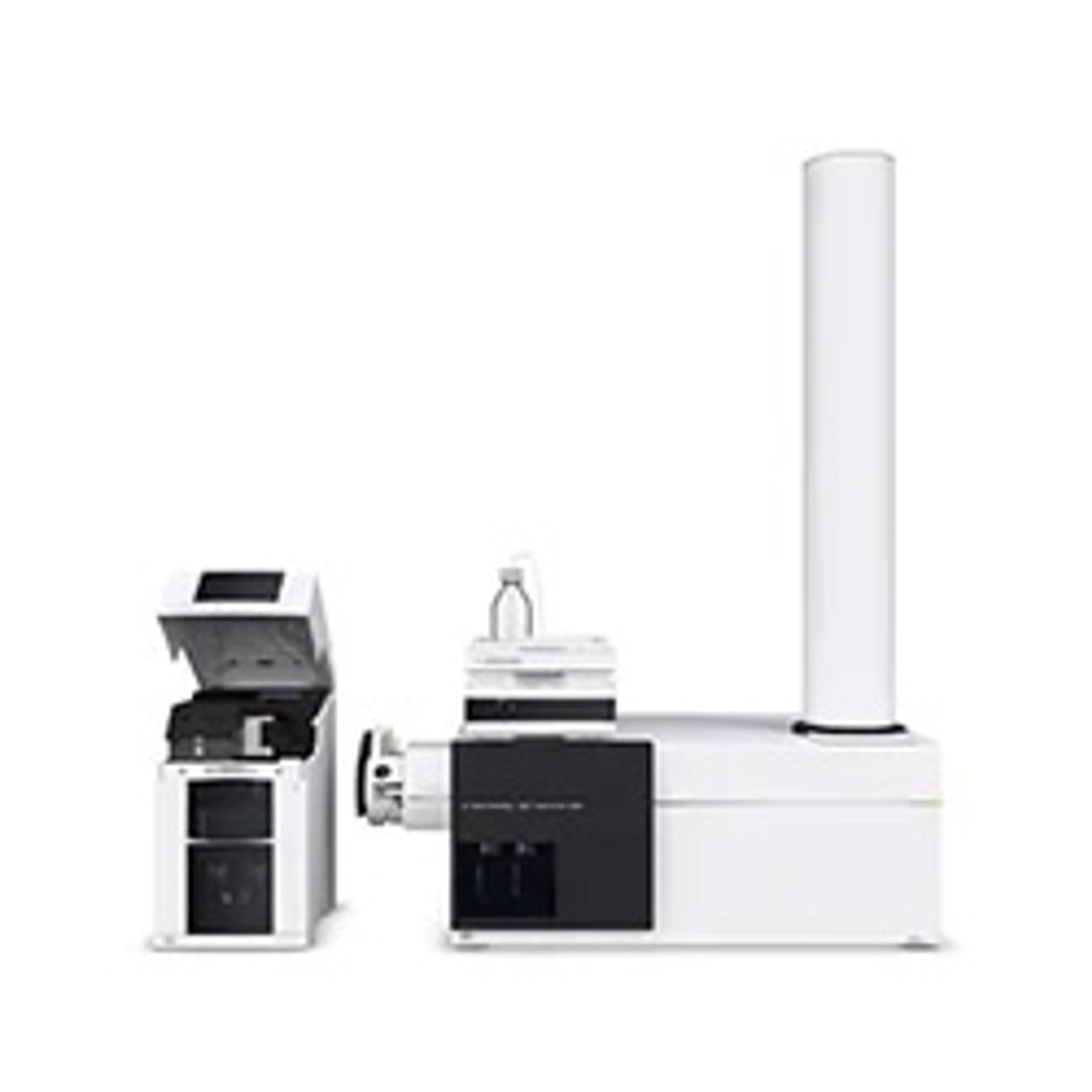
Agilent 7100 CE/MS System

Agilent Technologies

The Agilent CE/MS System comprises the Agilent 7100 CE System directly interfaced with any of the Agilent LC/MS systems. A range of ion sources, including standard ESI, can be installed, and additional detectors—such as UV-DAD, LIF, and CCD—can be operated parallel to MS. Agilent MassHunter software can be used to control the entire system from one workstation.

(2)

Links

Tags

Capillary ElectrophoresisCapillary electrophoresis (CE) is used to separate molecules based on charge, size and hydrophobicity. Pressure, voltage or a vacuum is used to introduce the sample to fused silica capillaries. Fluorescence, UV/Vis, UV or diode array detectors are used to visualize components. Types of CE systems include capillary electrochromatography (CEC), capillary zone electrophoresis and capillary gel electrophoresis. Find the best capillary electrophoresis equipment in our peer-reviewed product directory: compare products, check customer reviews and receive pricing direct from manufacturers.ADME-ToxicologyADME-toxicology (ADME-Tox) studies are used in pharmacology and pharmacokinetics to assess the activity/toxicity of drugs <i>in vivo</i> or <i>in vitro</i>. Find bioassays for absorption, distribution, metabolism, and excretion of drug molecules including cytotoxicity, transporter/permeability, metabolism and activity assays as well as hepatocytes and cell lines for ADME. Find the best ADME-toxicology products in our peer-reviewed product directory: compare products, check customer reviews and receive pricing direct from manufacturers.Mass SpectrometryMass spectrometry (MS) is a powerful analytical technique used to identify and quantify molecules based on the mass-to-charge ratio of gas-phase ions. It provides detailed information about the structure, composition, and properties of compounds and is widely used across fields such as environmental monitoring, materials science, drug discovery and development, food and beverage testing, and wider chemical research. Key MS techniques include tandem mass spectrometry (MS/MS), liquid chromatography–mass spectrometry (LS-MS) and inductively coupled plasma (ICP-MS). Choosing from these wide range of techniques and technologies can be a daunting task, so keep up to date with scientific applications, performance expectations, and customer reviews here all in one place. Visit our product directory to receive quotes direct from the manufacturer. LC-MSLC-MS (liquid chromatography-mass spectrometry) systems and equipment are used for separation and quantitative analysis of complex mixtures, combining liquid chromatography and mass spectrometry. Quantify proteins, contaminants, pesticides or screen for drug metabolites with a high level of sensitivity. LC-MS systems and equipment include reverse phase, normal phase and specialized columns integrated with various MS detectors such as time-of-flight (TOF), quadrupole, orbitrap or ion trap mass analyzers. LC-MS/MS instruments equipped with a qTOF or triple quadrupole analyzer give greater sensitivity and resolving power to your analysis. Find the best LC-MS equipment in our peer-reviewed product directory: compare products, check customer reviews and receive pricing direct from manufacturers.Drug DiscoveryDrug discovery is the process of identifying potential new medications, involving stages such as target identification, compound screening, and preclinical development. It relies on cutting-edge technologies like high-throughput screening, artificial intelligence, and molecular modeling to accelerate the identification of drug candidates. Drug discovery plays a pivotal role in developing new therapies for diseases ranging from cancer to rare genetic disorders. Browse our peer-reviewed product directory to find the latest drug discovery technologies, compare options, check customer feedback, and get pricing directly from manufacturers.ADMEImmunotherapyImmunotherapy is a treatment approach that utilizes the body�s immune system to fight diseases, especially cancer. It includes therapies such as monoclonal antibodies, checkpoint inhibitors, and CAR-T cell therapy. Immunotherapy is a rapidly growing area of research in oncology and autoimmune diseases. Browse our peer-reviewed product directory to find the best immunotherapy tools, compare products, check reviews, and get pricing directly from manufacturers.