
ALZpath signs global licensing agreement with Abbott to advance blood-based Alzheimer’s disease testing
The test is being developed for use on Abbott’s Alinity ci-series systems to help enable earlier and more accessible Alzheimer’s diagnosis on a global scale
7 Jul 2026
ALZpath Inc. has signed a global licensing agreement with Abbott to incorporate ALZpath’s proprietary phosphorylated Tau 217 (pTau217) antibody into the development of an in vitro diagnostic (IVD) blood test for Alzheimer’s disease.
The test is being developed for use on Abbott’s Alinity ci-series systems to help enable earlier and more accessible Alzheimer’s diagnosis on a global scale.
Strengthening leadership in blood-based Alzheimer’s diagnostics
ALZpath’s pTau217 antibody is among the most clinically validated tools for detecting Alzheimer’s disease pathology. Supported by more than 200 peer-reviewed publications across 18 countries, the antibody has demonstrated high accuracy and sensitivity in identifying Alzheimer’s disease biology.
Enabling earlier Alzheimer’s diagnosis at scale
As disease-modifying therapies for Alzheimer’s disease continue to expand, scalable and accessible diagnostics are critical for earlier patient identification and more efficient care pathways. ALZpath’s pTau217 antibody offers a blood-based alternative to positron emission tomography (PET) imaging and cerebrospinal fluid (CSF) analysis, which can be costly, invasive, and challenging to deploy widely.
Blood-based biomarkers such as pTau217 may also support ongoing monitoring of disease progression and treatment response in routine clinical practice, helping clinicians to better manage patients over time.
By combining ALZpath’s clinically validated pTau217 antibody with Abbott’s global diagnostics footprint and Alinity ci-series systems, the collaboration aims to help bring high-performance, blood-based Alzheimer’s disease testing into routine clinical workflows worldwide.
Mike Banville, CEO of ALZpath, said the agreement reinforces the company’s role in the rapidly growing market for blood-based Alzheimer’s disease testing. “As blood-based biomarkers become central to how Alzheimer’s disease is detected and managed, partnering with a global healthcare leader like Abbott can enable high-performance testing to reach clinicians and patients around the world at scale. Together with our diagnostic partners, we remain focused on bringing our highly accurate and sensitive antibody into routine care, including primary care, to reach patients in need.”
Want the latest science news straight to your inbox? Become a SelectScience member for free today>>
Related products
Request Quote for All Products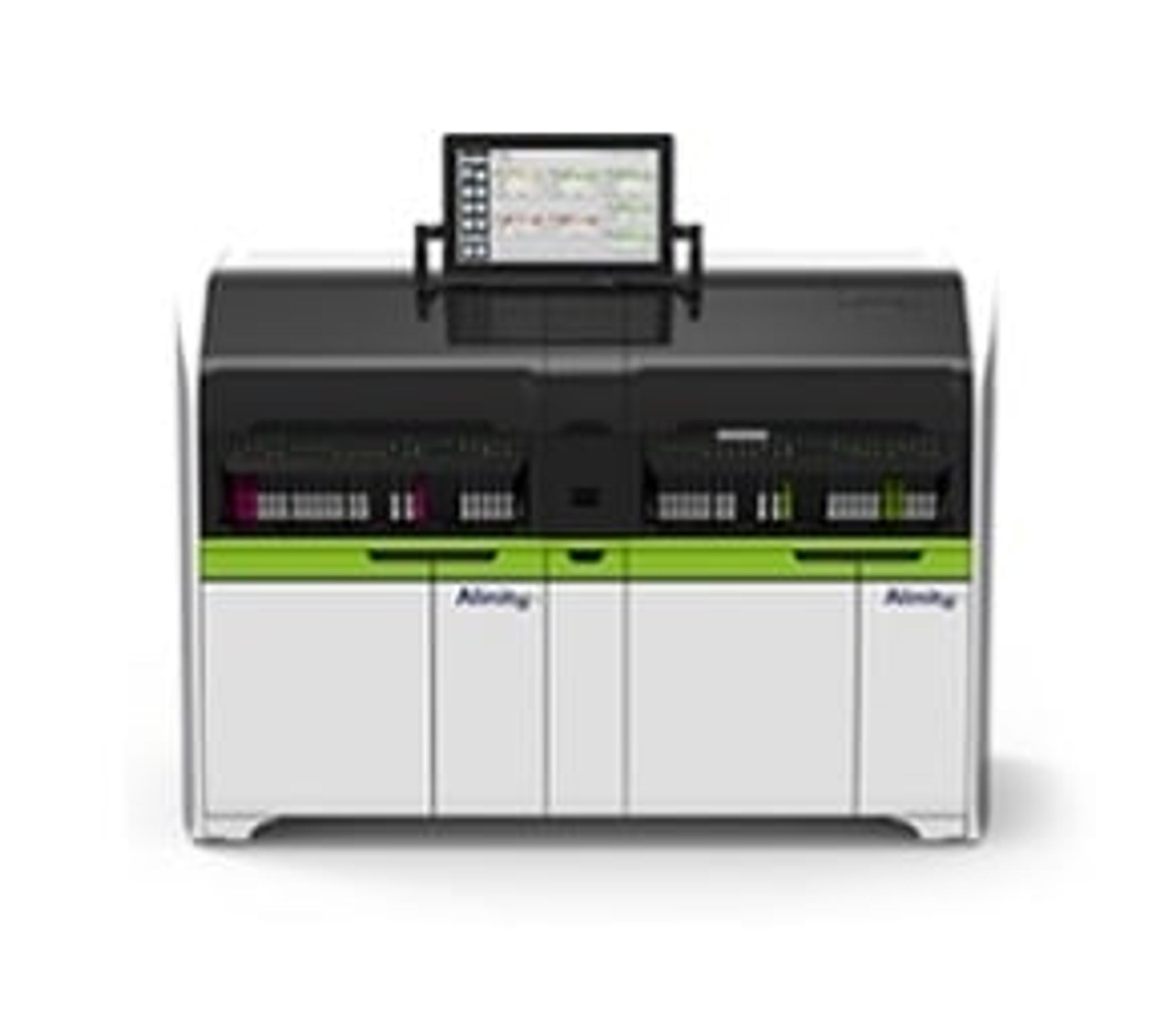
Tags
Frequently asked questions
Show frequently asked questions
How does the ALZpath and Abbott collaboration advance blood-based diagnostics for Alzheimer’s disease?
The collaboration licenses ALZpath’s proprietary pTau217 antibody to Abbott for developing an in vitro diagnostic (IVD) blood test for Alzheimer’s disease. The test is being designed for Abbott’s Alinity ci-series immunoassay systems, aiming to deliver earlier, more accessible Alzheimer’s diagnosis globally by integrating a highly accurate, clinically validated biomarker into routine clinical workflows.
What makes ALZpath’s pTau217 antibody a leading biomarker for Alzheimer’s disease detection?
ALZpath’s pTau217 antibody is among the most clinically validated tools for detecting Alzheimer’s disease pathology. It is supported by more than 200 peer-reviewed publications across 18 countries and has demonstrated high accuracy and sensitivity in identifying Alzheimer’s disease biology. This strong evidence base underpins its use in blood-based diagnostics as an alternative to PET imaging and CSF analysis.
Why are blood-based biomarkers like pTau217 important for future Alzheimer’s disease care pathways?
Blood-based biomarkers such as pTau217 provide a scalable, less invasive alternative to PET imaging and cerebrospinal fluid (CSF) analysis, which can be costly and difficult to deploy widely. They can enable earlier patient identification, support monitoring of disease progression and treatment response, and help integrate Alzheimer’s testing into primary care, improving efficiency and access as disease-modifying therapies expand.