
ResourceLife Sciences
Sensitive fluorometric quantification of DNA in microplate format
31 Jul 2019In this application note, Thermo Fisher Scientific demonstrates the feasibility of using the Fluoroskan™ or Fluoroskan™ FL instruments with the Invitrogen™ Quant-iT™ dsDNA high-sensitivity assays for sensitive and specific quantification of double-stranded DNA in a microplate format.
Related products
Request Quote for All Products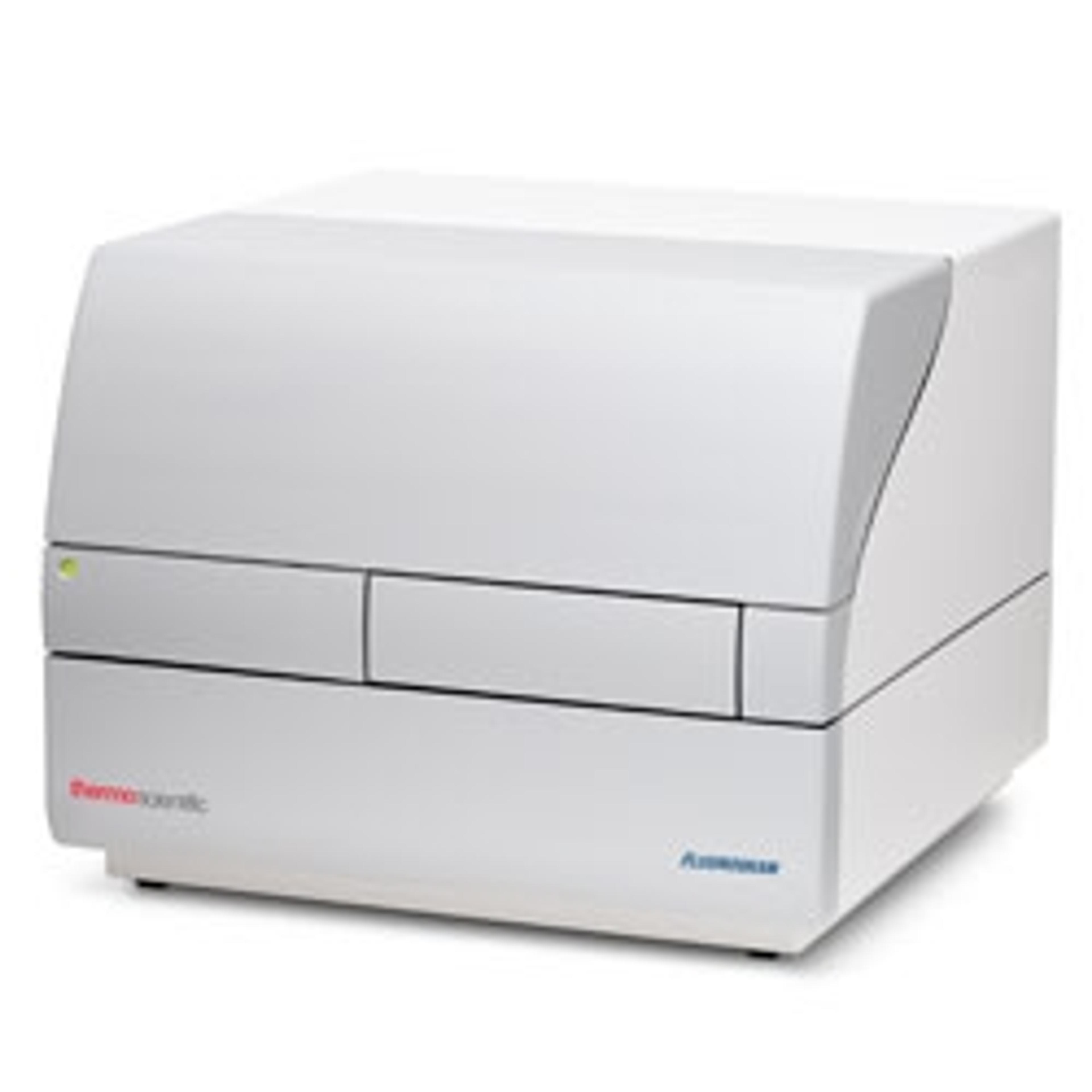
Thermo Scientific™ Fluoroskan™ Microplate Fluorometer
Thermo Fisher ScientificA compact, robust fluorescence plate reader built to run variety of fluorometric and FRET assays with excellent performance.
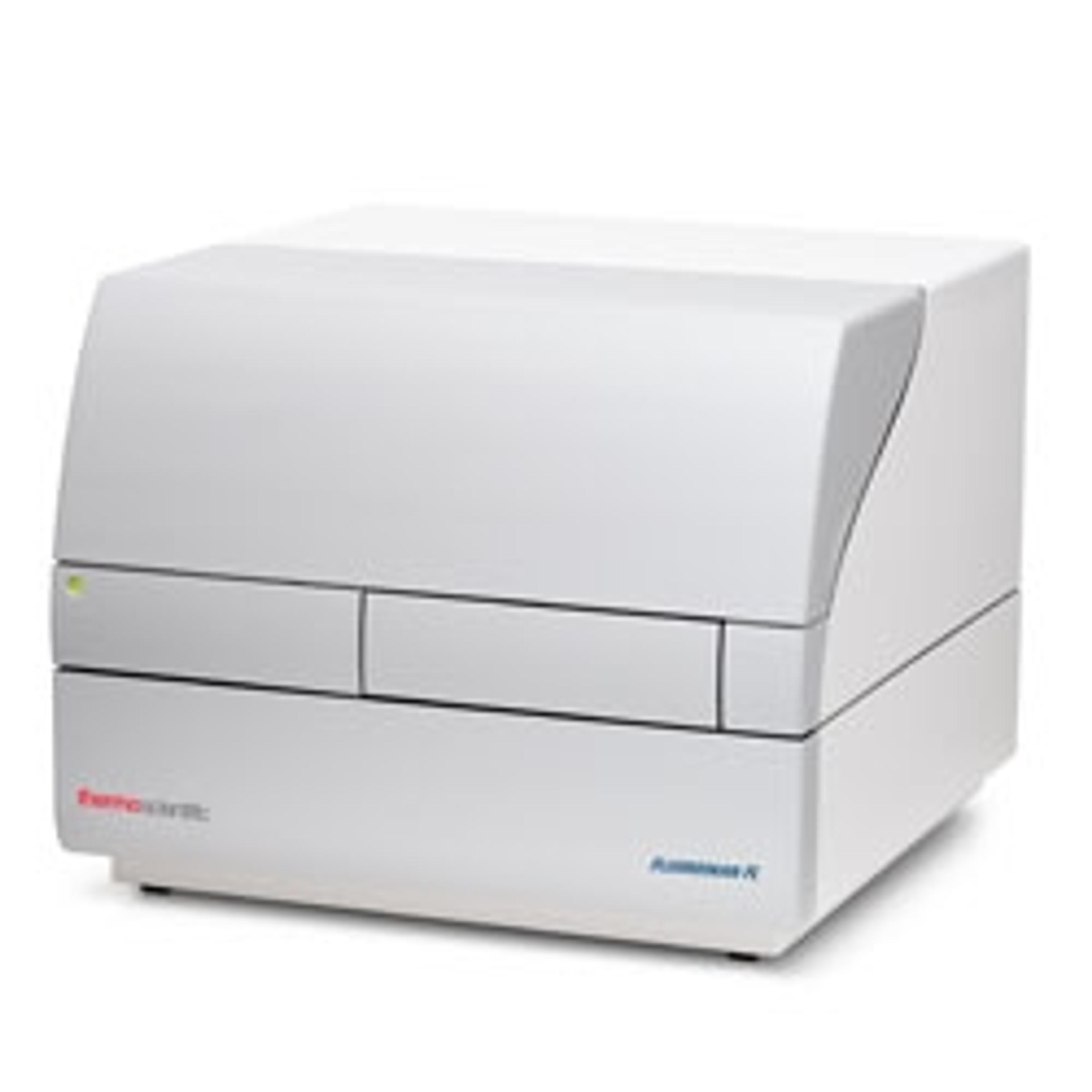
Thermo Scientific™ Fluoroskan™ FL Microplate Fluorometer and Luminometer
Thermo Fisher ScientificA DLReady certified, versatile dual-mode workhorse for fluorometric and luminometric assays built for excellent performance.
Links
Tags
MicroplatesMicroplates are multi-well plates used to increase the throughput of biological investigations. The number of wells microplates contain can range from 6 to 3243 wells, with the 96-well format being the most commonly used. Microplates can come tailored for a range of applications including cell culture, PCR, filtration, storage, non-binding surface, protein crystallization, as well as pre-coated, deep well and normal Standard microplates. Additionally, options for microplate colors include clear , black, white or black with clear bottom and white with clear bottom for absorbance microplate reader applications. Find the best microplates for your lab in our peer-reviewed product directory: compare products, check customer reviews and receive pricing direct from manufacturers.Microplate Readers / DetectorsMicroplate readers are used to automate the detection and analysis of labeled or label-free components in microplates during assays or live-cell monitoring. Microplate readers are generally distinguished by their mode of detection. Types include absorbance, luminescence, fluorescence intensity, fluorescence polarization, TRF / FRET and multimode microplate readers. Microplate readers deliver a high throughput of samples by reading multiple wells simultaneously, with the 96-well format the most commonly used. As a result, microplate readers are often used in the drug discovery, bioassays, research and pharmaceutical industries for screening applications. Microplate loading can also be automated, with robotic microplate stackers to increase throughput. Find the best microplate readers in our peer-reviewed product directory: compare products, check customer reviews and receive pricing direct from manufacturers.DNA / RNA QuantificationDetection and quantification of nucleic acids is important in molecular biology, cloning, expression, forensics and clinical diagnostics. Nucleic acids can be detected by labeling with colorimetric, fluorescent or radio labels and using in situ hybridization kits to identify specific sequences. Multiple nucleic acids can be detected and quantified at once using RNA / DNA detection beads or RNA / DNA microarrays. Find the best DNA / RNA Quantification products in our peer-reviewed product directory: compare products, check customer reviews and receive pricing direct from manufacturers.Software PlatformsSoftware platforms are useful for various stages of laboratory experiments from data collection to data storage and processing. For instance lab software is available for system control, data management, data analysis and qualification / validation.Microplate Reader SoftwareFluorescence Based AssayFluorescence based assays are widely used in life science research and high-throughput screening to measure a broad range of cellular activities.DNA QuantificationDNA quantification is the process of measuring the amount of DNA in a sample. It is vital in genomics, molecular biology, and biotechnology, helping to ensure accurate experiments and data analysis. Explore DNA quantification tools in our peer-reviewed product directory; compare products, check reviews, and get pricing directly from manufacturers.DNADeoxyribonucleic Acid (DNA) is the main component of chromosomes and the carrier of genetic information of living organisms. Find out here about PCR, NGS, ChIP-Seq, gel imaging, and many other techniques which can be used for the analysis of DNA.