Multiplex Methods to Examine Epigentic Modifications
6 Jun 2018This whitepaper explains how multiplex methods deep bisulfite sequencing and bisulfite PCR-Luminex can be used for DNA methylation analysis in research examining epigenetic modification.
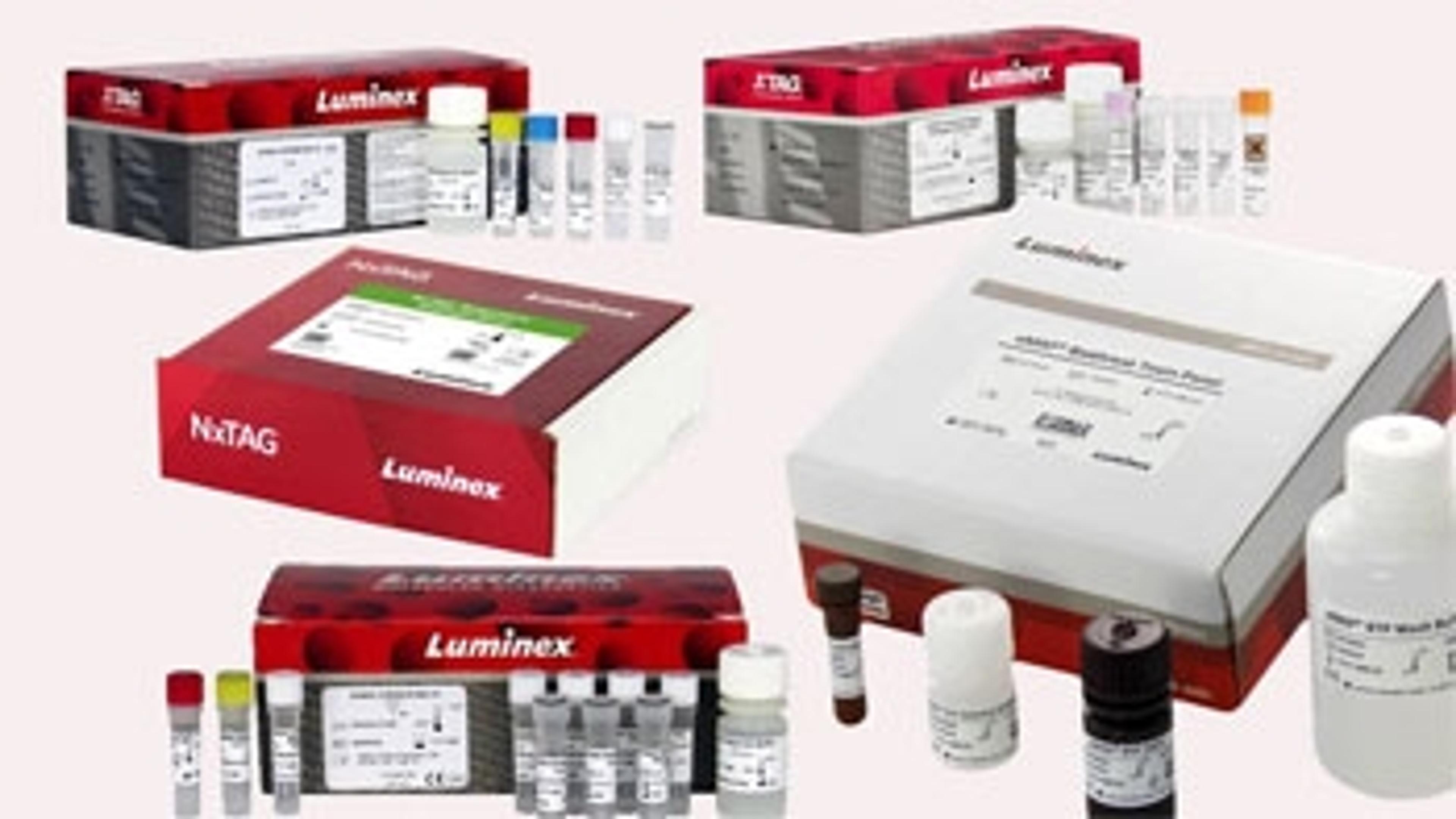
Related products
Request Quote for All Products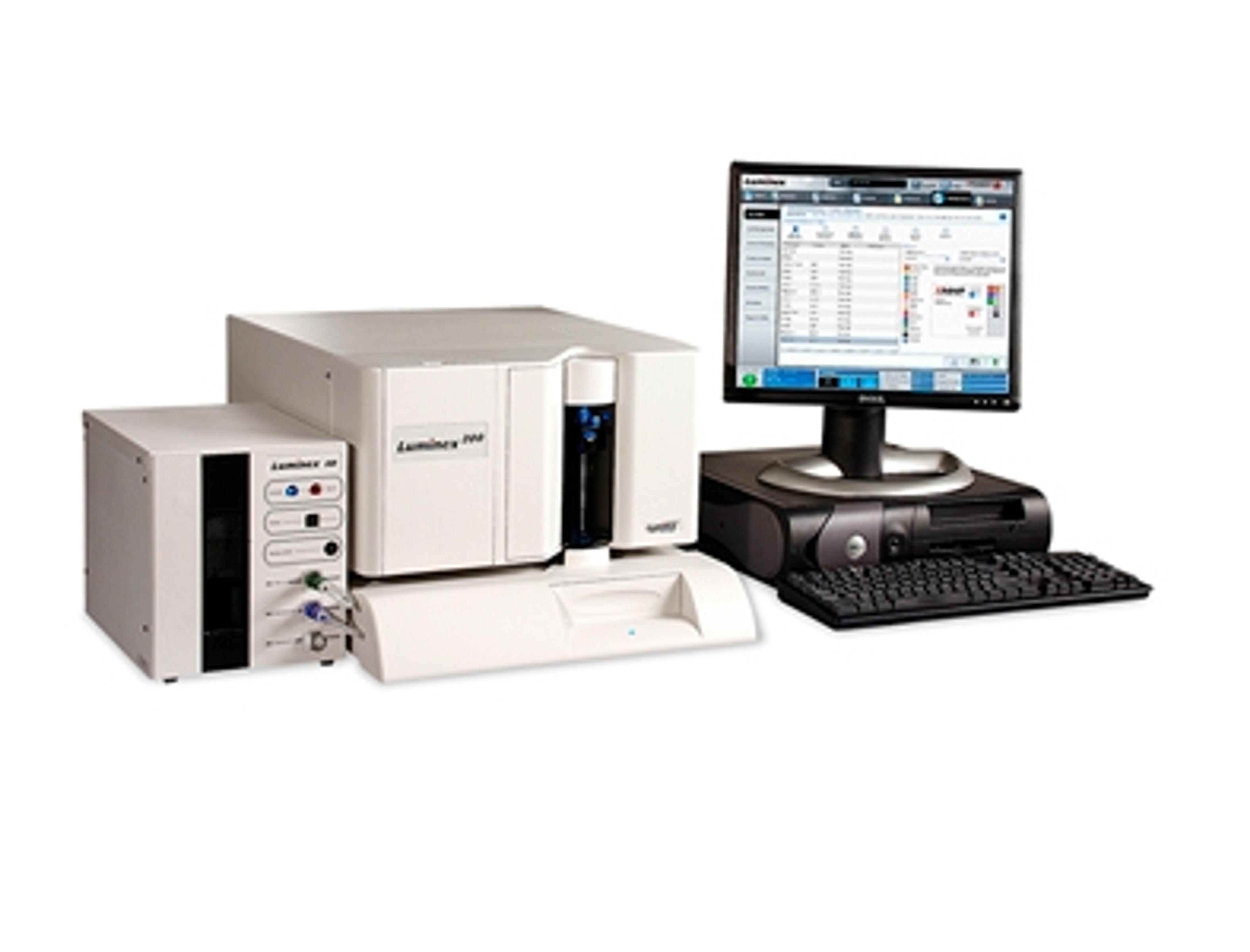
Luminex® 200™Multiplexing Instrument
LuminexThe Luminex® 200™ detects up to 100 protein or nucleic acid analytes from a single aliquot of sample in a single reaction well, enabling you to generate more data while saving sample, time, and reagents. With more than 11,000 units sold globally to date, the Luminex 100/200 is the established standard in multiplexing instrumentation. The xMAP® multiplexing platform is composed of an instrument and associated reagents: The Luminex 200 instrument is based on the principles of flow cytometry, which integrates key xMAP detection components such as lasers, optics, fluidics, and high-speed digital signal processors. xMAP microspheres are a family of fluorescently dyed carboxylated polystyrene microspheres that act as both the surface for the solution phase assay and the spectral identifier that the instrument detects. The open architecture of xMAP Technology enables users to build custom multiplex assays or select from a broad menu commercially available kits. Instrument Details: Multiplex Capacity: Up to 100 non-magnetic; 80 magnetic Microtiter Plate: 96 well Throughput: ~40 min/96-well plate (up to 12,800 tests per hour) Dynamic Range: 3.5 logs Sensitivity: Detects a minimum of 1,000 fluorochromes of phycoerythrin (PE) per xMAP microsphere Optics: Lasers/APDs/PMTs Hardware: Flow Cytometry based Software: xPONENT® Software supports protocol-based data acquisition with robust data regression analysis Dimensions: All components combined (Analyzer, XY Platform and Sheath Delivery System) 26.5" W x 23.5" D x 12.5" H (67.3 cm W x 59.7 cm D x 31.8 cm H) Weight: All components combined (Analyzer, XY Platform and Sheath Delivery System) 113 lbs (49 kg) xMAP Reagent Compatibility: Magnetic and nonmagnetic microspheres
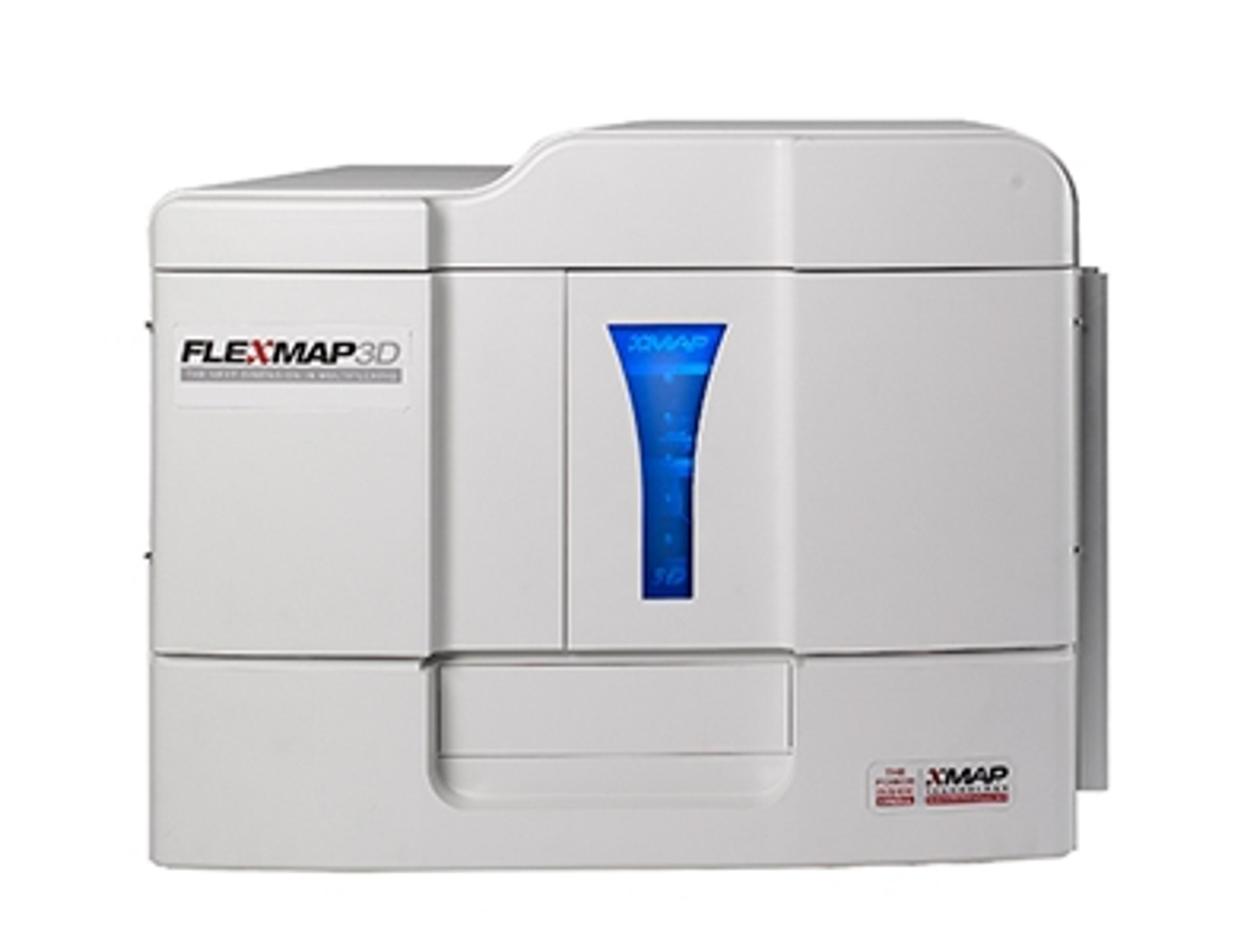
FLEXMAP 3D® Multiplexing Instrument
LuminexThe FLEXMAP 3D® detects up to 500 protein or nucleic acid analytes from a single aliquot of sample in a single reaction well, enabling you to generate more data while saving sample, time, and reagents. Fast read time, compatibility with both 96- and 384-well plates, and ease of integration with front-end automation systems make the FLEXMAP 3D the platform of choice for high-throughput bioassay applications. The xMAP® multiplexing platform is composed of an instrument and associated reagents: The FLEXMAP 3D® instrument is based on the principles of flow cytometry, which integrates key xMAP detection components such as lasers, optics, fluidics and high-speed digital signal processors. xMAP microspheres are a family of 500 fluorescently dyed carboxylated polystyrene microspheres that act as both the surface for the solution phase assay and the spectral identifier that the instrument detects. The open architecture of xMAP Technology enables users to build custom multiplex assays or select from a broad menu commercially available kits. Instrument Details: Multiplex Capacity: 500 Microtiter Plate: 96 well and 384 well Throughput: ~ 20 min/96-well plate (up to 144,000 tests/hour); ~ 75 mins/384-well plate (up to 153,600 tests/hour) Dynamic Range: 4.5 logs Sensitivity: Detects a minimum of 500 fluorochromes of phycoerythrin (PE) per xMAP microsphere Optics: Lasers/APDs/PMTs Hardware: Flow Cytometry based with dual sample fluidics paths and rapid sampling rate Software: xPONENT® Software offers interfacing options for front-end automation platforms and Laboratory Information Systems (LIS) Dimensions: 23” W x 25.7” D x 18” H (58.4 cm W x 65.3 cm D x 45.7 cm H) Weight: Up to 91 kg (200 lbs), including the instrument, monitor arm, monitor, and accessories, such as the keyboard, mouse and barcode scanner xMAP Reagent Compatibility: Magnetic and nonmagnetic microspheres